Identifying Ludwigia peploides by Season
A month-by-month guide to the seasonal appearance of Ludwigia peploides — diagnostic features available at each phenological stage and optimal windows for survey and early detection.
Ludwigia peploides is a perennial plant with a clear seasonal growth cycle in temperate regions. Understanding the plant's seasonal phenology is essential for planning effective survey programs, interpreting what you observe in the field, and timing management interventions for maximum effectiveness. This guide covers the characteristic appearance and diagnostic features available in each season. For a complete photographic guide to all life stages, see our Visual Identification Guide.
Spring: March–May
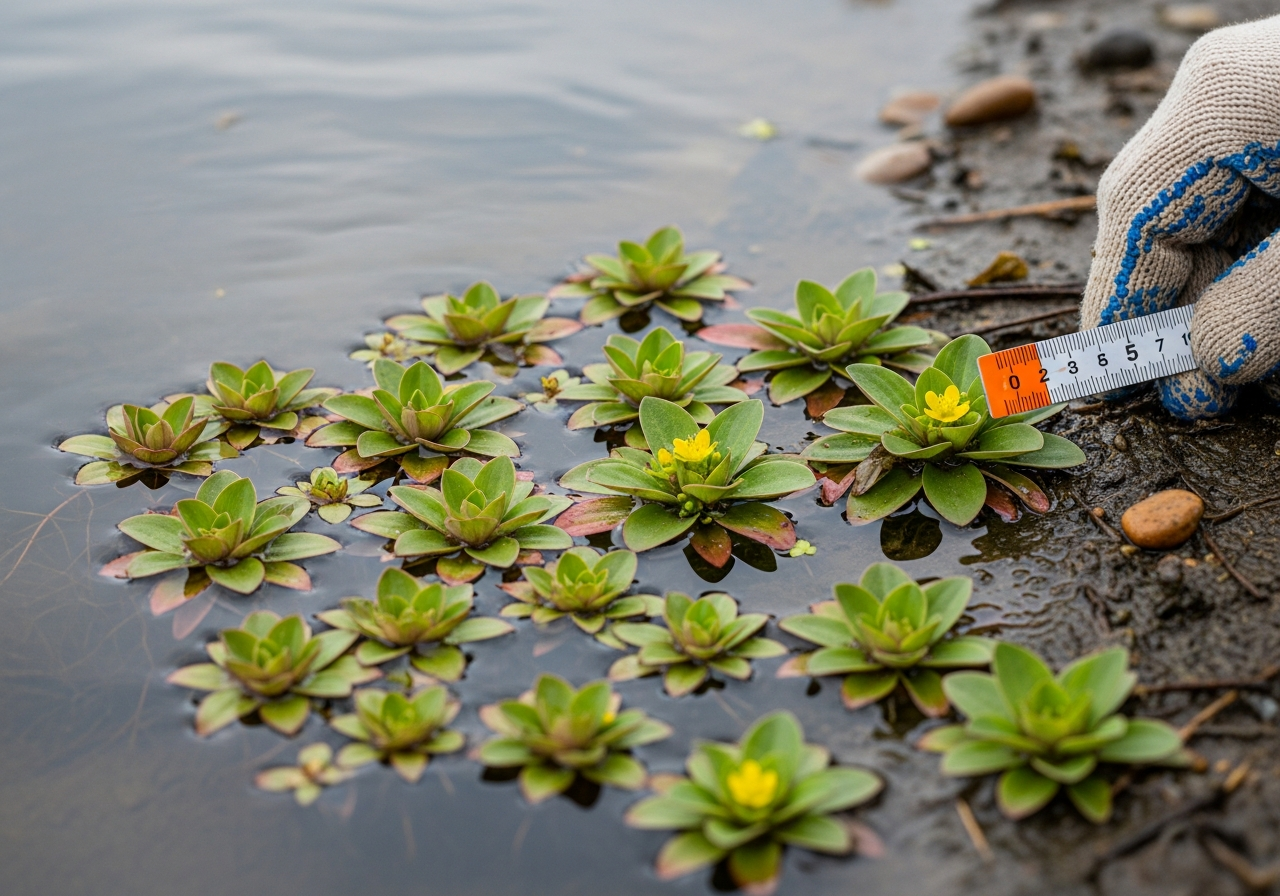
Growth resumes in spring when soil and water temperatures exceed approximately 12–15°C. In mild-winter regions, overwintered basal shoots may have been growing slowly through winter and resume rapid growth in early spring. In colder regions, new shoots emerge from root crowns surviving in the sediment or at the waterline.
Spring growth has fresh bright-green leaves arranged alternately on elongating stems. Pneumatophores become visible at nodes as stems reach the water surface. At this stage, the plant's growth rate accelerates rapidly — stems may elongate 5–15 cm per day in warm, nutrient-rich water. This is the optimal time for early detection surveys and for initiating treatment of small new populations before they expand. The cost of early spring treatment is a fraction of summer mat management costs.
Summer: June–August
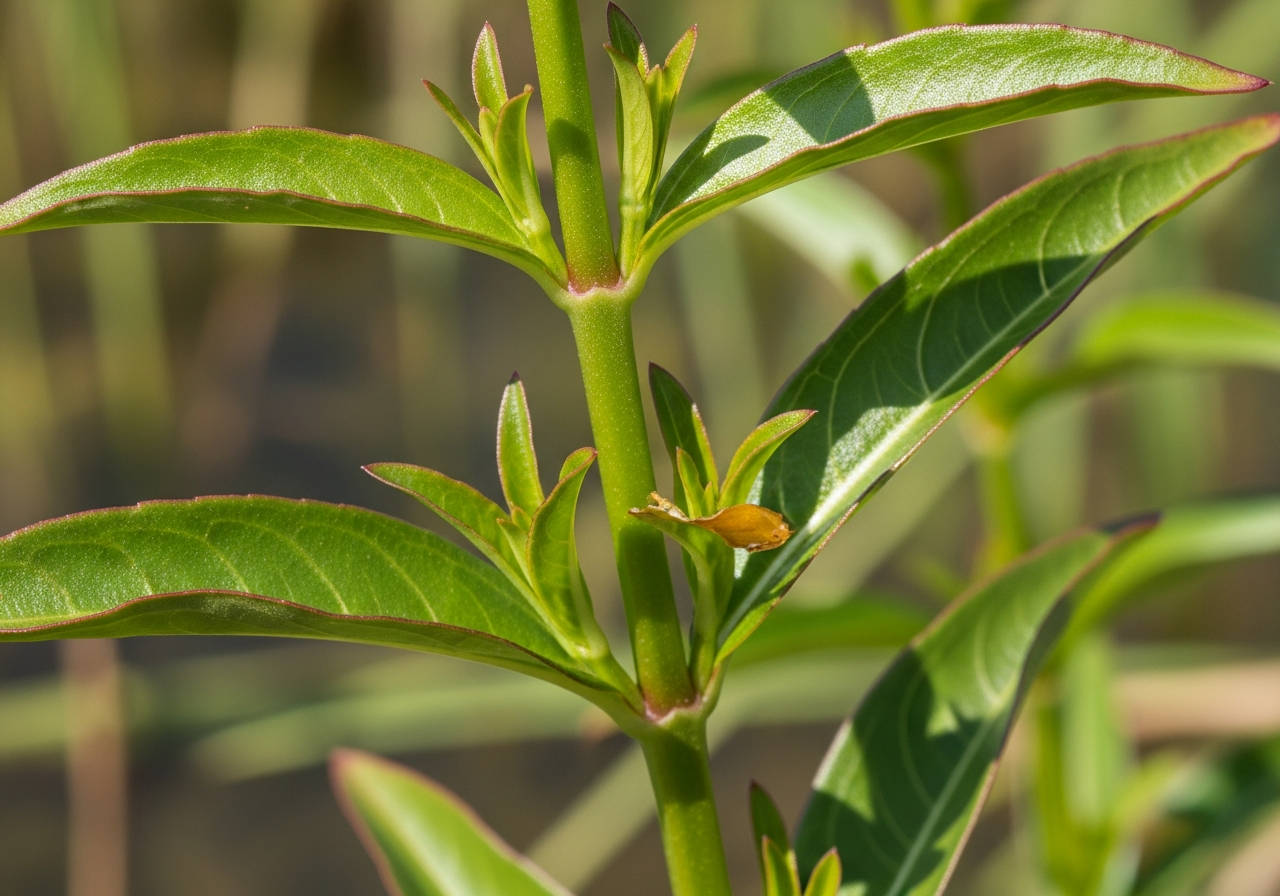
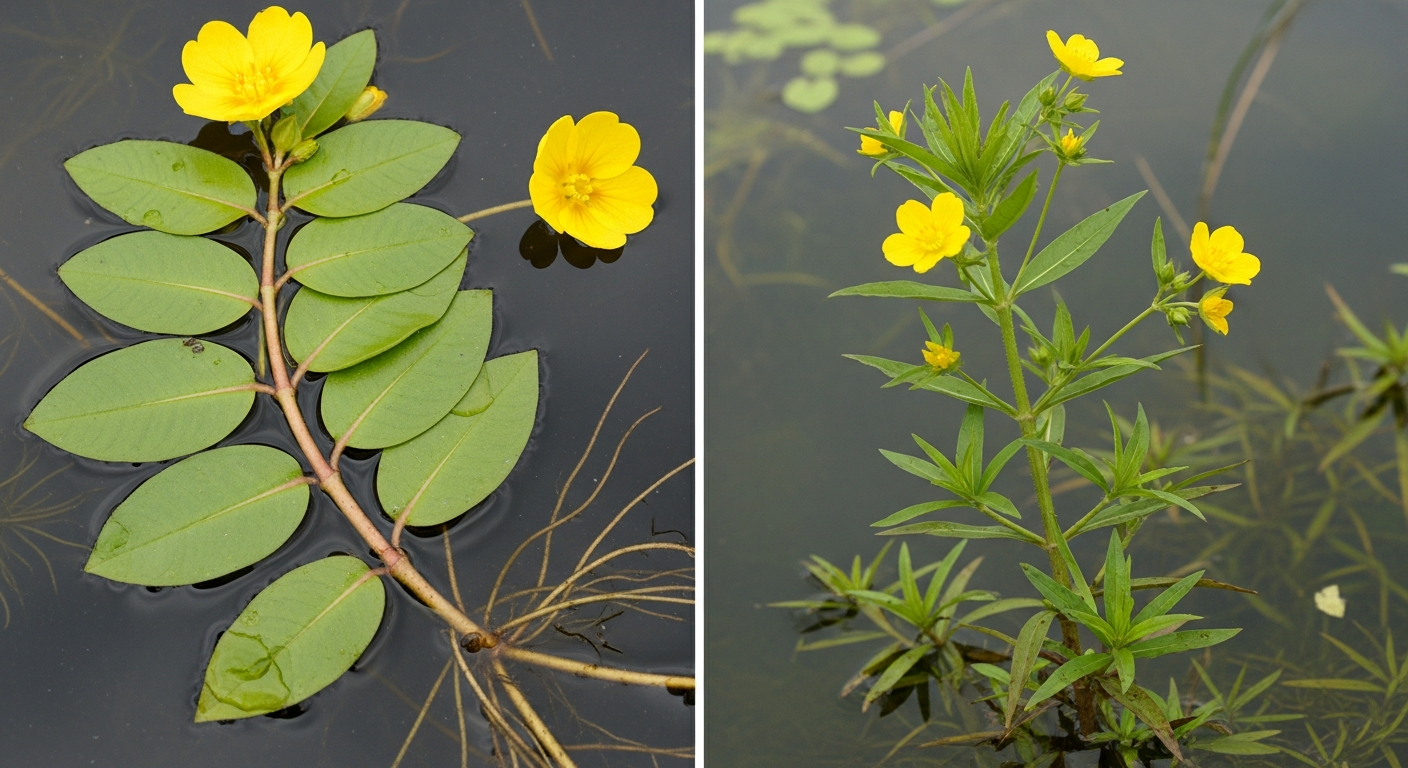
Summer is the period of maximum growth, biomass accumulation, and most importantly, flowering. From June onwards in temperate North America and Europe, the first flowers open. By July–August, mature infestations are covered with dozens to hundreds of bright yellow 5-petaled flowers visible from considerable distance. This is the most reliable and easiest season for identification — the flowers provide definitive confirmation of species identity. Stems have reached 1–3 m in length, and mats may cover hundreds of square meters.
Summer is also the time when new infestations become large enough to be noticed by the public — and when reporting of new occurrences peaks. Mapping surveys using drone aerial photography are highly effective in summer due to the high visual contrast of the yellow flower mass against surrounding vegetation. Herbicide treatment in summer is effective but requires careful timing relative to flowering and seed set to minimize seed dispersal from treated mats. See Best Herbicides for Ludwigia for treatment timing guidance.
Autumn: September–November
Growth slows as temperatures fall and day length shortens, typically beginning in September in temperate regions. Flowering continues into autumn in warm years. Leaves gradually take on reddish-bronze hues before yellowing and dying. Seed capsules mature and begin to dehisce — an important dispersal event as seeds are released into the water column for downstream transport. Mats progressively flatten as structural support is lost. The reddish-brown coloration of a dying mat is distinctive and identifiable from aerial surveys. Autumn is an important management window in some programs — post-summer treatment can reduce viable seed production and overwintering root crown biomass, improving outcomes the following year. See our Integrated Management guide for multi-season treatment strategies.
Winter: December–February
In regions with frost (USDA zones 7 and below), all aerial growth of L. peploides dies after the first significant frost. The water surface may be covered with brown, matted dead stems — which can retain buoyancy and continue to disperse seeds and plant fragments through winter water flows. Overwintering root crowns survive in the sediment or at the waterline, often buried under several centimeters of mud. These root crowns have substantial carbohydrate reserves and produce vigorous regrowth when temperatures rise in spring.
In zones 8–12 (coastal California, Florida, Gulf Coast, much of the Mediterranean), winter growth may continue at reduced rates with basal foliage remaining green. In these regions, winter surveys using eDNA sampling are valuable for monitoring treated sites and detecting surviving root crowns. For year-round monitoring of treatment sites, see our Post-Management Restoration guide.
Seasonal Survey Planning Tips
For maximum detection sensitivity, combine spring mapping surveys (to catch early new growth) with summer aerial surveys (to capture peak biomass and flowering), and autumn follow-up monitoring of treated sites. Winter eDNA sampling extends detection capability through the dormant season. High-risk areas — water body inflows, recreational access points, water garden outfalls — should be surveyed multiple times per year. Recording GPS coordinates and photographing every suspected occurrence with date and location enables year-over-year comparison of spread and treatment efficacy. All confirmed new occurrences should be reported through official reporting channels immediately.
Conclusion
The seasonal biology of Ludwigia peploides creates predictable windows for detection, confirmation, and management. Summer offers the easiest identification conditions; spring offers the best early-intervention opportunity. Combining knowledge of seasonal phenology with systematic survey planning maximizes the likelihood of detecting new infestations early, when management is most effective and least costly.