Best Herbicides for Ludwigia peploides Control
A ranked comparison of imazapyr, glyphosate, triclopyr, and bispyribac-sodium — efficacy data, label restrictions, cost, and application best practices for aquatic Ludwigia management.
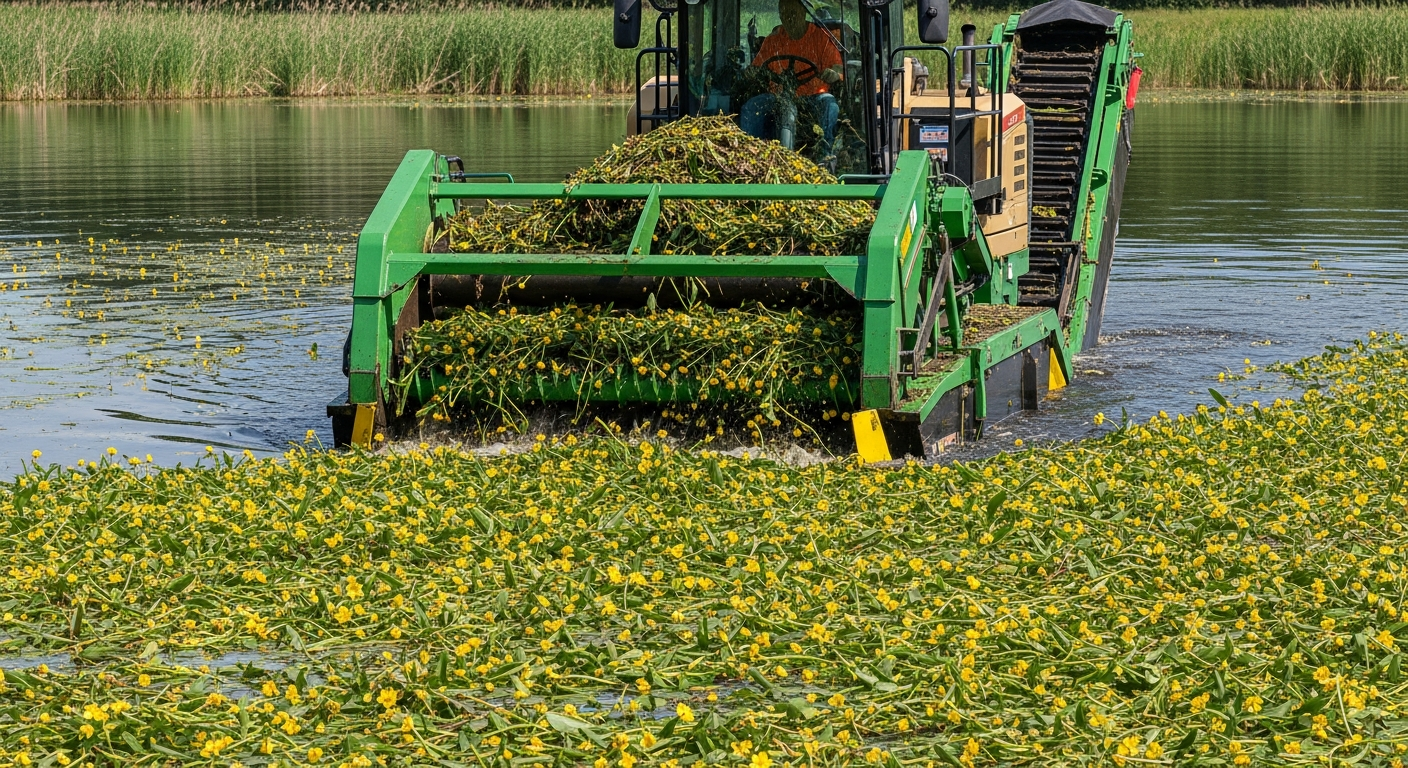
Herbicide treatment is the most cost-effective method for managing Ludwigia peploides at moderate to large scales in water bodies where chemical treatment is permitted. However, not all herbicides are equally effective, and the choice of product significantly affects treatment outcomes. This article compares the four herbicides most commonly used against Ludwigia peploides. For permit requirements, see Permit Requirements for Aquatic Herbicide Treatment. For pricing, see Herbicide Treatment Pricing.
Imazapyr (Habitat, Arsenal Powerline)
Imazapyr is widely considered the most effective single herbicide for Ludwigia peploides management in aquatic settings. It is a systemic, foliar-applied herbicide in the imidazolinone chemical family that inhibits acetolactate synthase (ALS) enzyme — a key step in branched-chain amino acid synthesis essential for plant growth. Following foliar application, imazapyr is translocated throughout the plant including to the roots and rhizomes, providing far more thorough kill of root crowns than contact herbicides. Multiple field studies in California and France have documented 70–90% biomass reduction within 60 days of a single imazapyr application. Imazapyr has a significant soil residual — typically 1–3 growing seasons — which provides ongoing suppression of seed bank germination but can also affect non-target species at the water margin. It is effective across a wide temperature range and is approved for aquatic use in most US states and many EU member states (as Habitat, or under trade names in European markets). Product cost is $150–$300 per gallon; typical aquatic application rates produce product costs of $37–$300 per treated acre.
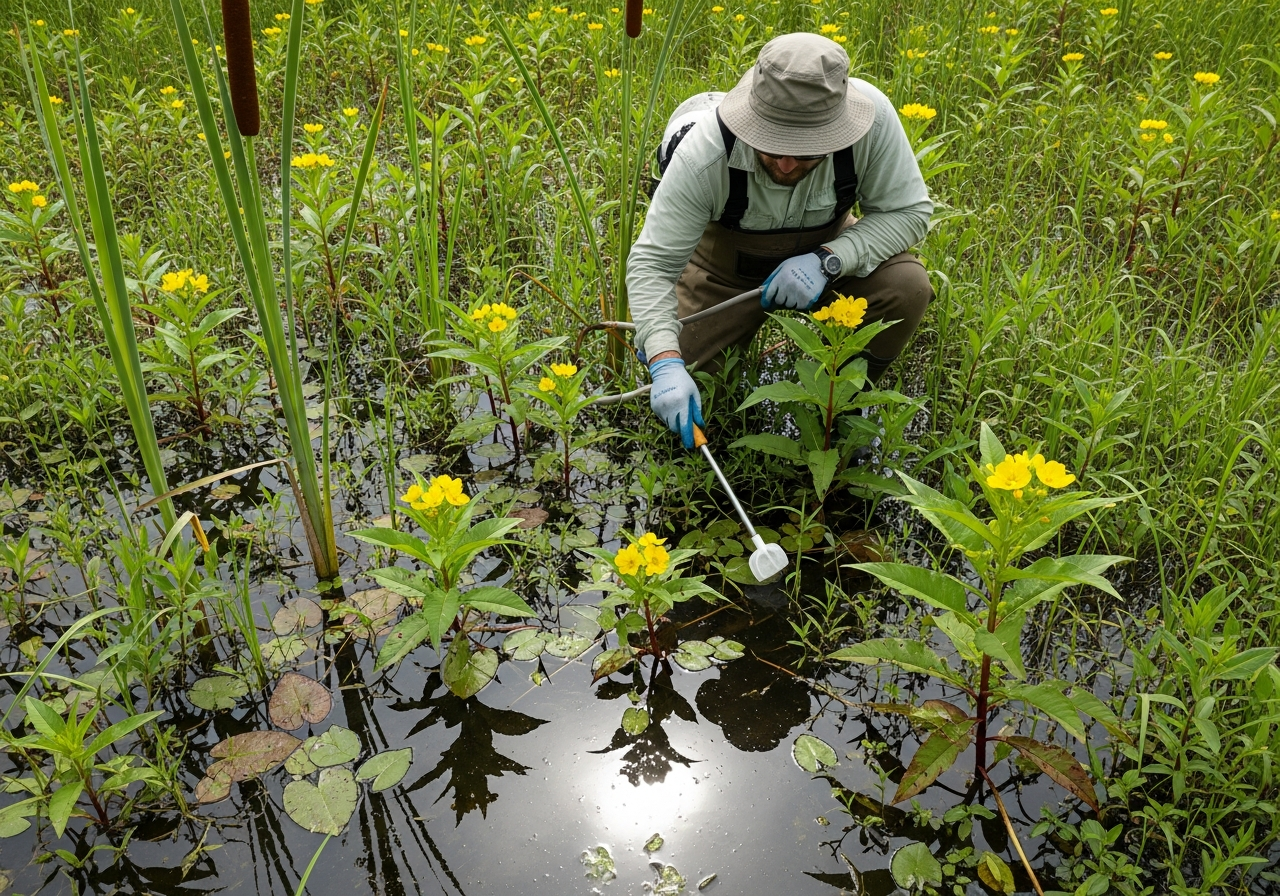
Glyphosate (Rodeo, AquaMaster, AquaNeat)
Aquatic-labeled glyphosate formulations are the most widely available and lowest-cost herbicides for Ludwigia management. Glyphosate inhibits EPSPS enzyme in the shikimate pathway, preventing aromatic amino acid synthesis. It is systemic but less thoroughly translocated to roots than imazapyr, resulting in good above-ground kill but more variable root crown control — typically requiring more repeat applications to achieve the same level of root suppression. Key advantages: glyphosate has no soil residual (rapidly metabolized by soil microbes), is non-selective, and has a well-established aquatic toxicology profile when used with approved surfactants. Key disadvantages: requires approved aquatic surfactants (not standard terrestrial surfactants); may require 2 applications per season for complete foliar kill; less effective at root crown elimination. Product cost: $50–$120 per gallon; product cost per acre $25–$180 depending on application rate.
Triclopyr (Renovate OTF, Garlon 3A)
Triclopyr is a synthetic auxin herbicide selective for broadleaf plants — meaning it kills Ludwigia while being less harmful to native grasses and sedges growing in the same area. This selectivity makes it valuable in sites where maintaining native emergent vegetation is a management priority. It is systemic and provides good translocation to roots at high enough application rates. Published efficacy data on Ludwigia shows that triclopyr requires higher application rates or more frequent applications than imazapyr to achieve comparable control. The aquatic formulation (Renovate OTF as a pelleted formulation, or Renovate 3 as a liquid) is approved for aquatic use with an extended aquatic label. Cost: $120–$250 per gallon; product cost per acre $80–$250. Triclopyr is preferred in some California Delta management zones where adjacent native tule (Schoenoplectus acutus) marshes must be protected.
Bispyribac-Sodium (Rated, Velocity)
Bispyribac-sodium is an ALS-inhibiting herbicide in the pyrimidyloxy benzoic acid chemical family, currently available as Rated (for aquatic use) in some US states. It has shown promising efficacy on Ludwigia peploides in research trials, particularly when applied during rapid vegetative growth in spring and early summer. Its selectivity profile (more effective on certain aquatic plants than others) and its different mode of action from imazapyr makes it potentially valuable as a rotation herbicide to manage resistance concerns in heavily treated sites. However, it is not yet as widely approved or field-tested as imazapyr and glyphosate for Ludwigia management and should be considered a supplementary option pending more complete efficacy data from operational programs.
Application Best Practices
For all herbicides, best results are achieved by: (1) applying during active growth (spring through midsummer) when the plant is translocating sugars to roots, facilitating herbicide movement to root crowns; (2) applying before significant seed set (before late summer) to minimize seed bank replenishment from treated plants; (3) using appropriate water-volume spray volumes and adjuvants as specified on the aquatic label; (4) avoiding application before rain events that could wash herbicide off foliage; (5) using properly calibrated equipment to ensure accurate application rates. Never exceed label rates — higher rates do not improve efficacy and increase environmental and regulatory risk. See Integrated Management for how to combine herbicide treatment with mechanical and preventive approaches for maximum long-term effectiveness.
Conclusion
Imazapyr is the most effective single herbicide for systemic Ludwigia peploides control, particularly for root crown kill and persistent suppression. Glyphosate (aquatic-labeled) is the most cost-effective option when multiple applications are acceptable. Triclopyr offers valuable selectivity in sites with native vegetation to protect. Always ensure that the selected herbicide has a valid aquatic use label, that applicable permits are in place, and that a licensed applicator is conducting the treatment. For all the details on permit acquisition, see Permit Requirements for Aquatic Herbicide Treatment.