Manual Removal Techniques for Ludwigia peploides
Manual removal is the most precise and ecologically safe control method available, making it essential for small infestations, sensitive sites, and as a complement to other management approaches in larger invasions.
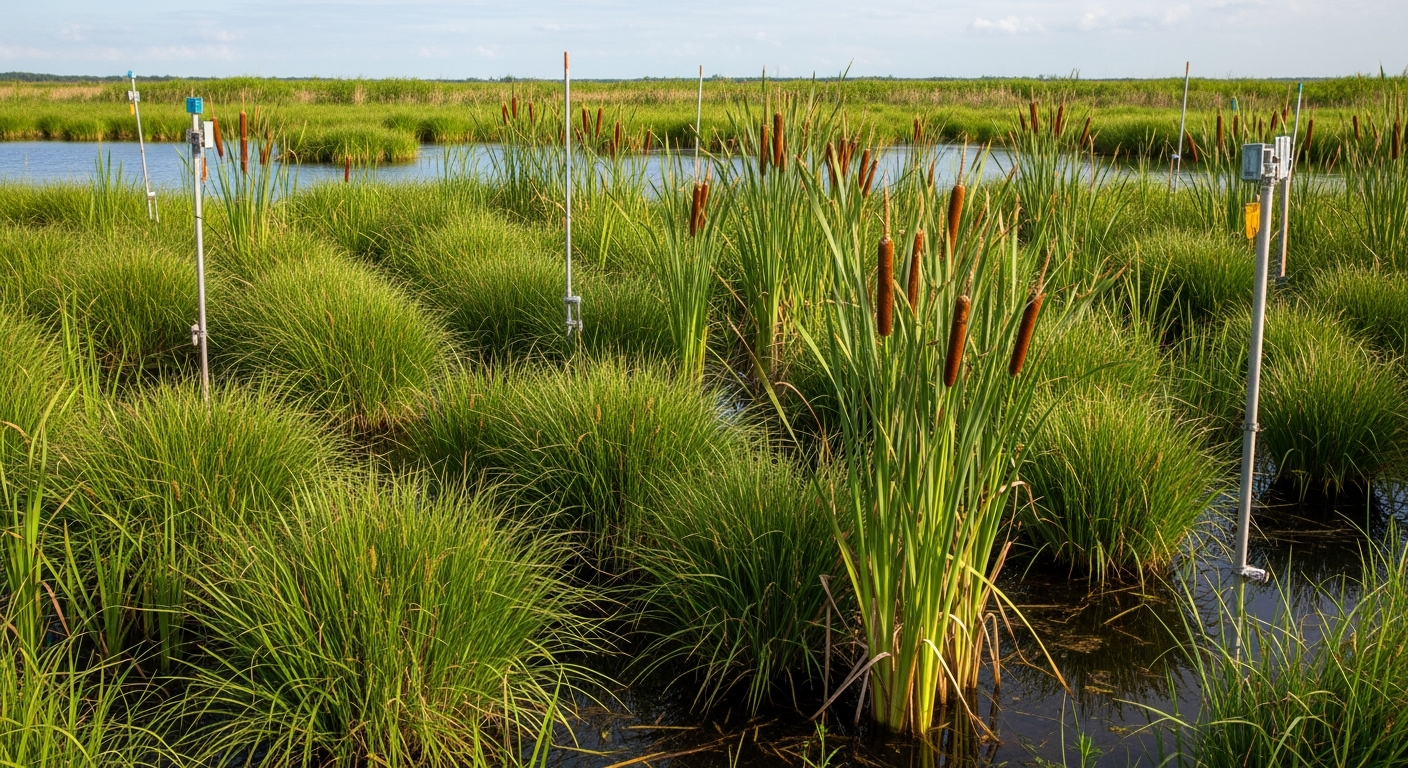
Manual removal — physically extracting Ludwigia peploides plants by hand-pulling, cutting, and root excavation — is the oldest and most fundamentally straightforward control approach available. In the context of modern invasive species management, it has been refined into a systematic practice with specific protocols for timing, technique, biosecurity, and disposal that determine its effectiveness. When implemented correctly, manual removal can eliminate small infestations and maintain managed areas free of the species, but it demands significant labour investment and sustained commitment over multiple years.
Hand-Pulling and Cutting Techniques
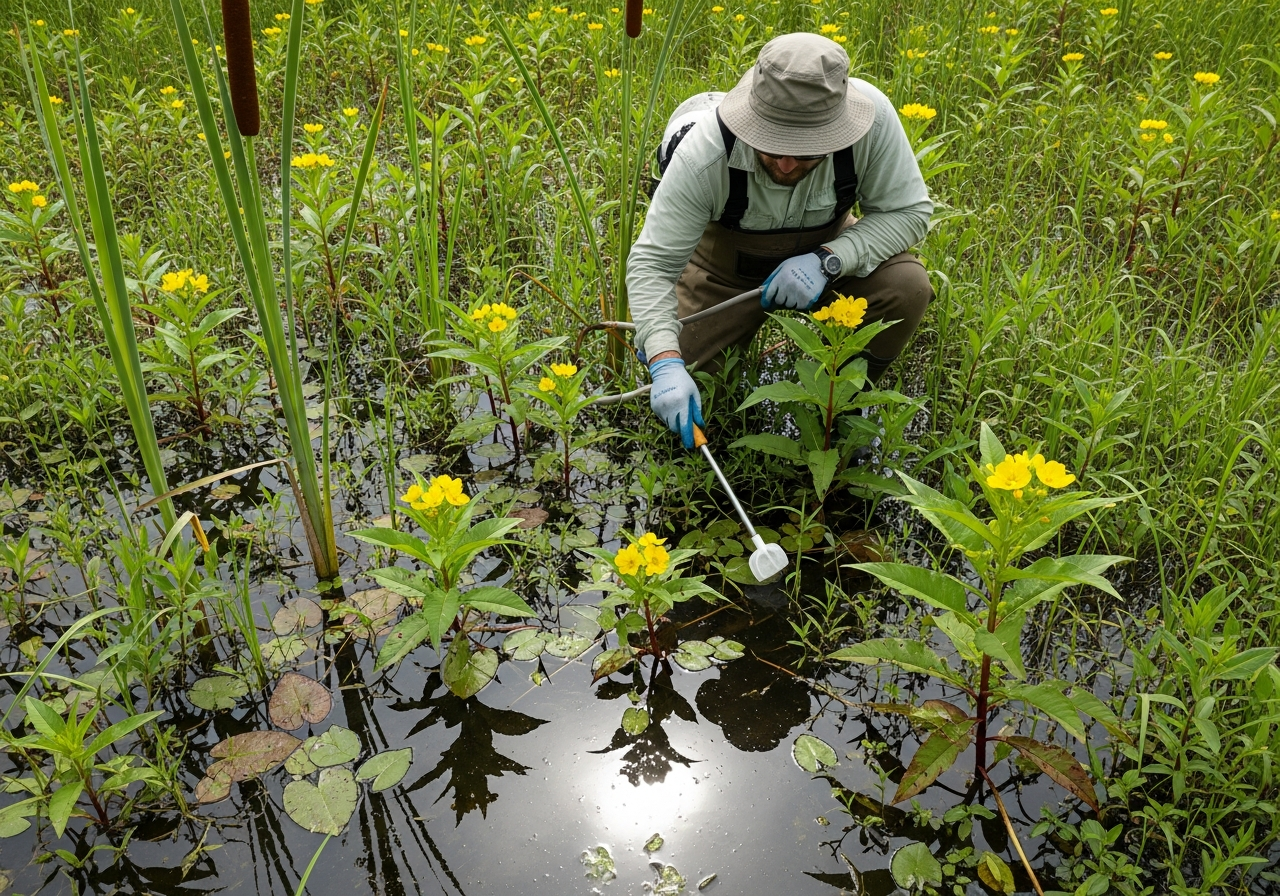
Effective hand-pulling requires grasping the stem as close to the sediment surface as possible and applying slow, steady upward traction to extract the root crown and rhizome with the stem. Jerking or snapping the stem is counterproductive — it breaks the stem at or above the root crown, leaving the most regeneration-capable tissue in the sediment. In shallow water less than 0.5 m deep, operators working from the bank or in waders can access roots directly. In deeper water, long-handled tools or working from small boats may be required, though root extraction becomes substantially more difficult at greater depths.
Cutting alone — without root removal — is not recommended as a standalone control method because regrowth from the intact root crown is rapid, often reaching pre-cutting biomass within 4–6 weeks. However, cutting of floating stem mats combined with immediate collection of cut material can be an effective preparatory step before root removal operations, reducing the volume of material that would otherwise impede access to the root zone. All cut material must be captured immediately — allowing cut stems to float downstream defeats the purpose of the operation and actively disperses propagules.
Biosecurity During Removal Operations
Biosecurity is arguably the most critical aspect of manual removal operations. The extraordinary regenerative capacity of L. peploides means that a single fragment — even a small section of internode — is sufficient to establish a new population. All operations must therefore be designed to prevent fragment dispersal within the water body and beyond the site boundary. Practical biosecurity measures include: working upstream to downstream to avoid pushing material into unworked areas; using fine-mesh nets or collection frames to capture floating fragments during operations; bagging all removed material in sealed heavy-duty plastic bags before transport; and maintaining strict equipment decontamination protocols between sites.
Plant Material Disposal
Removed L. peploides material requires careful disposal to prevent re-establishment. Composting in standard compost heaps is not recommended: the plant retains viability in compost conditions and can colonize the compost site itself. Disposal at licensed green waste processing facilities that achieve thermophilic composting temperatures (above 55°C throughout the pile) is acceptable if available. Landfill disposal in sealed bags is the safest option but may be limited by landfill acceptance criteria and costs. In some jurisdictions, burning of plant material is permitted under controlled conditions and provides effective kill of all propagules, but requires appropriate permits and must comply with air quality regulations.
Scaling Manual Operations
Manual removal is most cost-effective for small invasions (less than 0.1 ha) and for precision treatment in ecologically sensitive zones where other methods are constrained. As infestation size increases, labour demands escalate disproportionately: a 1 ha infestation may require 200–400 person-hours per operation. At this scale, manual removal is typically not cost-effective as the primary control method and should be combined with or supplemented by mechanical harvesting, herbicide treatment, or water level manipulation.
Successful scaling of manual operations in larger invasions involves systematic treatment planning — working in defined sections with clear boundaries, maintaining rigorous records of treated areas, and deploying standardized teams with clear task assignments. Community volunteer programs can supplement professional crews for large-scale operations, but require comprehensive briefing, appropriate supervision, and robust safety protocols.
Conclusion
Manual removal of Ludwigia peploides is an essential tool in the invasive species management toolkit — particularly for early intervention in small invasions, precision treatment in ecologically sensitive areas, and follow-up operations after primary control treatments. Its effectiveness depends critically on the quality of implementation: thorough root removal, rigorous biosecurity, appropriate disposal, and sustained repetition over multiple years. Investment in training, equipment, and operational planning is essential to transform manual removal from an ad-hoc response into an effective, systematic management programme.