Mechanical Control of Ludwigia peploides
Mechanical harvesting and excavation provide essential large-scale control capacity but must be implemented with rigorous biosecurity protocols to prevent fragment dispersal from turning management operations into inadvertent propagation events.
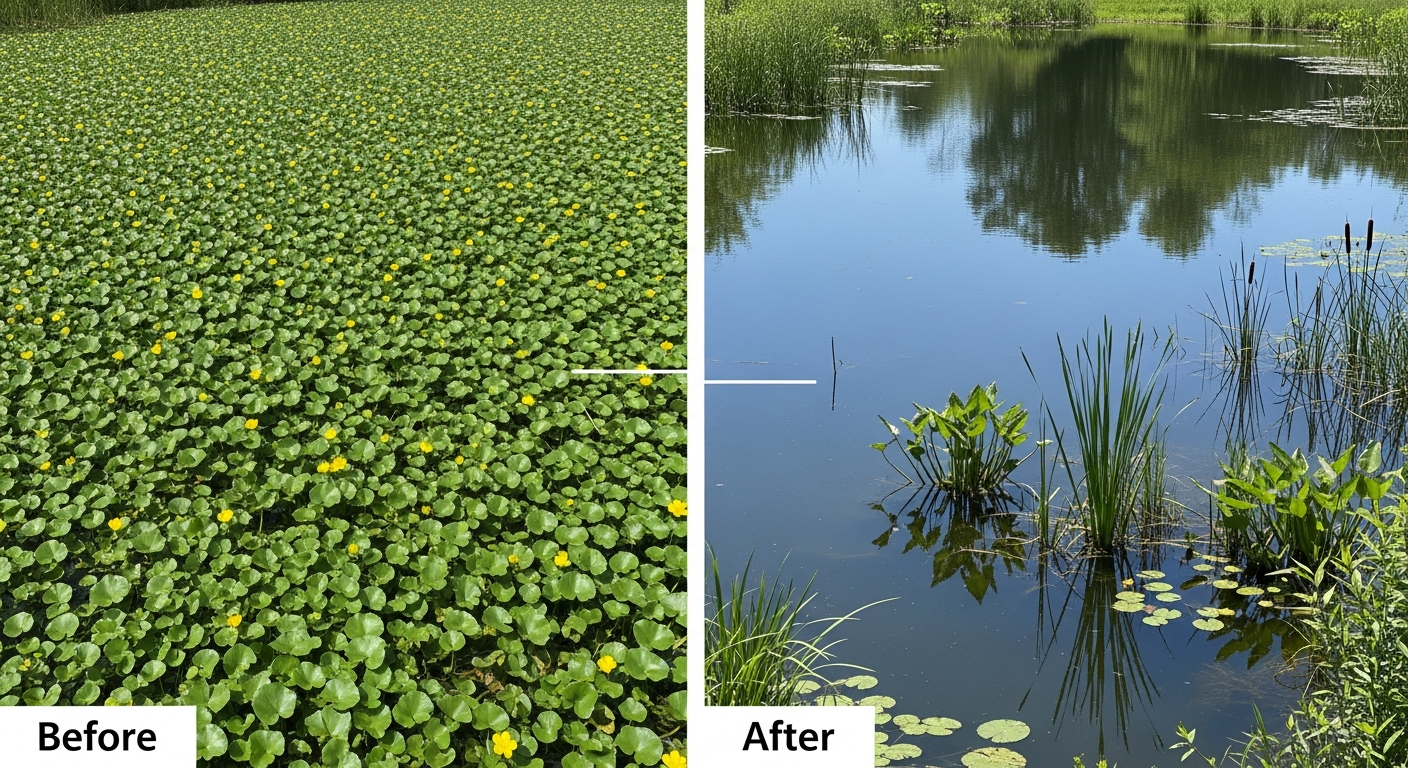
Mechanical control — using powered machinery to cut, harvest, excavate, or otherwise physically remove Ludwigia peploides biomass — occupies the critical middle ground between the precise but labour-intensive approach of manual removal and the chemically intensive approach of herbicide treatment. For large infestations in water bodies accessible to specialist equipment, mechanical operations provide the throughput necessary to make meaningful reductions in plant cover within single treatment events. However, the biological characteristics of L. peploides — particularly its capacity for regeneration from fragments — mean that mechanical operations must be implemented with particular care.
Aquatic Weed Harvesting Equipment
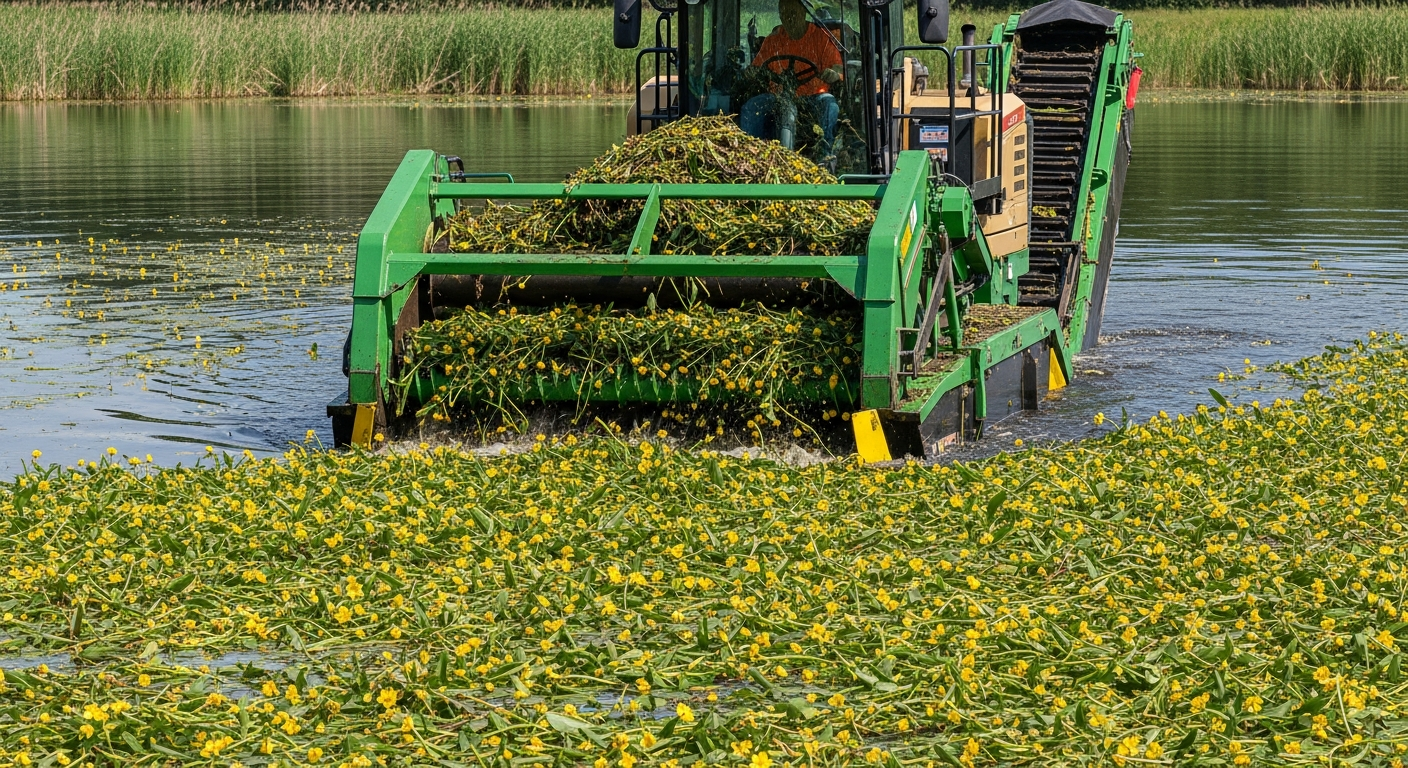
Aquatic weed harvesters are purpose-designed amphibious machines capable of cutting aquatic vegetation below the water surface and conveying the cut material to an on-board storage hopper for transport to shore. These machines are widely used for managing nuisance aquatic weeds in lakes, reservoirs, and slow-moving channels, and have been adapted for L. peploides management in French and other European management programs.
The primary limitation of weed harvesters for L. peploides control is depth of cut — most machines cut at 0.5–1.5 m below the water surface, which removes above-ground biomass and some shallow root material but leaves the majority of the root crown and deep rhizome system intact. Regrowth from these structures typically begins within 2–4 weeks of harvesting. Furthermore, the cutting process inevitably produces plant fragments — stem sections, leaf fragments, and small root pieces — some of which escape containment by the collection conveyor and are dispersed within the water body. Deployment of floating booms downstream of the working machine can contain much of this material, but complete containment of all fragments is not achievable with current technology.
Excavation of Root Systems
In shallow water (less than 0.5 m) and along banks, excavators equipped with modified buckets can excavate root crowns and rhizome masses from the sediment, achieving more thorough removal of the perennating tissue that drives regrowth. This approach is most effective in early spring before new growth has extended beyond the root crown area, and when water levels are lowered by drawdown or seasonal drought to expose and dry root material.
Excavated material must be carefully inspected and any plant fragments collected separately from soil. The excavated soil itself can contain viable fragments and should be handled with biosecurity protocols — either treated on site (drying, covering with impermeable membrane) or disposed of at a licensed facility. Reinstatement of excavated sites with clean soil and replanting with native species is essential to prevent the disturbed ground becoming re-colonized by L. peploides or other invasive opportunists.
Limitations of Mechanical Control
Despite their operational advantages, mechanical control methods face inherent limitations in achieving long-term population reduction. The root-to-shoot architecture of L. peploides means that above-ground removal without rhizome extraction achieves only temporary biomass reduction. Regrowth timelines of 4–8 weeks after harvesting operations mean that the biological impact of a single mechanical treatment is limited in duration, requiring repetition within the same season to prevent recovery to pre-treatment biomass levels.
Fragment dispersal risk is not solely a biosecurity concern — it also represents a direct mechanism for population expansion during management. Machine-generated fragments that escape collection can establish new patches downstream of the treatment site, potentially accelerating the invasion rather than containing it. Rigorous fragment containment protocols — including boom deployment, post-operation water column monitoring, and downstream surveillance — are non-negotiable components of responsibly implemented mechanical operations.
Integration with Other Methods
Mechanical control achieves its greatest effectiveness as part of an integrated management program. Early-season harvesting reduces biomass volume and plant competition, making subsequent manual operations or herbicide applications more effective. Late-summer herbicide treatment following early-summer harvesting can target the weakened root system during the rhizome translocation window. Water level manipulation to expose and desiccate root systems can follow mechanical removal of above-ground material. The combination of methods addresses different aspects of the plant's persistence strategy, creating a more comprehensive impact than any single method in isolation.
Conclusion
Mechanical control is an essential component of large-scale L. peploides management, providing throughput that manual methods cannot match and a non-chemical approach appreciated in settings where herbicide use is restricted. Its implementation must, however, be informed by a clear-eyed understanding of its limitations: regrowth from intact rhizomes, fragment dispersal risk, and high equipment costs mean that mechanical control is rarely sufficient as a standalone approach. When integrated into a comprehensive management program with appropriate follow-up treatments and rigorous biosecurity, mechanical operations can make substantial contributions to achieving management objectives at landscape scale.