Ludwigia peploides vs Native Aquatic Plants
Side-by-side morphological comparisons of Ludwigia peploides with the native species most likely to be confused with it — preventing misidentification that can lead to unnecessary treatment or missed infestations.
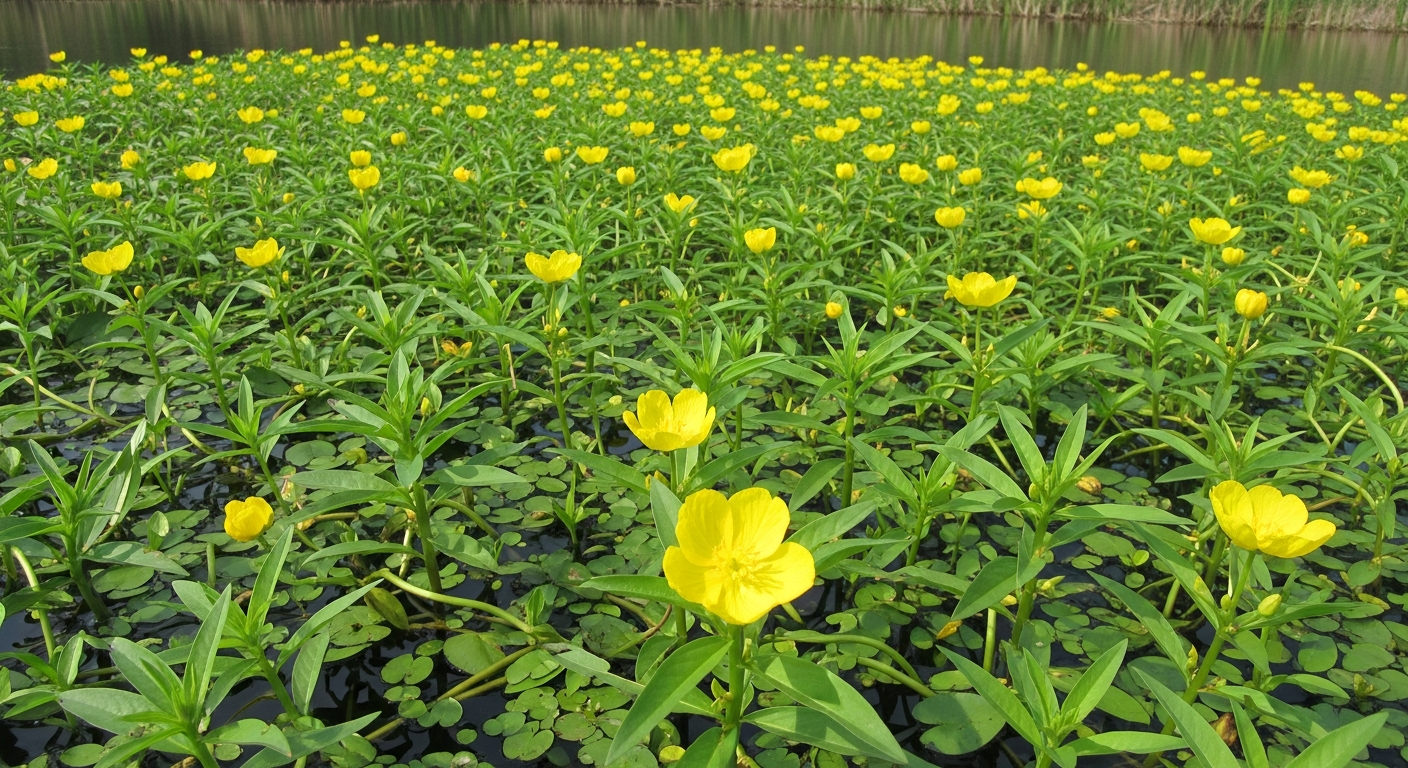
Misidentification of Ludwigia peploides causes two serious problems: treating native plants unnecessarily, damaging non-target species and wasting resources; or worse, allowing a genuine infestation to go unrecognized and untreated during the critical window when early intervention is most cost-effective. This guide provides detailed, feature-by-feature comparisons of L. peploides against the native species most commonly confused with it in North America and Europe. For a complete field identification guide, see How to Identify Creeping Water Primrose.
Native Ludwigia Species in North America
North America hosts approximately 27 native Ludwigia species, several of which share aquatic or semi-aquatic habitats with L. peploides. The most frequently confused are L. palustris (Water Purslane), L. alternifolia (Seedbox), and L. repens. None of these native species form the large, dense floating mats characteristic of L. peploides, and all have significantly smaller flowers or no flowers visible to the naked eye.
vs Ludwigia palustris (Water Purslane)
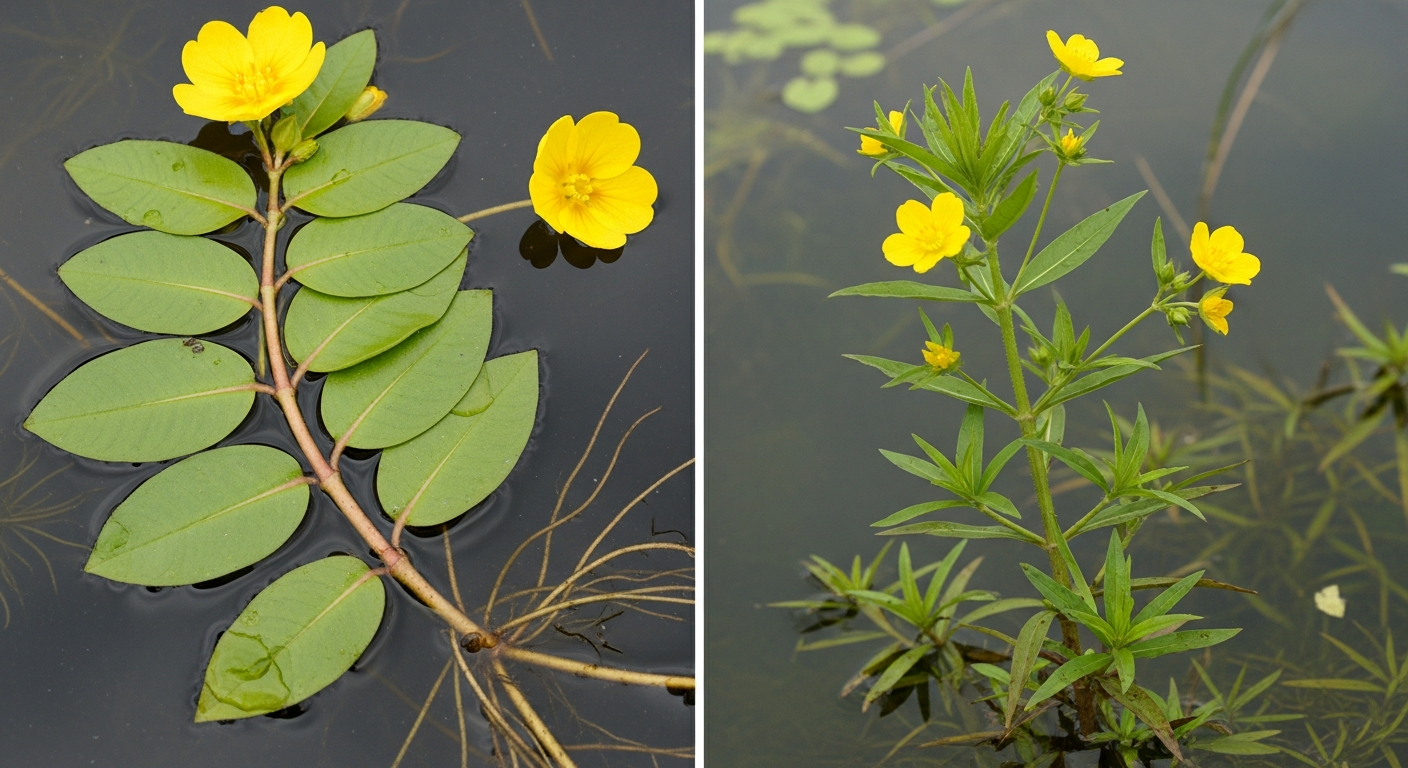
Ludwigia palustris is perhaps the most commonly confused native species. Both grow in shallow water and wet margins and share the genus. However, the differences are clear once known. L. palustris has opposite (not alternate) leaves, flowers with 4 petals (sometimes absent) that are tiny (1–3 mm), and no pneumatophores at stem nodes. Plants are generally much smaller in stature and do not form dense floating mats. The overall growth form is a low-growing, creeping plant 10–40 cm long, compared to the 1–3 m stems of L. peploides. Color can also distinguish them: L. palustris stems and leaf undersides are often reddish-purple, while L. peploides stems range from green to red depending on sun exposure.
vs Yellow Pond Lily (Nuphar lutea)
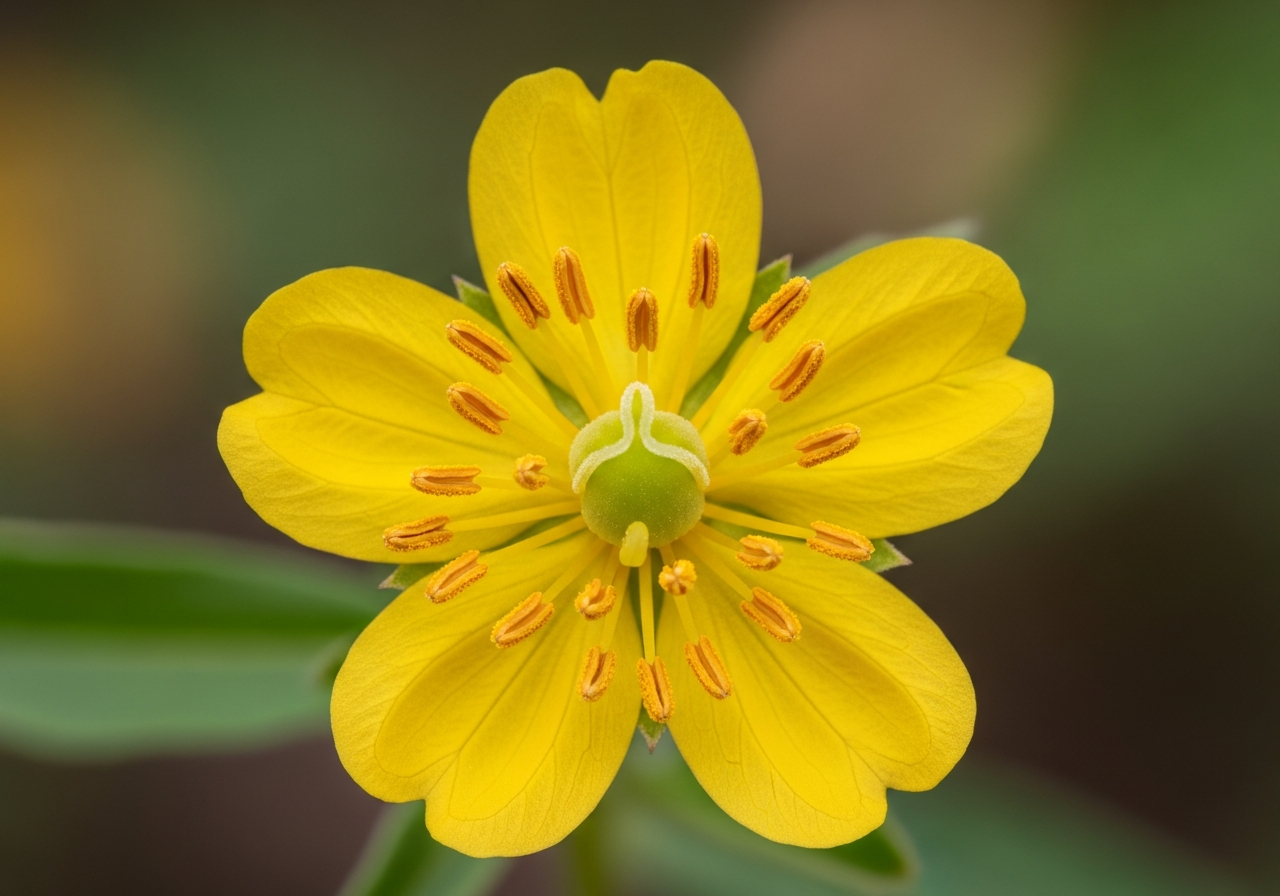
Yellow Pond Lily (Nuphar lutea) shares the large yellow flower and floating aquatic habitat with L. peploides but is immediately distinguishable on close examination. Nuphar leaves are large (20–40 cm across), heart-shaped, and float flat on the water surface from long petioles rooted in the sediment. Ludwigia leaves are much smaller (3–12 cm), alternate on creeping stems, and are oblong-elliptic rather than heart-shaped. Nuphar flowers are structurally very different — globe-shaped with many rounded yellow sepals (petals being much reduced internally), while Ludwigia flowers are open, flat, with 5 clearly separate obovate petals. The two species do not grow in the same manner and a second look at either reveals obvious differences.
vs Smartweeds and Knotweeds (Polygonum/Persicaria)
In the non-flowering vegetative state, some smartweeds growing in wetland margins can superficially resemble Ludwigia. Confusion is most likely with species like Persicaria amphibia (Amphibious Bistort), which also floats on water surfaces. However, smartweeds have swollen nodes covered by a papery sheath (the ocrea) — a completely distinctive character absent in all Ludwigia species. Smartweed flowers, when present, are pink, red, or white — never yellow. Looking for the ocrea (a membranous ring clasping the stem at each node) immediately rules out Ludwigia peploides.
Quick Comparison Table
| Feature | L. peploides | L. palustris | Nuphar lutea |
|---|---|---|---|
| Leaf arrangement | Alternate | Opposite | Basal from rhizome |
| Leaf shape | Oblong-elliptic | Oval | Heart-shaped |
| Flower petals | 5, large (4–6 cm) | 4, tiny (1–3 mm) | Many sepals, globe-shaped |
| Pneumatophores | Yes (distinctive) | No | No |
| Mat-forming | Yes, dense | No | No (single leaves) |
| Stem length | Up to 3 m | 10–40 cm | Petioles from sediment |
Conclusion
With careful attention to leaf arrangement, flower size and petal count, and the presence or absence of pneumatophores, Ludwigia peploides can be distinguished from all common native confusion species. When uncertain, the best approach is to observe the plant over multiple visits — the growth rate and mat-forming behavior of L. peploides will quickly become apparent — and to photograph all available features for expert review. When an infestation is confirmed, early action delivers the best results. See our management guides for Early Detection protocols and the cost of removal at different infestation stages.