Early Detection of Ludwigia peploides
Early detection of new L. peploides invasions is the most cost-effective investment in the entire management hierarchy — the smaller the population at detection, the lower the resources required for successful eradication.
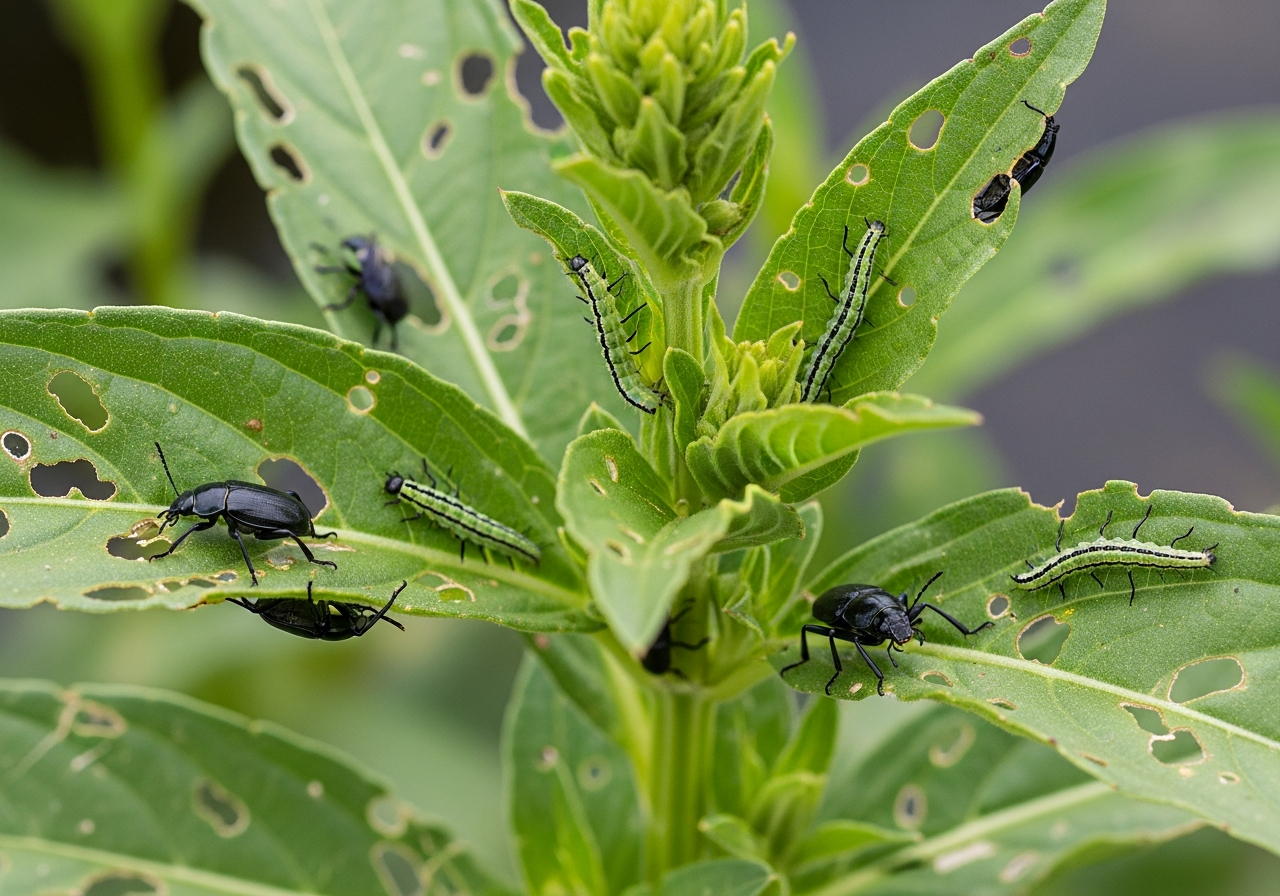
The management of invasive species is governed by a fundamental asymmetry: small, recently established populations are orders of magnitude easier and cheaper to eliminate than large, well-established ones. This simple reality makes early detection — the systematic identification of new invasions at the earliest possible stage — not merely valuable but foundational to any rational invasive species management strategy. For Ludwigia peploides, where a single plant can expand to cover hundreds of square meters within a growing season, the value of detection and response within the same season as establishment cannot be overstated.
Systematic Field Survey Methods
Standardized field survey methods form the backbone of early detection programs. Watercourse surveys — walking or boating along both banks of rivers, canals, and ditches and recording all L. peploides occurrences with GPS coordinates and population size estimates — provide the basic data for population mapping and trend analysis. Survey coverage should be prioritized based on invasion risk factors: proximity to known populations, water connectivity to established infestations, presence of recreational water users, and historical records of introductions through ornamental plant trade.
Systematic waterbody surveys for still water habitats (ponds, lakes, reservoirs) should cover the full shoreline perimeter and, where depth permits safe wading or boat access, survey transects into the water body. Sampling for the characteristic floating mat habit and pneumatophore roots — features visible from the bank with binoculars under favourable light conditions — can increase survey efficiency for large water bodies.
Remote Sensing and Drone Technology
Advances in drone technology and image analysis are transforming the efficiency of large-area L. peploides surveys. RGB (true colour) drone imagery captured during the flowering period (June–August) enables detection of yellow-flowered mats against the green background of other aquatic vegetation and the blue-green of open water. Classification algorithms applied to RGB imagery have demonstrated detection accuracies of 80–90% for patches larger than 1 m² under favourable conditions. Multispectral sensors that capture near-infrared reflectance improve discrimination of L. peploides from morphologically similar green emergent vegetation by exploiting its distinctive leaf-level spectral signature.
The combination of systematic drone survey coverage (enabling rapid screening of large areas) with targeted ground-truthing of detected anomalies (verifying identifications and estimating population size) provides a cost-effective hybrid survey protocol suitable for priority monitoring programs at catchment scale.
Environmental DNA Detection
Environmental DNA (eDNA) analysis — detecting genetic material shed by organisms into the surrounding water — represents a potentially transformative tool for very early detection of L. peploides populations before they reach sizes visible to conventional survey methods. Aquatic plants shed cellular material, pollen, and fragments into the water column continuously, and species-specific molecular markers can detect this material at very low concentrations using quantitative PCR or droplet digital PCR methods.
Proof-of-concept eDNA studies have successfully detected L. peploides in water samples from both controlled mesocosm conditions and field water bodies. However, translation to robust field protocols requires calibration of the relationship between eDNA signal strength and population size, understanding of how signal dispersal in flowing water affects upstream versus downstream detection probabilities, and validation of sensitivity and specificity across diverse field conditions.
Citizen Science and Public Reporting
Citizen science programs harness the observational capacity of the general public to extend survey coverage far beyond what professional monitoring programs can achieve. Platforms such as iNaturalist (global), iRecord (UK), and equivalent national biodiversity recording systems accept and verify public sightings of invasive species including L. peploides. Well-designed identification resources — field guides, species profiles, photograph-based identification keys — are essential to ensure that public records are reliable and contribute meaningfully to surveillance data.
Conclusion
Early detection of L. peploides is a biological race against time: the plant's rapid seasonal growth means that detection delays translate directly into increased management costs and reduced eradication probability. The optimal early detection system combines systematic professional surveys using traditional field methods and drone remote sensing, integrated citizen science reporting platforms with robust identification support, responsive data management systems that trigger rapid management response, and strategic prioritization of survey effort toward highest-risk water bodies. Investment in early detection is investment in management efficiency — every early detection averts years of expensive population management at established sites.