Cost to Remove Water Primrose: A Complete Pricing Guide
Comprehensive breakdown of Ludwigia peploides removal costs by method — manual, mechanical, and chemical — with per-acre and per-site pricing benchmarks to help plan your management budget.
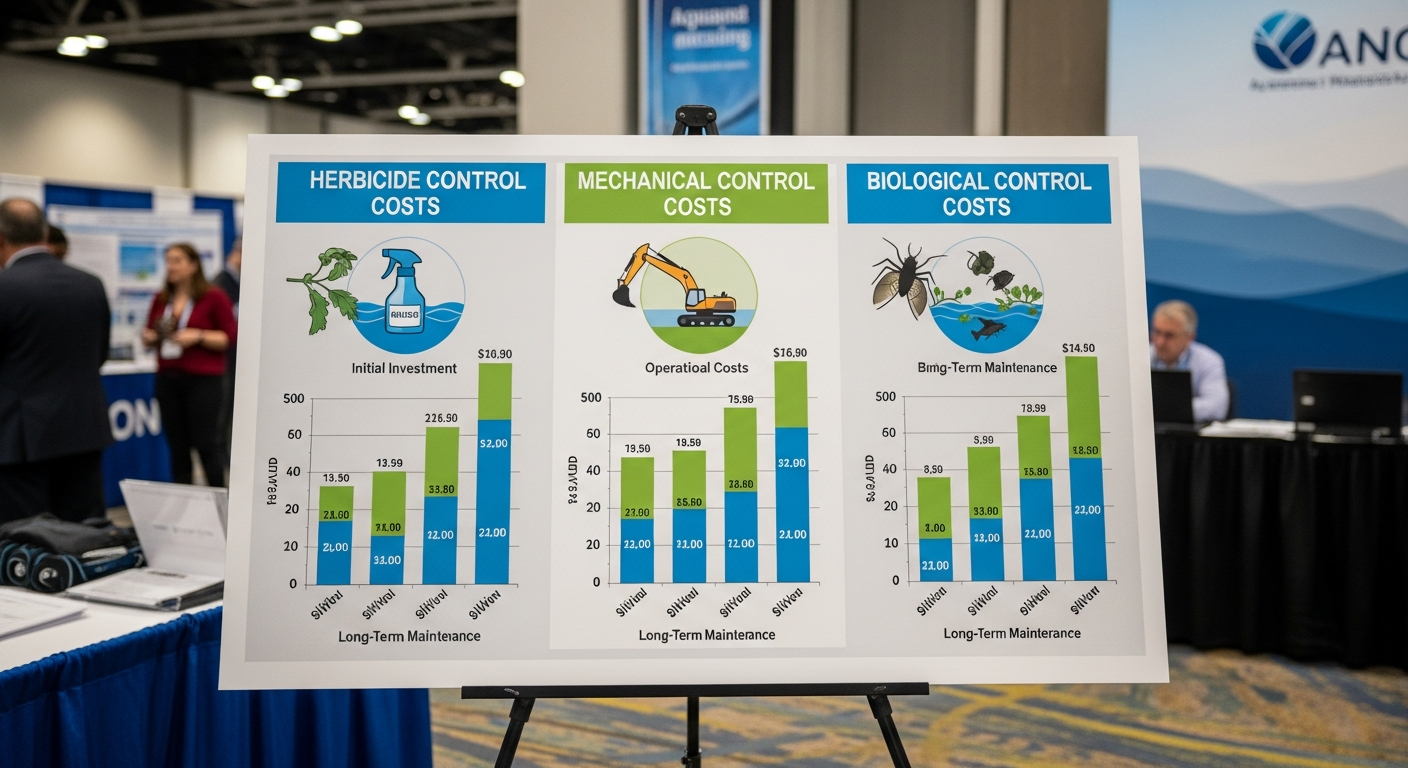
Removing Ludwigia peploides (Creeping Water Primrose) from ponds, lakes, canals, and rivers is a significant financial commitment — one that must be planned carefully to achieve lasting results without overspending on ineffective treatments. This guide provides the most comprehensive publicly available pricing data for Ludwigia removal, broken down by method, site type, and infestation size. For context on why early treatment is dramatically more cost-effective, see our Cost of Inaction analysis. For specific lake vs pond cost comparisons, see our Lake vs Pond Removal Costs article.
Key Factors Affecting Cost
Before providing specific numbers, it's important to understand the variables that cause costs to vary by an order of magnitude or more between sites:
- Infestation size: The most important cost driver. Small patches cost far less per unit area than large mats.
- Water body size and access: Small ponds with good road access are far less expensive to treat than large lakes or remote river systems requiring boat access.
- Treatment method: Herbicide, mechanical, manual, or combinations each have very different cost profiles.
- Permit requirements: Regulatory costs (permits, notifications, biological assessments) can add $500–$5,000+ to project costs.
- Post-treatment monitoring: Required by permits and good practice, adding ongoing costs.
- Location and contractor availability: Labor costs and contractor availability vary significantly by region.
Manual Removal Costs
Manual removal — hand-pulling, cutting, and root excavation — is the most labor-intensive method and therefore the most expensive per unit area at larger scales. However, it is the only viable method in some situations (near drinking water intakes, in culturally sensitive sites, in areas where herbicide and machinery access is impossible). Labor costs for professional manual removal run $35–$75 per hour in most US markets. For a heavily infested area, experienced crews can remove approximately 10–50 m² per hour (highly variable by stem density and water depth). At these rates, manual removal of a 0.5 acre (2,000 m²) infestation might require 40–200 person-hours of work, costing $1,400–$15,000 for labor alone. Equipment (waders, boats, hauling containers) and disposal add further costs. For volunteer programs that can reduce labor costs, see our Volunteer Removal Programs guide.
Mechanical Removal Costs
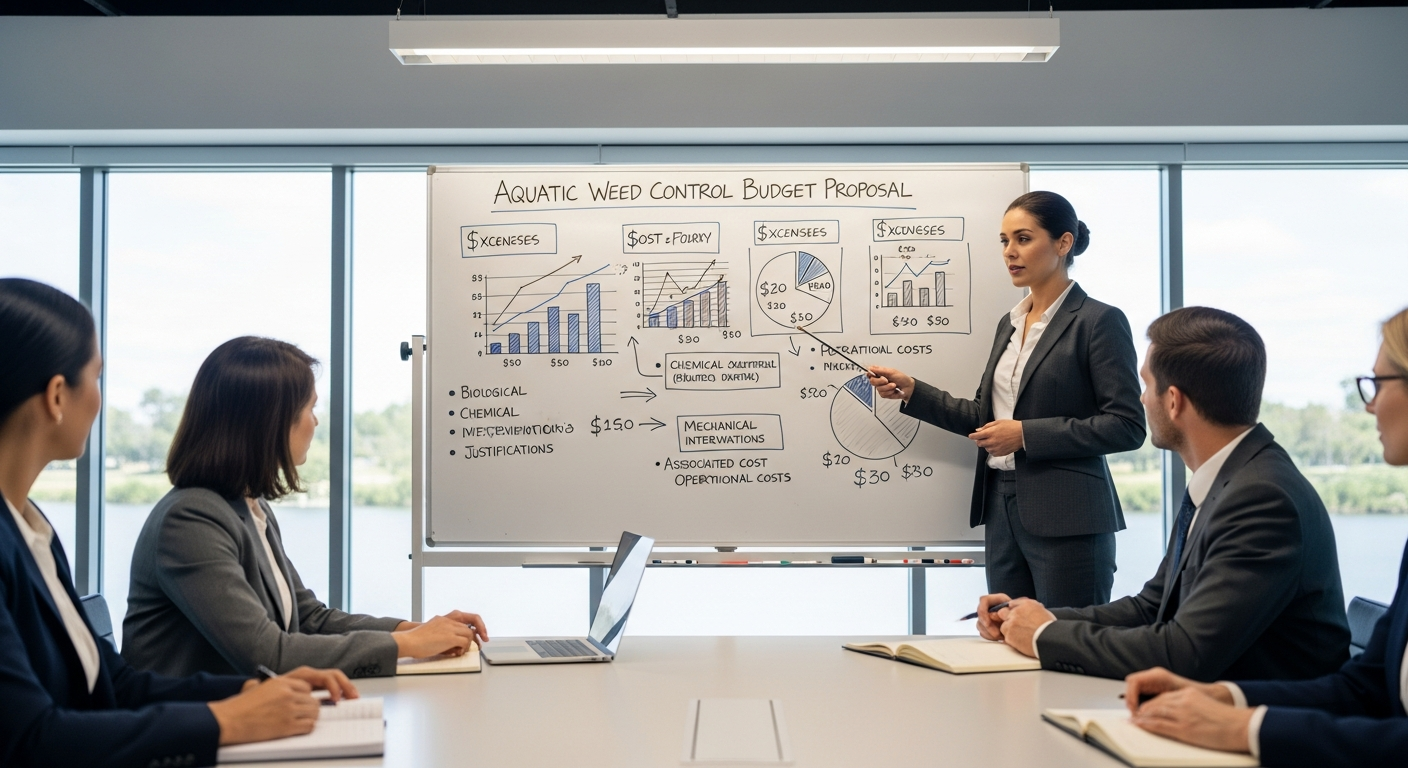
Mechanical harvesting — using aquatic weed harvesters, amphibious excavators, or suction dredges — is significantly more efficient than manual removal for large infestations in accessible water bodies. Equipment rental rates for aquatic weed harvesters run $800–$2,500 per day in most markets. Contractor rates for operated equipment typically run $1,500–$5,000 per day. A good aquatic weed harvester operated by an experienced crew can process 0.5–2 acres per day of surface mat. Debris disposal adds $100–$500 per ton of wet plant material. Fragment containment screening (required to prevent dispersal of fragments) adds equipment and labor costs. Total mechanical removal costs typically run $2,000–$8,000 per treated acre for a single treatment season — significantly higher per acre than herbicide but required in areas where chemical treatment is prohibited. See our Mechanical Removal Costs article for detailed equipment and contractor pricing.
Herbicide Treatment Costs
Herbicide treatment is generally the most cost-effective method per unit area for established infestations in water bodies where chemical treatment is permitted. The total herbicide treatment cost per acre depends on: product choice (imazapyr is typically $50–$200 per acre product cost; glyphosate is $20–$80 per acre), application method (boat application $150–$400 per acre including labor; aerial application $200–$600 per acre), and permit costs ($500–$3,000 depending on jurisdiction and complexity). Total herbicide treatment costs — including product, application labor, equipment, and permit costs — typically range from $800–$2,500 per acre for a single treatment. For detailed herbicide pricing breakdown, see our Herbicide Treatment Pricing article. For guidance on which herbicides to use, see Best Herbicides for Ludwigia.
Method Cost Comparison
| Method | Typical Cost/Acre | Best For |
|---|---|---|
| Manual removal | $1,000–$15,000 | Small patches, sensitive sites |
| Mechanical harvesting | $2,000–$8,000 | Medium-large infestations with boat access |
| Herbicide treatment | $800–$2,500 | Large infestations in permitted waters |
| Integrated (combined) | $1,500–$4,000 | Complex sites, maximum effectiveness |
Conclusion
The cost of removing Ludwigia peploides ranges from a few hundred dollars for a small, newly established infestation to millions of dollars annually for large established invasions. The single most important cost management decision is timing — early detection and rapid treatment when an infestation is small delivers dramatically better cost outcomes than waiting until an infestation matures into a large mat. Plan for multi-year treatment and monitoring, budget for permit costs and post-treatment surveys, and seek professional consultation before choosing a treatment method. For a full multi-year budget framework, see our Annual Control Budgets guide and Multi-Year Control Cost Planning article.