Multi-Year Control Cost Planning for Ludwigia peploides
Five- and ten-year management cost projections for Ludwigia peploides infestations — treatment cycle costs, seed bank depletion timelines, reinvasion monitoring, and restoration phases.
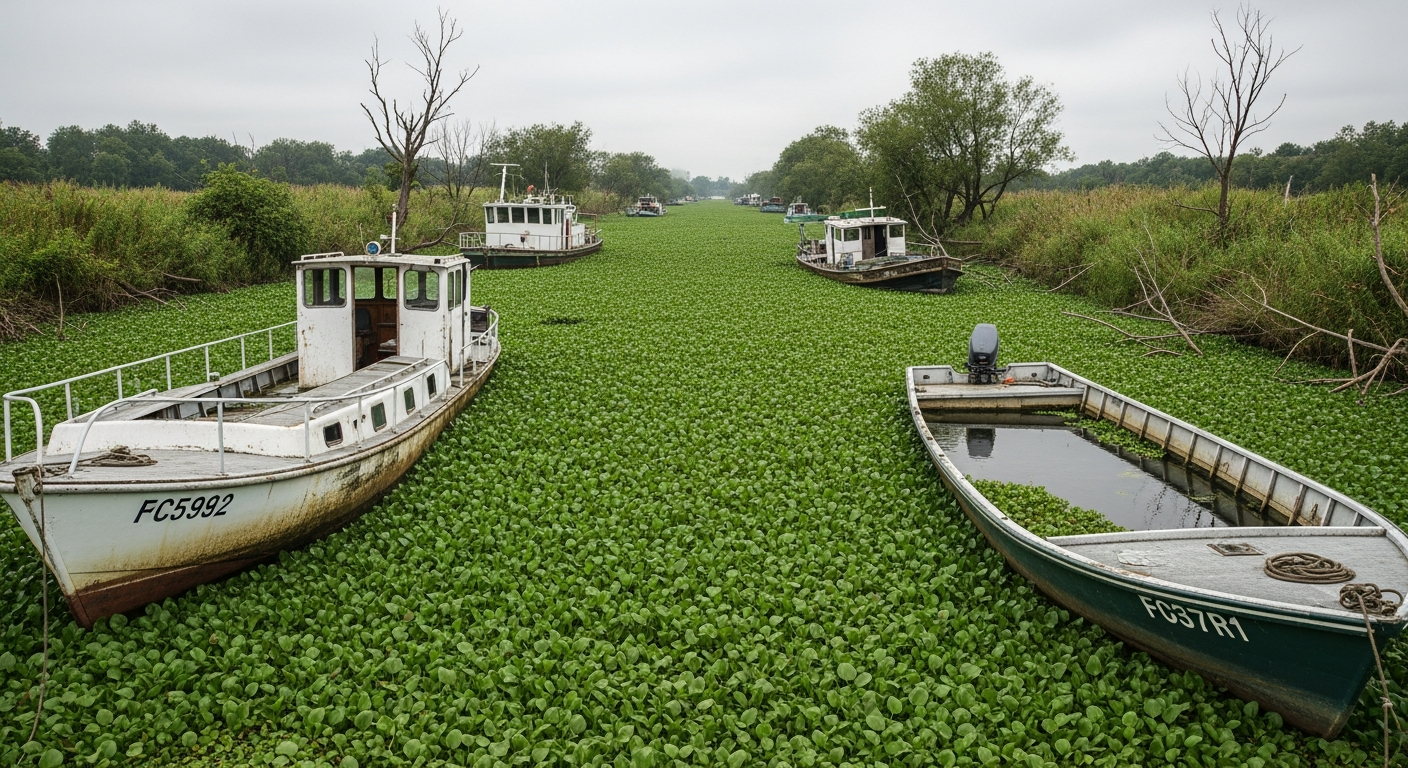
Understanding the multi-year cost trajectory of Ludwigia peploides management is essential for realistic budget planning and for making the economic case for sustained program funding. A single-year perspective dramatically underestimates total program costs and sets up programs to fail when follow-up funding is not secured. This article provides detailed multi-year cost frameworks for different infestation sizes. For annual budget breakdowns, see our Annual Control Budgets guide. For funding support, see Funding Programs for Control.
Why Multi-Year Programs Are Necessary
A single treatment of Ludwigia peploides — however effective — does not achieve lasting control for three biological reasons: (1) Seed bank persistence: Seeds deposited in the sediment remain viable for 3–7 years in most freshwater sediments. Even if every living plant is killed in Year 1, seeds germinate and produce new plants in subsequent years as light reaches the sediment surface through the gaps created by treatment. (2) Root crown survival: Subterranean root crowns often survive herbicide treatment or mechanical harvesting, regrowing vigorously the following spring. Complete root crown destruction requires either very effective systemic herbicide applications or excavation. (3) External reinfestation: For water bodies connected to other infested areas, propagules (fragments and seeds) arrive continuously from upstream sources, replenishing the population even when local plants are controlled. Multi-year programs must address all three sources simultaneously to achieve progressive population reduction.
Phase 1: Initial Treatment (Year 1)
The first year of a management program is almost always the most expensive, requiring: full infestation mapping and assessment; permit acquisition (including potentially complex ESA consultations for new treatment sites); first-year herbicide application or mechanical treatment at the full infestation extent; post-treatment monitoring (multiple surveys at 30, 60, 90 days and end of season); debris disposal for mechanical treatments; and baseline establishment for future comparison. Year 1 costs for a 1-acre established infestation typically run $5,000–$15,000 all-in. For a 5-acre infestation, Year 1 costs may reach $20,000–$60,000. The Year 1 investment is justified by the long-term cost reduction it initiates — but only if followed by Years 2 and beyond.
Phase 2: Suppression (Years 2–3)
In Years 2 and 3, the management goal shifts from treating the full infestation to suppressing regrowth from the seed bank and surviving roots. Treatment in these years targets the specific areas where regrowth is observed, rather than the full previous infestation area. Year 2 costs typically run 50–80% of Year 1 costs for isolated infestations — reduced by the smaller treatment area and by permit streamlining (annual renewals are typically less expensive than initial permits). By Year 3, regrowth areas are further reduced as the seed bank is progressively depleted, and costs may fall to 30–50% of Year 1. Monitoring remains essential in these years to identify all regrowth locations for targeted treatment. Missing areas in Years 2–3 allows sufficient seed production to restart the seed bank.
Phase 3: Maintenance (Years 4+)
For isolated infestations with effective Phase 1 and 2 treatment and no external reinfestation, Phase 3 maintenance costs can be 10–30% of Year 1 costs — consisting primarily of annual monitoring surveys and targeted spot treatment of any remaining seedling emergence. At this stage, the seed bank is largely depleted and root crowns are eliminated; new growth comes only from residual seeds or newly arrived propagules. Annual monitoring costs ($500–$3,000 per year depending on site size and survey requirements) should be maintained indefinitely for any site at risk of reinfestation. For sites with ongoing external reinfestation pressure (e.g., located downstream of a larger source population), Phase 3 costs may be higher — perhaps 30–50% of Year 1 — because new propagules must be treated each year.
Sample 5-Year Cost Projections
| Scenario | Year 1 | Year 2 | Year 3 | Year 4–5 | 5-Yr Total |
|---|---|---|---|---|---|
| Small pond (0.5 ac) | $3,000–$7,000 | $1,500–$4,000 | $800–$2,000 | $500–$1,500/yr | $7,300–$18,000 |
| Medium lake (3 ac) | $10,000–$25,000 | $6,000–$15,000 | $3,000–$8,000 | $1,500–$4,000/yr | $24,000–$60,000 |
| Large lake (10 ac) | $30,000–$80,000 | $18,000–$50,000 | $10,000–$30,000 | $5,000–$15,000/yr | $73,000–$190,000 |
Conclusion
Realistic multi-year budget planning is one of the most important success factors in Ludwigia peploides management. Programs that secure multi-year funding commitments before starting treatment achieve dramatically better outcomes than programs funded year-to-year, because the continuity of treatment through the critical seed bank depletion period (Years 2–4) is essential to the long-term cost reduction trajectory. Present these multi-year projections to funders, lake associations, and governing boards as part of your management plan — the case for sustained investment is compelling when the declining cost trajectory and the return on investment are clearly presented.