Annual Control Budgets for Ludwigia peploides Management
How to build a realistic annual management budget — accounting for treatment, monitoring, permits, and contingency across different site sizes and infestation levels.
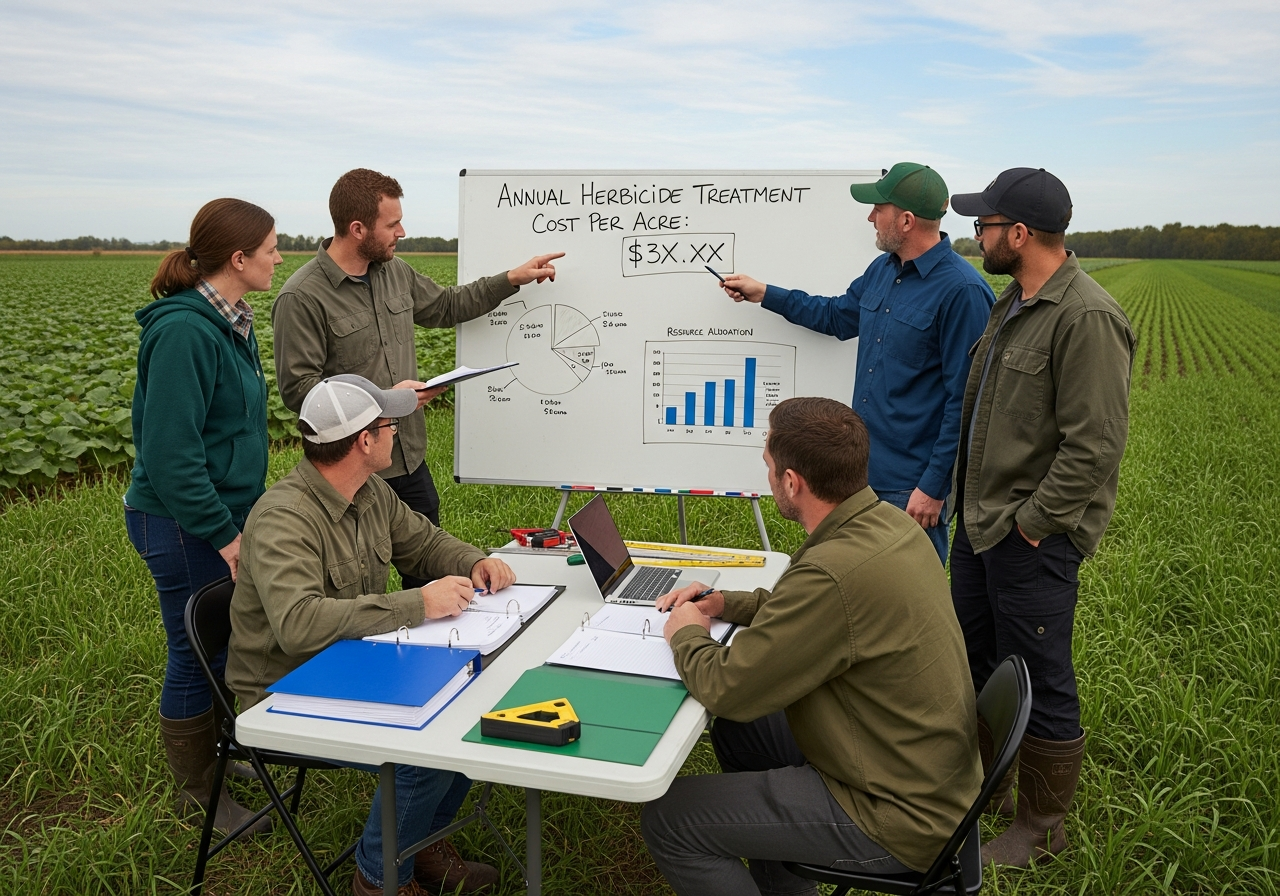
Successful Ludwigia peploides management requires sustained, multi-year investment — not a single emergency treatment followed by neglect. The organizations and landowners that achieve lasting control are those that build annual management budgets as part of a multi-year plan, including treatment, monitoring, regulatory compliance, and appropriate contingency. This article provides a framework for building annual budgets at different site sizes. For overall pricing benchmarks, see our Complete Pricing Guide and Multi-Year Control Cost Planning.
Annual Budget Components
Every annual Ludwigia management budget should include four categories:
- Treatment costs (40–60% of budget): Herbicide product cost; herbicide application labor and equipment; mechanical harvesting equipment and operators; debris disposal; fragment containment equipment.
- Monitoring costs (15–25% of budget): Pre-treatment infestation mapping; post-treatment efficacy surveys at 30, 60, and 90 days; end-of-season status assessment; GPS data processing and report preparation.
- Permit and administrative costs (10–20% of budget): Annual permit fees; license renewals; biological assessment for ESA compliance; regulatory reporting; consultant fees for permit preparation.
- Contingency (15–25% of budget): Reserve for unexpected regrowth requiring additional treatment; flood event response; equipment breakdown; regulatory changes requiring program modification.
Small Site Annual Budget (Pond under 2 acres)
Sample Budget: 1-acre pond, moderate infestation, herbicide treatment
- Herbicide product (imazapyr, 1 ac)$150–$400
- Licensed applicator labor (4–6 hrs)$300–$600
- Equipment (boat, sprayer, safety)$100–$300
- Pre-treatment mapping survey$200–$500
- Post-treatment monitoring (2 surveys)$200–$600
- Permit (state NOI or exemption)$100–$500
- Contingency (20%)$200–$500
- ANNUAL TOTAL$1,250–$3,400
Medium Site Annual Budget (Lake 2–10 acres)
Sample Budget: 5-acre lake, significant infestation, herbicide + spot mechanical
- Herbicide product (imazapyr, 5 ac)$750–$2,000
- Licensed applicator labor (2 days)$1,000–$2,500
- Spot mechanical removal (1 restricted area)$800–$2,000
- Pre-treatment GPS mapping survey$500–$1,500
- Post-treatment monitoring (3 surveys)$600–$2,000
- Aquatic pesticide permit$300–$1,500
- Contingency (20%)$800–$2,000
- ANNUAL TOTAL$4,750–$13,500
Large Site Annual Budget (Lake 20+ acres, or Canal system)
Large site programs require professional project management and often involve multiple contractors working under a coordinated plan. At 20+ acres of infested surface, annual treatment and monitoring budgets typically run $20,000–$150,000+. Key additional costs at this scale include: environmental consultant fees for ESA consultation and permit preparation ($2,000–$20,000); GIS mapping and aerial survey services ($1,000–$8,000); multi-day boat-based application campaigns; and stakeholder communication and reporting. For programs at this scale, consider applying for grant funding through federal and state programs. See our Funding Programs article for available sources.
Contingency Planning
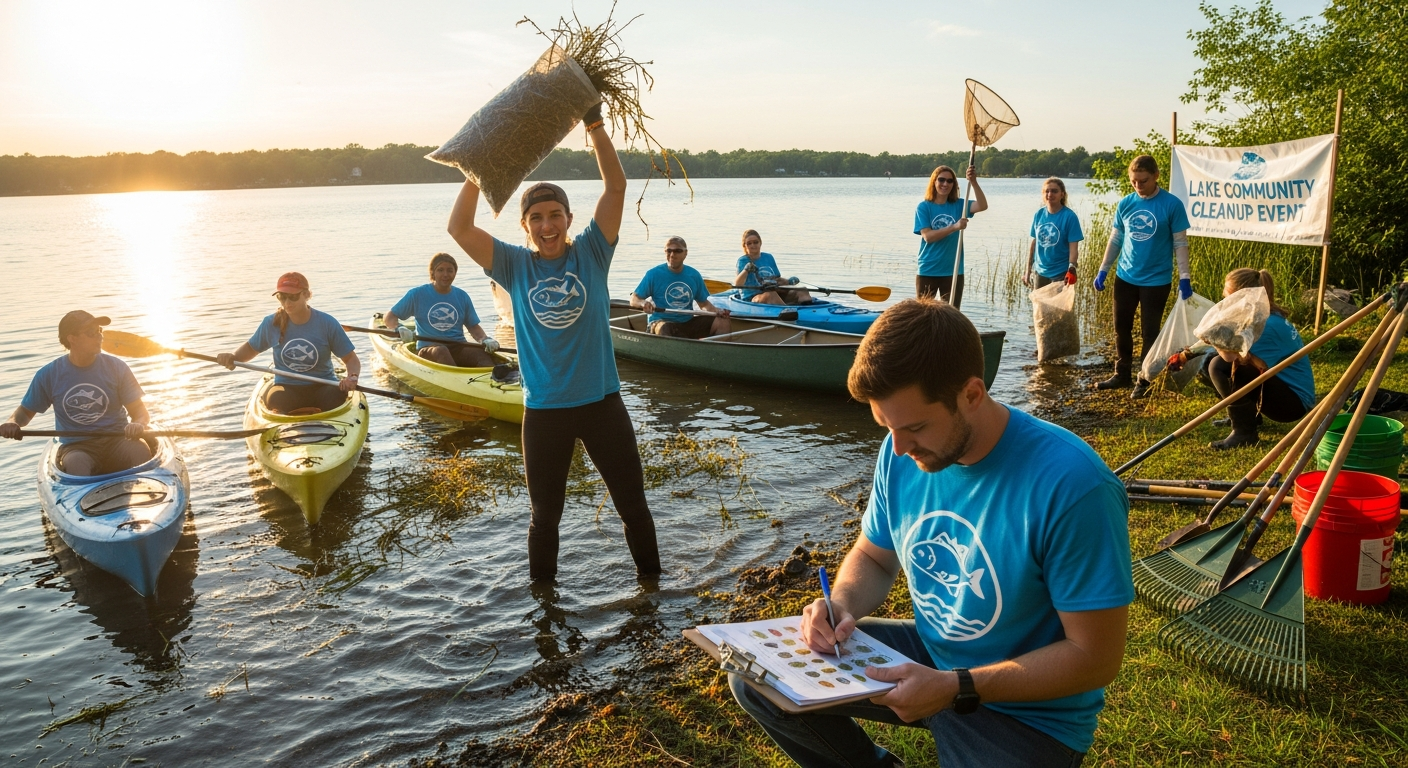
Budget contingency for aquatic invasive plant management should be set at 15–25% of the annual treatment budget. Common contingency scenarios include: unexpected regrowth requiring an additional treatment application within the same season; flood or storm events dispersing treated plant fragments and creating new hotspots; equipment failure requiring substitute contractors at short notice; regulatory changes affecting permitted methods mid-season; and discovery of previously unmapped infestation areas during monitoring surveys. A formal adaptive management review at the end of each season — comparing actual vs projected results — should feed directly into the following year's budget revision.
Conclusion
Realistic annual budget planning for Ludwigia peploides management requires accounting for all cost components — treatment, monitoring, permits, and contingency — and committing to multi-year programs that match the reality of Ludwigia's persistent biology. Sites that invest in adequate annual budgets and adaptive management achieve substantially better long-term outcomes than those that attempt to minimize costs through under-treatment. See our Return on Investment article to understand the economic benefits of sustained management investment.