Habitat Destruction Caused by Ludwigia peploides
From open-water littoral zones to tule marshes — how Ludwigia peploides converts diverse wetland habitats into monoculture floating mats, progressively degrading all ecological functions of the invaded system.
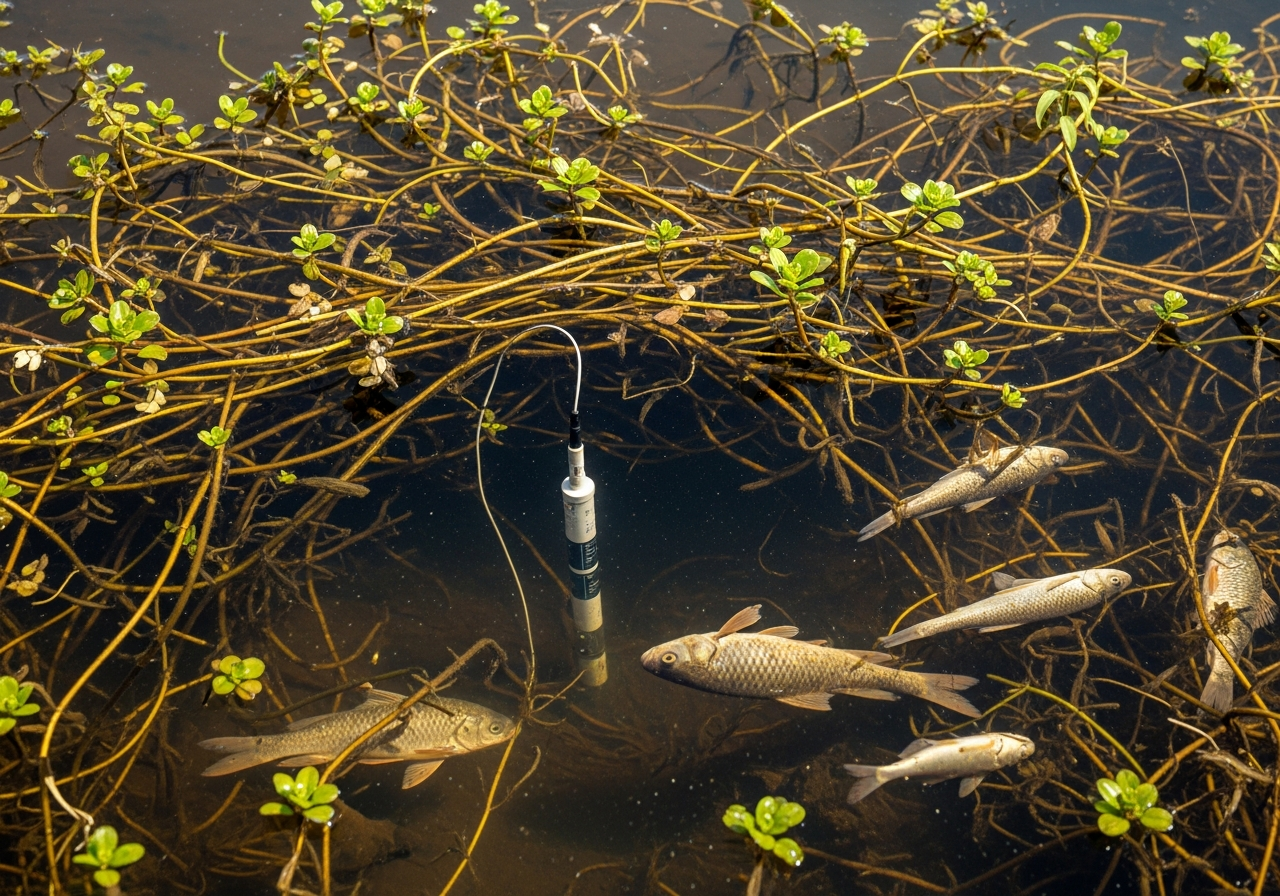
Ludwigia peploides does not simply reduce the quality of the habitats it invades — it fundamentally converts them into something structurally and functionally different. The displacement of diverse native aquatic communities by a Ludwigia monoculture eliminates the complex physical structure, chemical environment, and biological resources on which native fauna depend. This article examines the mechanisms and consequences of habitat destruction by Ludwigia peploides. For the oxygen-related dimension of habitat degradation, see Oxygen Depletion Effects. For fish community impacts, see Effects on Fish Populations.
Habitat Conversion to Monoculture
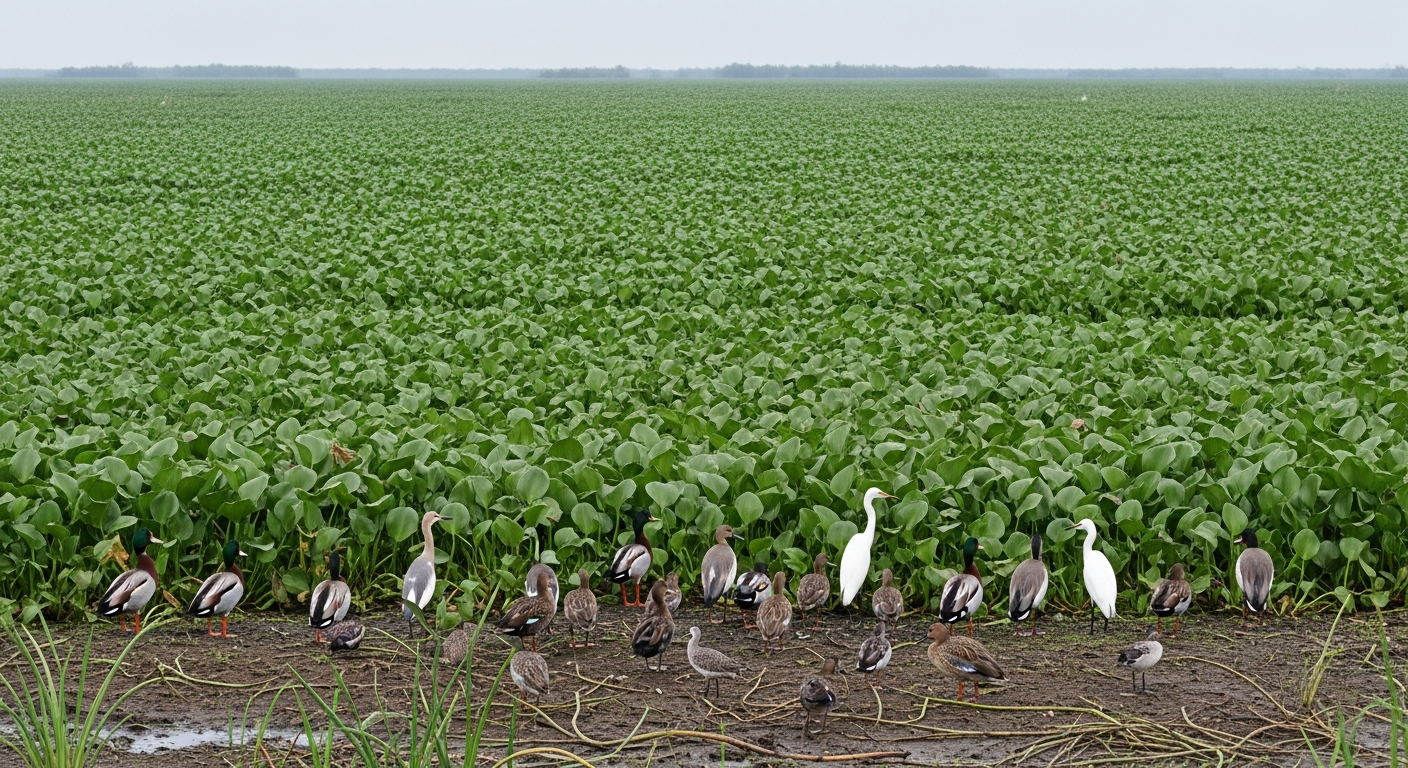
The most fundamental habitat impact of L. peploides is the conversion of structurally diverse native plant communities to a monoculture floating mat. In healthy littoral zones and freshwater wetlands, native vegetation includes a layered community: submerged plants (pondweeds, naiad, waterweed) providing below-surface structure; floating-leaf plants (water lilies, spatterdock) providing surface shade; emergent plants (tules, cattails, rushes) providing above-water structure; and shoreline transition species connecting water to land. Each structural layer provides distinct and irreplaceable habitat for different components of the aquatic fauna. The Ludwigia mat eliminates all of these layers — shading out submerged plants, physically displacing floating-leaf species, competitively suppressing emergent plants, and converting the entire available surface to a continuous, structurally monotonous floating mat. The result is a habitat that supports far fewer species in far lower abundance than the native community it replaces.
Light Exclusion and Submerged Vegetation Loss
Dense Ludwigia mats intercept 80–99% of incoming solar radiation — reducing light levels at the water surface beneath the mat to less than 1% of ambient in some measurements. Submerged aquatic plants — which require light for photosynthesis and are the base of submerged habitat structure — are eliminated from beneath established mats within 1–2 growing seasons. The loss of submerged vegetation has cascading effects: (1) loss of the oxygen produced by submerged plant photosynthesis; (2) loss of structural complexity (stems and leaves) that invertebrates, juvenile fish, and amphibians use for feeding, shelter, and reproduction; (3) loss of epiphytic algae (growing on plant surfaces) that form a critical food resource for grazing invertebrates and small fish; and (4) loss of the nutrient uptake capacity of submerged plant roots and leaves that prevents excess nutrient accumulation in the water column.
Sediment Modification
The sediment environment beneath Ludwigia mats is profoundly altered from pre-invasion conditions. The dense accumulation of decaying Ludwigia biomass — leaves, stems, roots — on and in the sediment creates a thick layer of organic material that: (1) raises the sediment surface, reducing effective water depth; (2) creates anoxic conditions in the upper sediment layers, transforming aerobic sediment communities to anaerobic ones; (3) releases phosphorus and other nutrients sequestered under aerobic conditions when sediments become anoxic, contributing to eutrophication; (4) eliminates the macroinvertebrate community that depends on aerobic sediment conditions. Published studies from France and California document significant sediment organic matter enrichment and phosphorus release in areas where Ludwigia mats have been established for two or more growing seasons. For detailed analysis of sediment effects, see Sediment and Nutrient Dynamics.
Terrestrialization
In very shallow water bodies (under 0.5–1 m deep) with long-established Ludwigia infestations, the organic matter accumulation beneath the mat can progressively raise the substrate surface toward and above the waterline. This "terrestrialization" — the conversion of aquatic habitat to emergent and ultimately terrestrial habitat — is the most permanent form of habitat destruction. Once sufficient organic matter has accumulated to raise the substrate above the normal water surface, Ludwigia's erect emergent shoots can grow without the buoyancy support of the floating mat, and the area begins to function as a terrestrial organic substrate on which other non-aquatic plants can establish. This is an irreversible ecological transformation on human timescales — the aquatic habitat is permanently lost. Terrestrialization processes are most advanced in isolated ponds, rice paddies, and other water bodies with minimal hydrological flushing.
Impact on Endangered and Sensitive Habitats
The habitats most vulnerable to Ludwigia peploides destruction often have the highest conservation value. In California's Sacramento-San Joaquin Delta, tule marsh (Schoenoplectus acutus and Typha spp.) — listed as a priority conservation habitat — is directly impacted by Ludwigia mat encroachment that shades the emergent margin zone where tule seedlings establish. In France's Marais Poitevin, Ludwigia invasion has reduced native aquatic plant diversity in Natura 2000 protected areas, directly threatening populations of rare macrophytes. Federally listed plant species in the genus Elatine, Eleocharis, and Gratiola that occupy the same shallow water margin habitats as Ludwigia are directly at risk of competitive displacement. The overlap between Ludwigia's preferred habitat and the most ecologically sensitive freshwater systems is not coincidental — both depend on the same warm, shallow, nutrient-enriched conditions that characterize productive freshwater ecosystems globally.
Conclusion
Habitat destruction by Ludwigia peploides operates at multiple scales and through multiple mechanisms — from the elimination of submerged vegetation by light exclusion, to the progressive terrestrialization of shallow water bodies. The conversion of diverse native wetland habitats to monoculture floating mats is the most visually obvious and ecologically significant consequence of Ludwigia invasion, and the one that most directly justifies the investment in prevention and management. Restoring habitat quality after management requires not just plant removal but also active recovery measures — described in our Post-Management Restoration guide.