Sediment and Nutrient Dynamics under Ludwigia peploides
The biogeochemical changes in sediment and nutrient cycling driven by L. peploides invasion create lasting water quality legacies that persist well beyond plant removal, requiring specific restoration strategies to address.
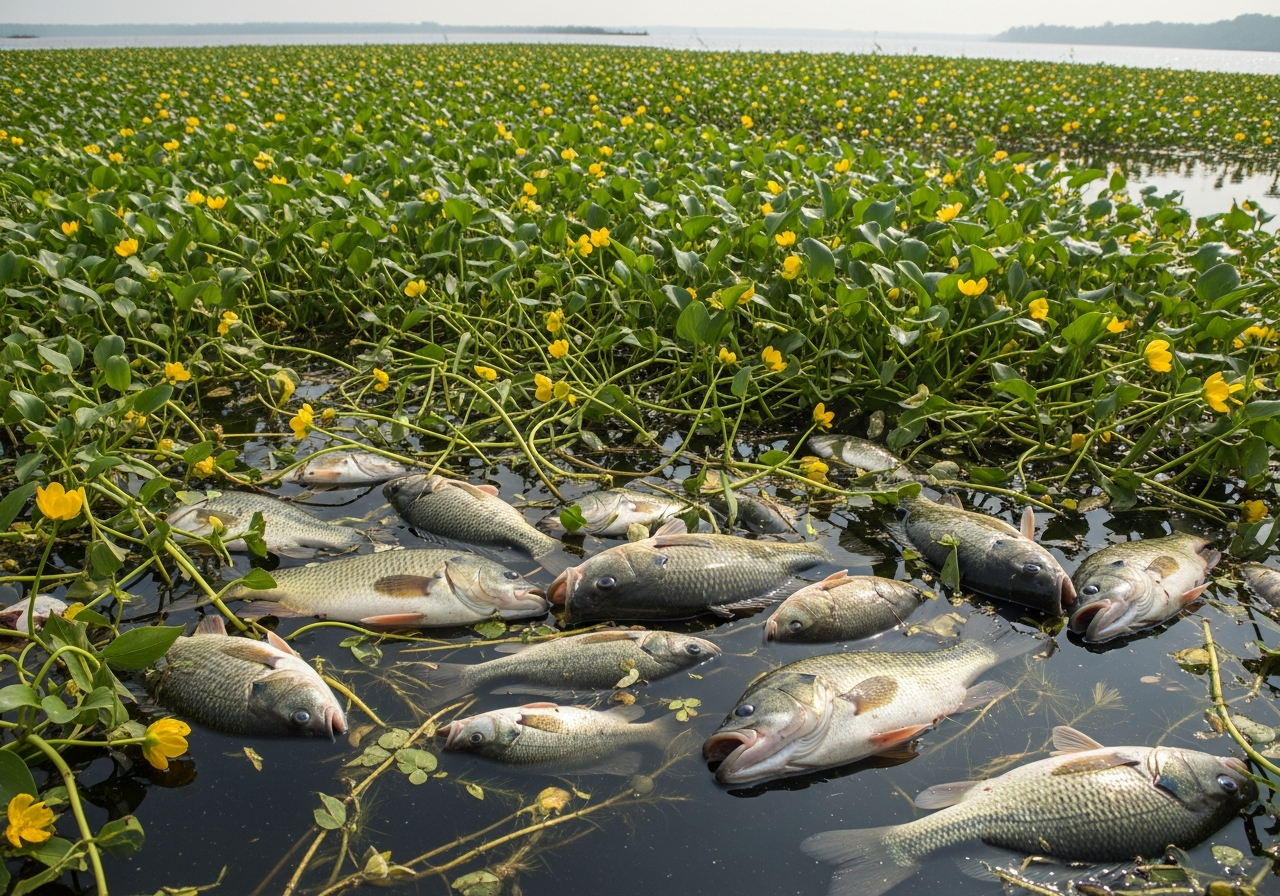
The relationship between Ludwigia peploides invasion and the biogeochemical dynamics of freshwater sediments represents one of the most scientifically complex and practically consequential aspects of its ecological impact. Sediments are not inert substrates but dynamic biogeochemical reactors — sites of nutrient transformation, organic matter processing, and redox chemistry that fundamentally influence water quality and aquatic community composition. The modifications that L. peploides introduces to sediment biogeochemistry create legacies that persist after the plant itself has been removed, complicating post-management water quality recovery.
Phosphorus Cycling and Internal Loading
Phosphorus (P) cycling in freshwater systems involves a dynamic equilibrium between water-column dissolved phosphorus, biologically immobilized phosphorus, and sediment-bound phosphorus. In aerobic sediments, phosphorus is efficiently bound to iron(III) oxyhydroxide minerals — particularly ferrihydrite and goethite — maintaining low water column concentrations. This buffering mechanism acts as a natural water purification service that is disrupted by the anoxic conditions created beneath L. peploides mats.
When sediment oxygen is depleted under dense mats, iron(III) is microbiologically reduced to iron(II), which has approximately 100-fold lower phosphorus binding affinity. The phosphorus previously immobilized in iron-phosphate complexes is released as dissolved inorganic phosphate into the sediment porewater, from which it diffuses to the overlying water column. This internal phosphorus loading mechanism transforms the sediment from a phosphorus sink to a phosphorus source — fundamentally reversing the water purification function and maintaining elevated water-column phosphorus concentrations that support continued eutrophication and algal bloom potential.
Quantitative phosphorus flux measurements in invaded water bodies in France and Australia have documented internal loading rates of 0.5–2 mg P m⁻² day⁻¹ from sediment beneath L. peploides mats — rates comparable to those observed in severely eutrophied lake sediments where internal loading has become the dominant phosphorus source for algal growth.
Nitrogen Dynamics
Nitrogen cycling under L. peploides mats is similarly altered by the anoxic sediment conditions. In aerobic sediments, both nitrification (ammonia oxidation to nitrate) and denitrification (nitrate reduction to nitrogen gas) occur, with the balance determining the net retention or loss of nitrogen from the system. Under anoxic conditions, nitrification is inhibited, but denitrification can be stimulated if nitrate is supplied from the overlying water column. This can lead to enhanced nitrogen loss as N₂ gas — potentially reducing water column nitrogen concentrations and altering nitrogen:phosphorus ratios.
However, under strongly reducing conditions, DNRA (dissimilatory nitrate reduction to ammonium) can become dominant over denitrification, converting nitrate to ammonium rather than N₂ gas. Ammonium is retained in the system rather than lost to the atmosphere, maintaining nitrogen availability for algal and plant growth. The relative balance of denitrification and DNRA under L. peploides-influenced sediment conditions requires further research, but the available evidence suggests complex changes in nitrogen cycling that resist simple generalization.
Organic Matter Accumulation and Decomposition
The high productivity of L. peploides mats — above-ground biomass of 2–4 kg dry matter m⁻² at peak season — generates substantial quantities of plant litter during autumn senescence. In the anoxic conditions beneath the mat, decomposition of this organic matter is slow and incomplete, dominated by anaerobic pathways (fermentation, sulfate reduction, methanogenesis) that produce organic acids, hydrogen sulfide, and methane rather than the CO₂ and water of aerobic decomposition. This accumulation of partially decomposed organic matter raises the organic content and reduces the density of the sediment over time, creating the characteristic soft, organic-rich sediment found beneath long-established L. peploides stands.
Post-Management Nutrient Legacy
The most practically significant aspect of L. peploides-mediated sediment change is the persistence of altered nutrient dynamics after successful plant management. Even following complete removal of above-ground plant material, the reducing, nutrient-enriched sediment created during the invasion continues to release phosphorus into the water column as sediment chemistry gradually adjusts toward aerobic equilibrium. This process can take months to years, maintaining water quality conditions that are unfavourable for native species recovery and that continue to support eutrophication-associated algal growth. Managers must anticipate this post-management water quality trajectory and communicate it clearly to stakeholders who may expect immediate water quality improvement following plant removal.
Conclusion
The sediment and nutrient dynamics associated with L. peploides invasion represent some of the deepest and most lasting biogeochemical changes in the freshwater systems that the species invades. The conversion of sediments from nutrient sinks to nutrient sources through iron-phosphorus chemistry disruption, the alteration of nitrogen cycling pathways, and the accumulation of slowly decomposing organic matter create legacy conditions that require specific management attention beyond plant removal. Addressing these sediment chemistry legacies — through chemical amendment, physical sediment management, or simply sustained monitoring during natural recovery — should be an integral component of post-management restoration planning for sites with long-established L. peploides invasions.