Oxygen Depletion Effects of Ludwigia peploides
How dense Ludwigia peploides mats drive nighttime dissolved oxygen crashes and seasonal hypoxic dead zones that eliminate fish and invertebrate communities from invaded water bodies.
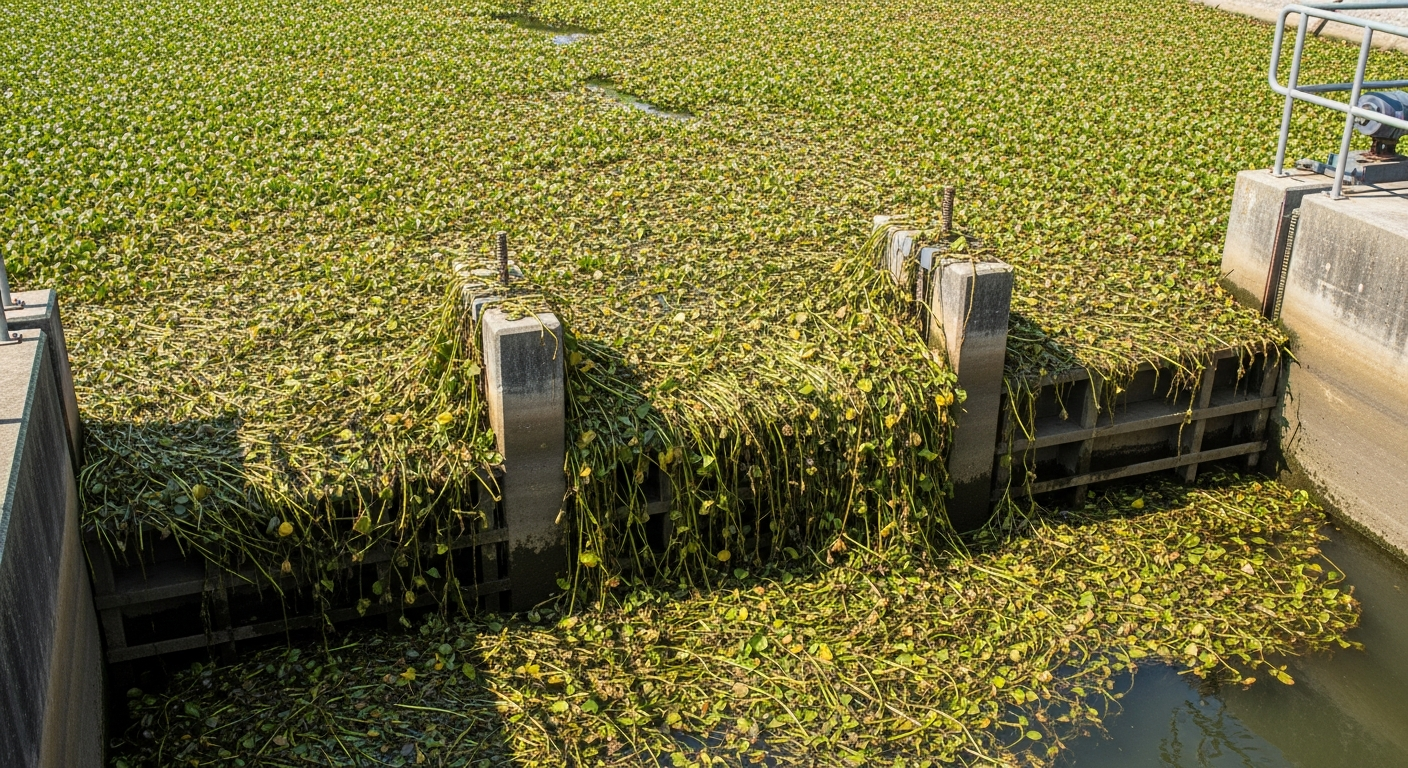
Dissolved oxygen (DO) is the most critical physical-chemical parameter for aquatic ecosystem function — most freshwater fish, invertebrates, and aerobic microbes require DO above approximately 3–5 mg/L to survive. Dense mats of Ludwigia peploides systematically degrade dissolved oxygen regimes in invaded water bodies, creating hypoxic and even anoxic conditions that eliminate entire communities of aquatic organisms. This mechanism is one of the most ecologically damaging aspects of Ludwigia invasion and a primary driver of biodiversity loss. For the broader biodiversity impacts, see Biodiversity Loss from Ludwigia peploides. For fish-specific impacts, see Effects on Fish Populations.
Mechanism of Oxygen Depletion
Oxygen depletion beneath Ludwigia peploides mats occurs through two primary mechanisms operating simultaneously: Light exclusion: The dense canopy of floating and emergent Ludwigia stems and leaves intercepts 80–99% of incoming solar radiation. This light exclusion eliminates photosynthesis by submerged aquatic plants and phytoplankton beneath the mat — removing the primary biological oxygen production mechanism from the water column. In the absence of photosynthetic oxygen production, only atmospheric re-aeration at the water surface can supply oxygen to the water — but this is severely limited by the physical barrier of the floating mat. Biological oxygen demand: The mat's photosynthesis produces oxygen, but only within the mat structure itself (released to atmosphere above) and not to the water below. The mat's respiration — and particularly the microbial decomposition of the vast amount of organic material shed by dying mat undersurface leaves — consumes dissolved oxygen from the water column beneath the mat 24 hours per day. At night, when the mat's photosynthesis ceases but respiration continues, net oxygen consumption from the water column can create DO crashes within a few hours in warm, still conditions.
Nighttime Dissolved Oxygen Crashes
The most acute oxygen depletion events associated with Ludwigia mats occur at night during the warmest summer months (July–August in temperate North America). During the day, the mat's photosynthesis produces some oxygen and maintains acceptable DO conditions at the mat surface. As night falls, photosynthesis ceases while respiration by the mat and the microbial community beneath it continues to consume oxygen. In still, warm water (typically above 25°C), biological oxygen demand is elevated, atmospheric re-aeration is minimal, and DO can fall from 6–8 mg/L in the early evening to 0–2 mg/L by early morning. These nighttime crashes are episodic but can be frequent — occurring on warm nights throughout the summer in established infestations. Fish and invertebrates in the affected area must either flee to oxygenated water or face hypoxic stress and potential mortality.
Seasonal Hypoxia Patterns
Beyond individual nighttime events, Ludwigia mats create chronic seasonal hypoxia in heavily invaded water bodies. In spring, as mat growth begins, DO effects are modest. As mats expand through early summer and mat density increases, DO depression beneath the mat becomes more consistent and more severe. By peak summer (when mats are densest and temperatures are highest), large areas of the water column beneath established mats may be chronically hypoxic — maintaining DO below 3 mg/L for extended periods day and night. Seasonal hypoxia of this magnitude is documented in California Delta channels during summer — coinciding with the period when juvenile salmon and Delta smelt are most in need of their aquatic habitat. Autumn mat senescence releases large amounts of decomposing organic material that further increases biological oxygen demand in the water column during the period when temperature-driven stratification is breaking down, creating a secondary DO crash risk.
Biological Impacts of Hypoxia
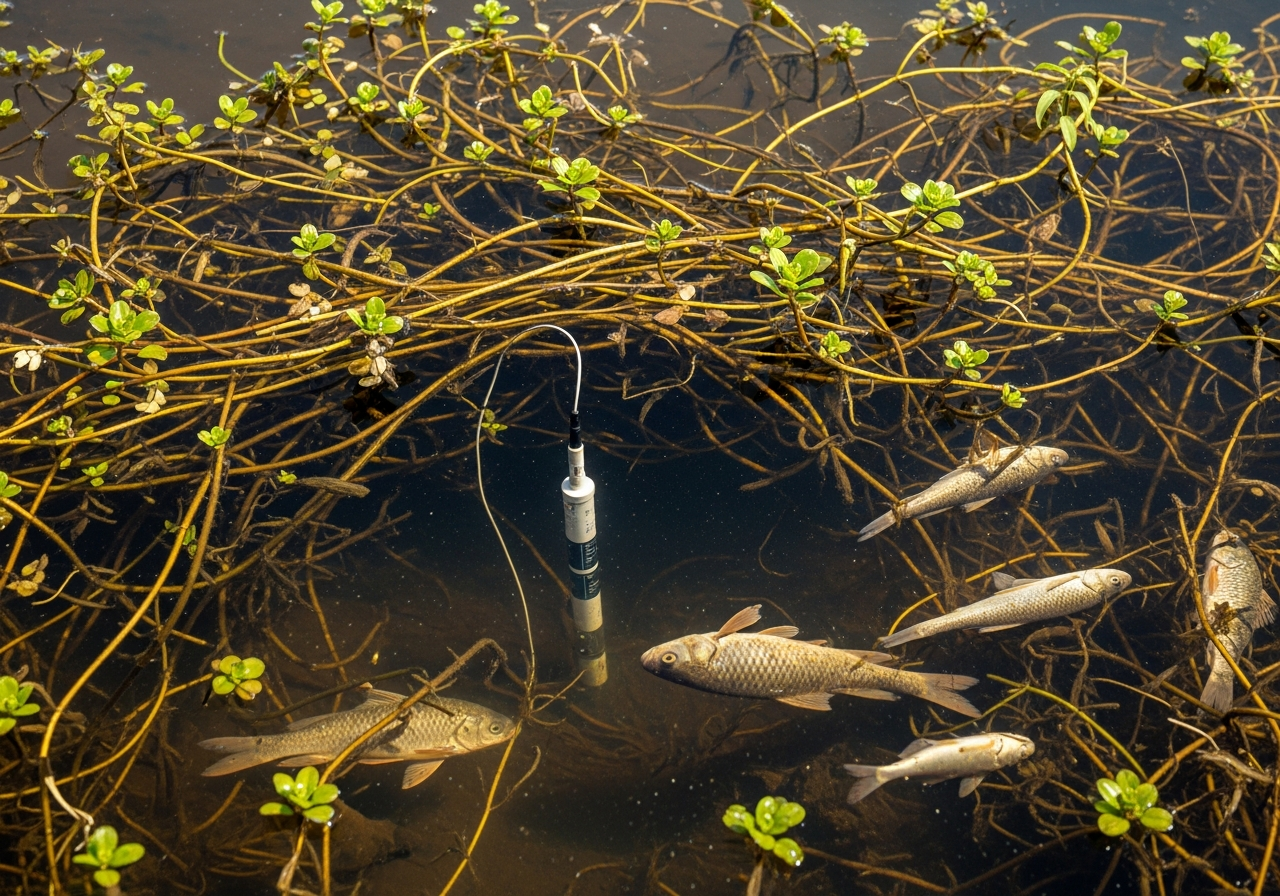
The biological consequences of Ludwigia-induced hypoxia are severe and extend from individual organism physiology to ecosystem-level community structure. Fish — including ecologically and commercially important species like Delta smelt, salmon, bass, and catfish — experience sublethal stress at DO below 5 mg/L, reduced growth and reproduction at DO below 4 mg/L, and acute distress and mortality risk at DO below 2–3 mg/L. Benthic macroinvertebrates — the invertebrate community living on the water body floor that forms the base of the food web for fish — are eliminated from chronically hypoxic areas within one to several seasons of mat establishment. Hypoxia also favors anaerobic microbial processes that release hydrogen sulfide and methane — further degrading water quality and excluding aerobic biota. For the full scope of fish impacts, see Effects on Fish Populations.
Monitoring Dissolved Oxygen
Continuous dissolved oxygen monitoring — using submersible data loggers deployed beneath Ludwigia mats and in adjacent open-water reference areas — provides the most complete picture of hypoxia severity and temporal patterns. Modern DO data loggers record measurements every 15 minutes for weeks to months on a single battery charge, enabling detection of both nighttime crash events and the progression of chronic hypoxia through the season. Post-treatment monitoring of DO is essential for documenting treatment effectiveness and detecting any treatment-induced oxygen demand from decomposing plant material. Comparing pre- and post-treatment DO records at treated sites and reference sites provides the clearest evidence of management benefit for regulatory reporting and program evaluation.
Conclusion
Dissolved oxygen depletion is one of the most immediate and severe ecological impacts of Ludwigia peploides invasion. By intercepting light and maintaining high biological oxygen demand around the clock, dense mats create hypoxic conditions that eliminate fish and invertebrate communities from what were previously productive aquatic habitats. The effect is most severe during warm summer nights and most ecologically damaging in water bodies with limited hydrological flushing and high biological oxygen demand. Effective management that reduces mat density restores DO conditions, recovering aquatic habitats — an outcome that is both ecologically and economically valuable, as documented in our Return on Investment analysis.