Where Is Ludwigia peploides Found?
A global overview of the native and invasive distribution of Ludwigia peploides — from its South American origins to established invasive populations across North America, Europe, Asia, and Oceania.
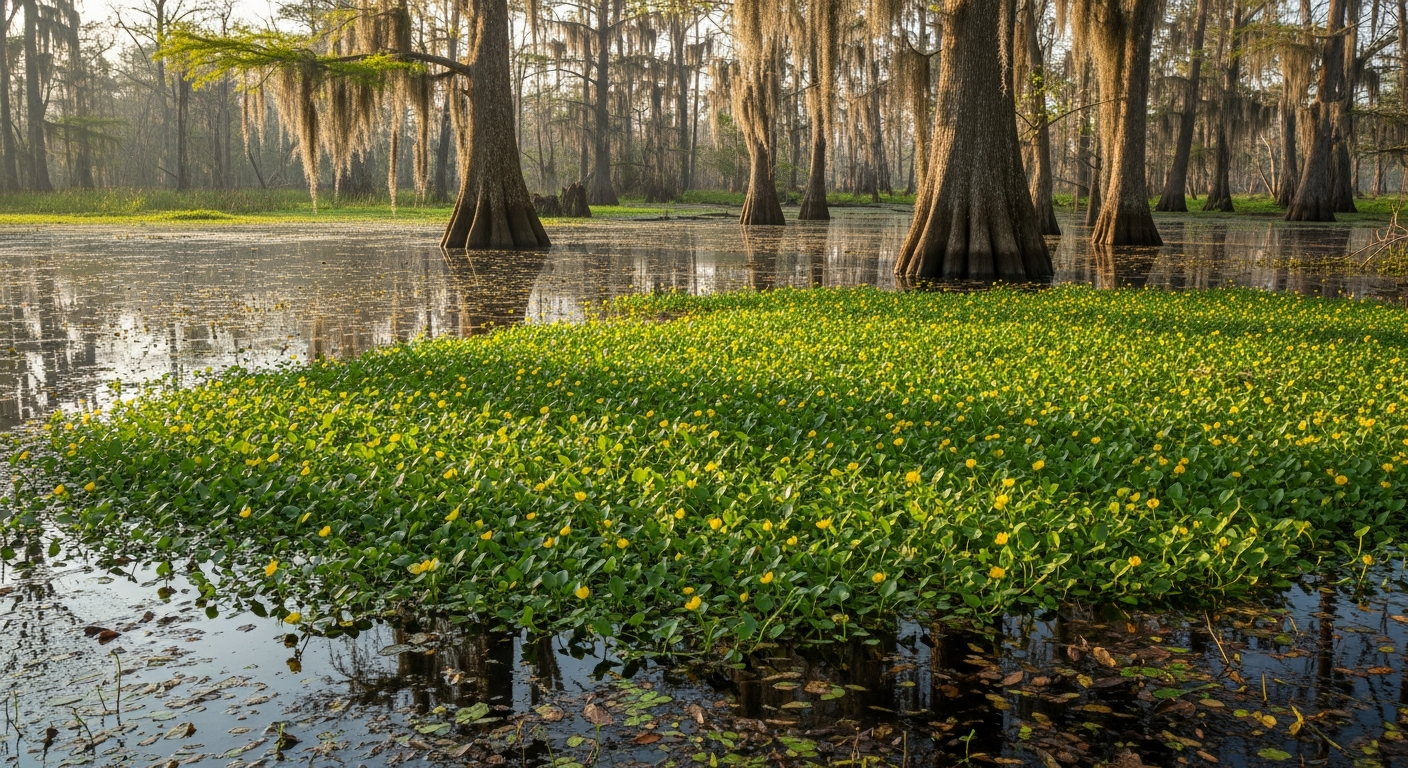
Ludwigia peploides has achieved one of the most extensive geographic ranges of any aquatic invasive plant, with established populations on every inhabited continent except Africa. Understanding where the plant is currently established — and where it is likely to spread next — is fundamental for prioritizing management resources, implementing biosecurity measures, and assessing the risk to uninvaded water bodies. This article provides a continent-by-continent overview of its distribution. For detailed US distribution, see our US distribution guide, and for California-specific information, our California distribution article.
Native Range: South and Central America
In its native range, L. peploides is a component of diverse freshwater plant communities from temperate to tropical South America. It occurs in Argentina, Uruguay, Brazil, Paraguay, Bolivia, Chile, Peru, Venezuela, Colombia, and throughout Central America to Mexico. Within this range, the species is subject to a natural complex of herbivores, pathogens, and competing plant species that regulate its population growth — preventing the unchecked mat formation observed in invaded regions. Native populations occupy a similar range of freshwater habitats (slow rivers, lakes, ponds, canals) but at lower densities and less frequently as a dominant species. The high diversity of the native range has produced the five recognized subspecies, each with a partially distinct distribution.
North America
The United States hosts the most economically significant invasive populations of L. peploides outside South America. California's Sacramento-San Joaquin Delta — where the species was first documented in California in 1945 — now represents one of the world's largest and most intractable infestations, covering thousands of acres of delta waterways. The Delta infestation has resisted decades of management and continues to spread annually. In the Pacific Northwest, invasive populations occur in Oregon and Washington river systems. Along the Gulf Coast, established populations exist in Texas (particularly the Houston Ship Channel area), Louisiana, Mississippi, and Florida. Atlantic seaboard populations occur in the Carolinas, Georgia, and Virginia. For the most detailed county-level data, see our US Distribution Map.
Europe
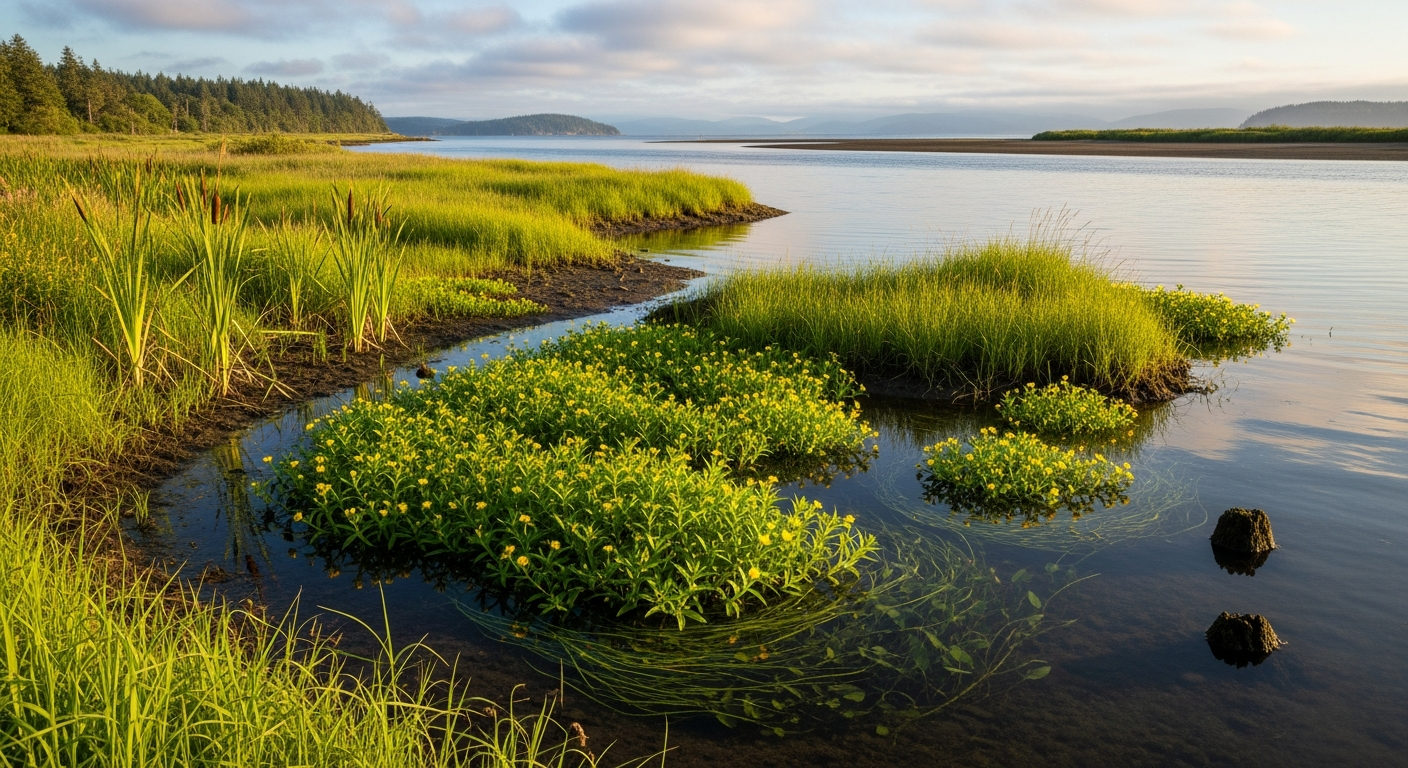
European invasion is most advanced in southwestern France and the Iberian Peninsula. France, where the species has been recorded since the 1820s, has the most extensive European infestations — concentrated in the Rhône, Loire, Charente, and Gironde river systems. The Marais Poitevin (a Natura 2000 protected area in western France) has been severely impacted, requiring multi-million euro annual management programs. Spain and Portugal have large infestations in river systems of the Atlantic coast. Italy has reported expanding populations in the Po Valley. Germany and Belgium report emerging populations along the Rhine system. The EU listed Ludwigia peploides and the closely related L. grandiflora and L. hexapetala under Regulation 1143/2014 on Invasive Alien Species, prohibiting sale, transport, and introduction across all EU member states. See our European invasion article for detailed country-by-country data.
Asia and Oceania
In Asia, L. peploides has been documented in China (primarily in southern provinces), Japan, Taiwan, South Korea, and parts of Southeast Asia. China's invasion is particularly concerning given the scale of its freshwater infrastructure (rice paddies, irrigation canals, major rivers) that could facilitate rapid spread. Australia and New Zealand have established populations, primarily in the warmer northern parts of Australia and in New Zealand's North Island. Both countries list the species as a significant invasive threat with restrictions on trade and movement. Hawaii has documented infestations with significant ecological concerns for its unique native wetland ecosystems. See our Hawaii distribution article for details on Pacific Island invasions.
Why Has It Spread So Widely?
The global distribution of L. peploides reflects both deliberate and accidental introduction pathways. The aquarium and water garden trade is the most significant deliberate pathway — the plant's attractive yellow flowers made it a popular ornamental aquatic plant that was widely sold and traded before its invasive status was understood. Once introduced to a water body, it spreads locally by water-mediated fragment and seed dispersal, and regionally via recreational boating (fragments trapped in boat propellers and bilges), wildlife movement (particularly waterfowl which disperse seeds), and inadvertent movement of contaminated soil or water garden plants. Climate change is projected to expand the suitable climate envelope northward and to higher altitudes, exposing new regions to invasion risk. See our Introduction Pathways article for a detailed analysis of how the species spreads.
Conclusion
The global distribution of Ludwigia peploides spans five continents, with invasive populations established in dozens of countries. The pattern of spread — from South America via the ornamental plant trade to water bodies across Europe, North America, Asia, and Oceania — reflects the role of human activity in introducing the species and natural dispersal mechanisms in facilitating local spread. Identifying where the plant currently occurs, and predicting where it will spread next, is fundamental to allocating biosecurity and management resources effectively. For range expansion projections, see our Predictive Risk Mapping article.