How Ludwigia peploides Spreads: Introduction Pathways
The aquarium and water garden trade, recreational boating, wildlife movement, and flooding — understanding how Ludwigia peploides reaches new water bodies and the prevention measures that can stop each pathway.
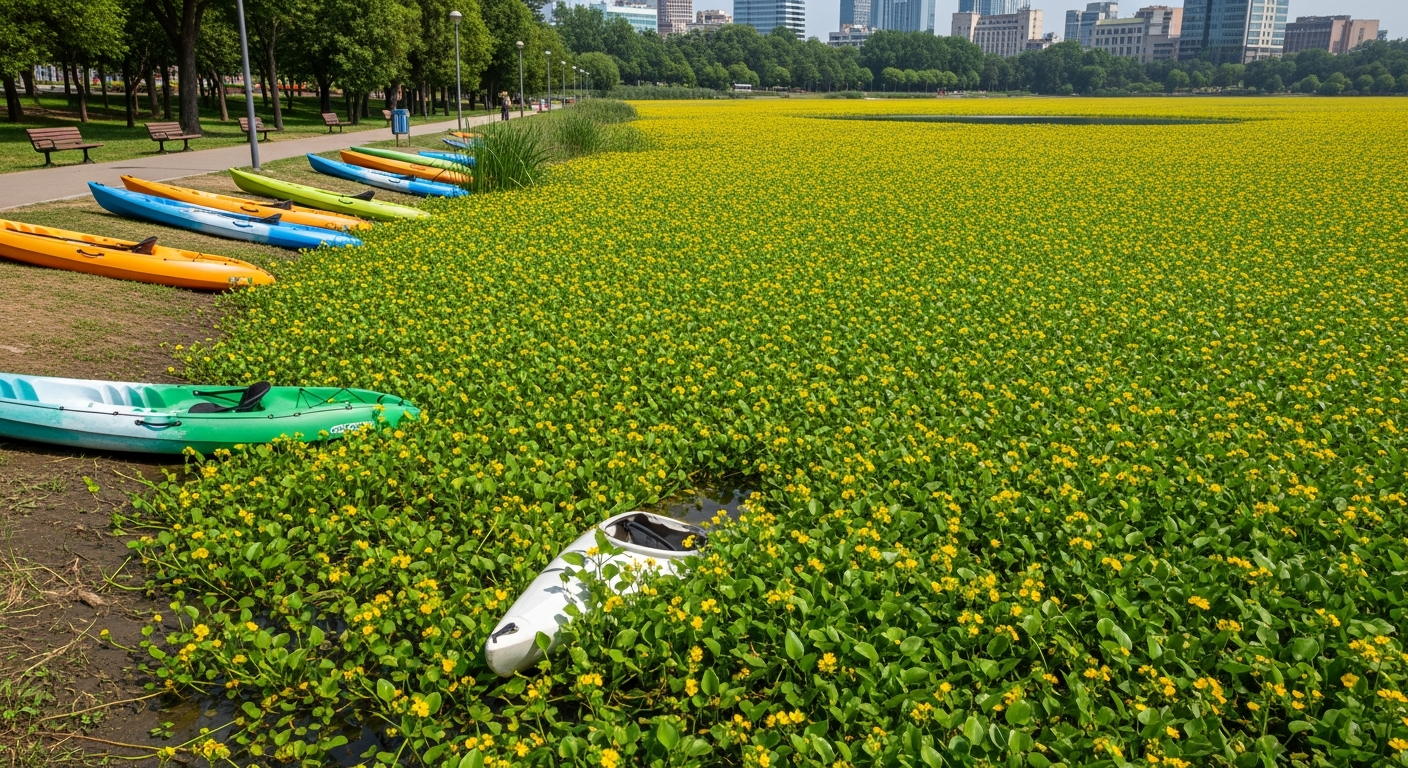
Preventing new introductions of Ludwigia peploides requires understanding not just where the plant occurs, but how it gets from one place to another. Different pathways require different prevention interventions — trade restrictions address ornamental plant pathways, while boat inspection programs address recreational boating. This article examines each pathway in detail, providing the knowledge needed to understand and implement effective prevention. For information on where the species is currently established, see Where Is Ludwigia peploides Found?
Aquarium and Water Garden Trade
The aquarium and ornamental water garden trade is the primary introduction pathway responsible for most historical invasions of L. peploides globally. The species was widely sold as an attractive aquatic plant for garden ponds — its large yellow flowers and vigorous growth made it a popular choice — under common names including "water primrose," "creeping Jenny," and "tropical pond plant." Before regulatory action in the 2000s and 2010s, it was sold across Europe, North America, Asia, and Oceania through aquatic plant retailers, garden centers, and online marketplaces. Introduction to natural water bodies occurred through: overflow from garden ponds during heavy rainfall; deliberate dumping of unwanted plants by pond owners; trade in water-filled shipping containers that could harbor plant fragments; and contamination of other aquatic plants sold in the same nursery systems.
Regulatory intervention has reduced this pathway significantly in regions where listing has occurred — the EU ban has substantially reduced European retail availability, and state-level restrictions in California, Oregon, and Washington have reduced West Coast US trade. However, the pathway is not eliminated: the species continues to be offered for sale online through marketplaces with limited regulatory oversight, and in US states without specific restrictions, it may still be legally sold. Public education campaigns ("Never release aquarium plants into the wild," "Don't dump aquatic plants") address the deliberate release component of this pathway.
Recreational Boating
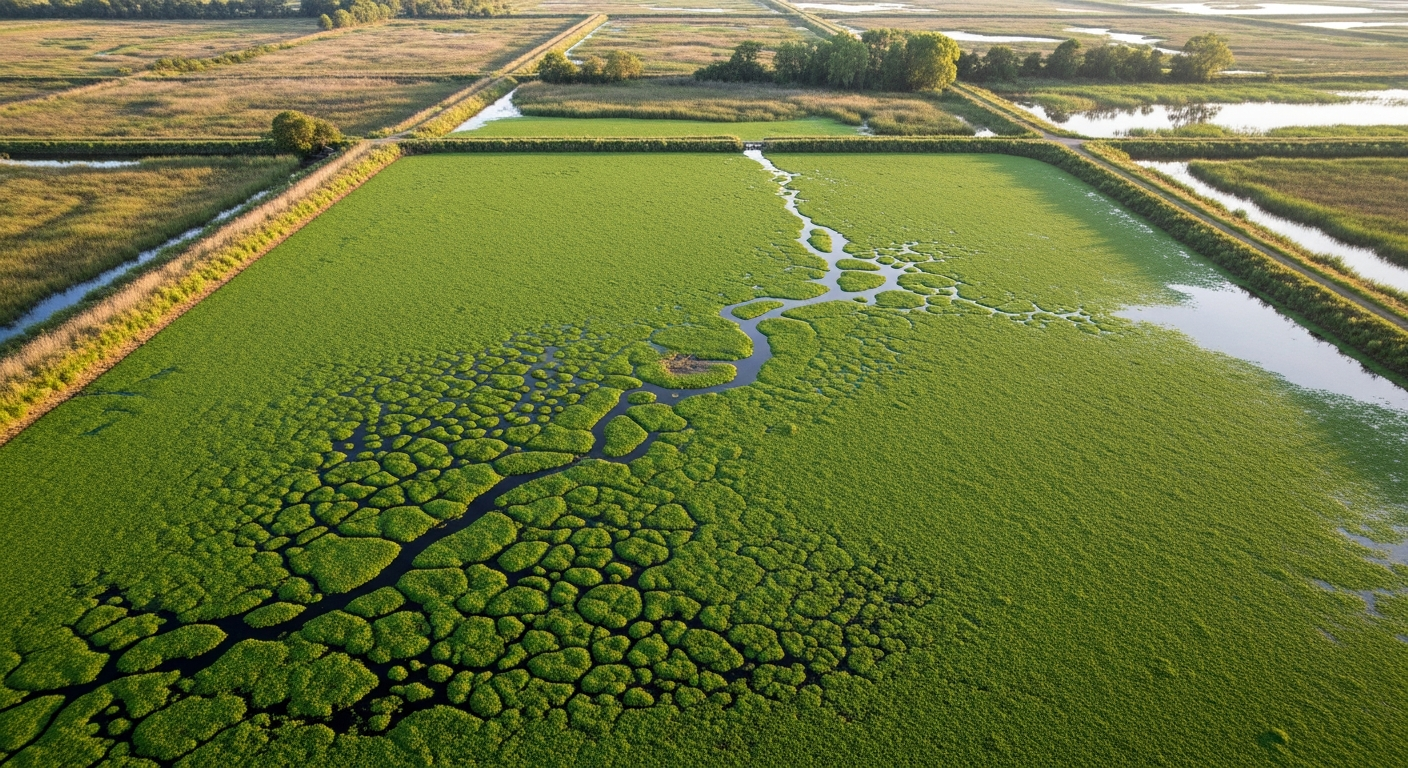
Once L. peploides is established in a water body, recreational boating becomes the dominant pathway for its spread to adjacent and connected water bodies. Boats passing through infested areas trap plant fragments in: propellers and motor intakes; anchor chains and anchor compartments; bilge water and live wells; trailer bunks and wheel wells; and fishing equipment including nets, rods, waders, and bait buckets. Fragments can survive on boat equipment for hours to days in cool, moist conditions. Studies of boat wash deposition from water-body-scale surveys have confirmed that boating activity at sites where Ludwigia is present significantly increases the probability of establishment at the destination water body. The risk is highest when boats move from an infested source water body to uninvaded water bodies in the same region — common in areas with multiple water bodies accessible within a single day trip.
The "Check, Clean, Drain" program — a standardized protocol for inspecting and decontaminating boats between water bodies — is the primary prevention intervention for this pathway. Mandatory boat inspection stations at the entry to high-risk water bodies (particularly those in close proximity to known infestations) are implemented in California's Delta program and at other high-priority sites. See our Prevention and Biosecurity article for full protocol details.
Wildlife Pathways
Wildlife movement — particularly waterfowl — is a significant natural pathway for long-distance Ludwigia seed dispersal. The fruit capsules of L. peploides are consumed by dabbling ducks and other waterfowl that feed in infested water bodies. Seeds pass through the digestive tract intact and are deposited in droppings at subsequent feeding and resting sites, which may be in water bodies hundreds of kilometers away. This pathway explains the occurrence of Ludwigia populations in geographically isolated water bodies with no obvious connection to known infestations. Seeds also attach externally to the feathers and feet of wading birds and to the fur of swimming mammals. Human-associated wildlife movement (birds attracted to artificial water bodies, wildlife management programs involving animal translocation) can amplify this natural pathway in ways that are difficult to predict or control.
Flooding and Hydrological Connectivity
Flooding events significantly accelerate Ludwigia spread within and between water bodies. Floodwaters carry plant fragments and seeds from established infestations across normally disconnected landscape features — road crossings, levees, and culverts that would otherwise limit downstream movement. Drought followed by flooding — a pattern projected to become more frequent under climate change — is particularly damaging: drought kills competing vegetation and exposes bare substrate, while subsequent flooding brings Ludwigia propagules directly to this disturbed, competition-free habitat. The dramatic expansion of the California Delta infestation in wet years relative to drought years reflects this flood-facilitated spread dynamic. Flood events are essentially uncontrollable as spread vectors, reinforcing the priority of eliminating source populations before major flood events occur.
Prevention Measures by Pathway
Effective prevention requires pathway-specific interventions: (1) Trade pathway: state and national noxious weed listing prohibiting sale; retailer education; consumer education ("Never release into the wild"); online marketplace monitoring. (2) Boating pathway: Check, Clean, Drain public education campaigns; mandatory boat inspections at high-risk entry points; support for self-inspection stations at boat ramps. (3) Wildlife pathway: Limited direct intervention options; reducing source populations reduces the number of seeds available for wildlife dispersal. (4) Flooding pathway: Source population reduction; rapid response to post-flood surveys detecting newly established populations in previously uninvaded areas. For a full prevention framework, see our Prevention and Biosecurity guide.
Conclusion
The spread of Ludwigia peploides to new locations is driven by multiple pathways simultaneously — trade, boating, wildlife, and hydrology — each requiring different prevention strategies. The ornamental plant trade brought the species to most regions where it is now invasive; boating and wildlife pathways continue to move it to new water bodies within invaded regions. Effective prevention requires a multi-pathway approach: regulatory action on trade, public education and enforcement on boating biosecurity, and systematic monitoring of high-risk sites for early detection of new establishments before they expand beyond the reach of rapid response.