Ludwigia peploides Across the United States
State-by-state distribution status, invasion history, regulatory listing, and management programs for Ludwigia peploides across the contiguous United States.
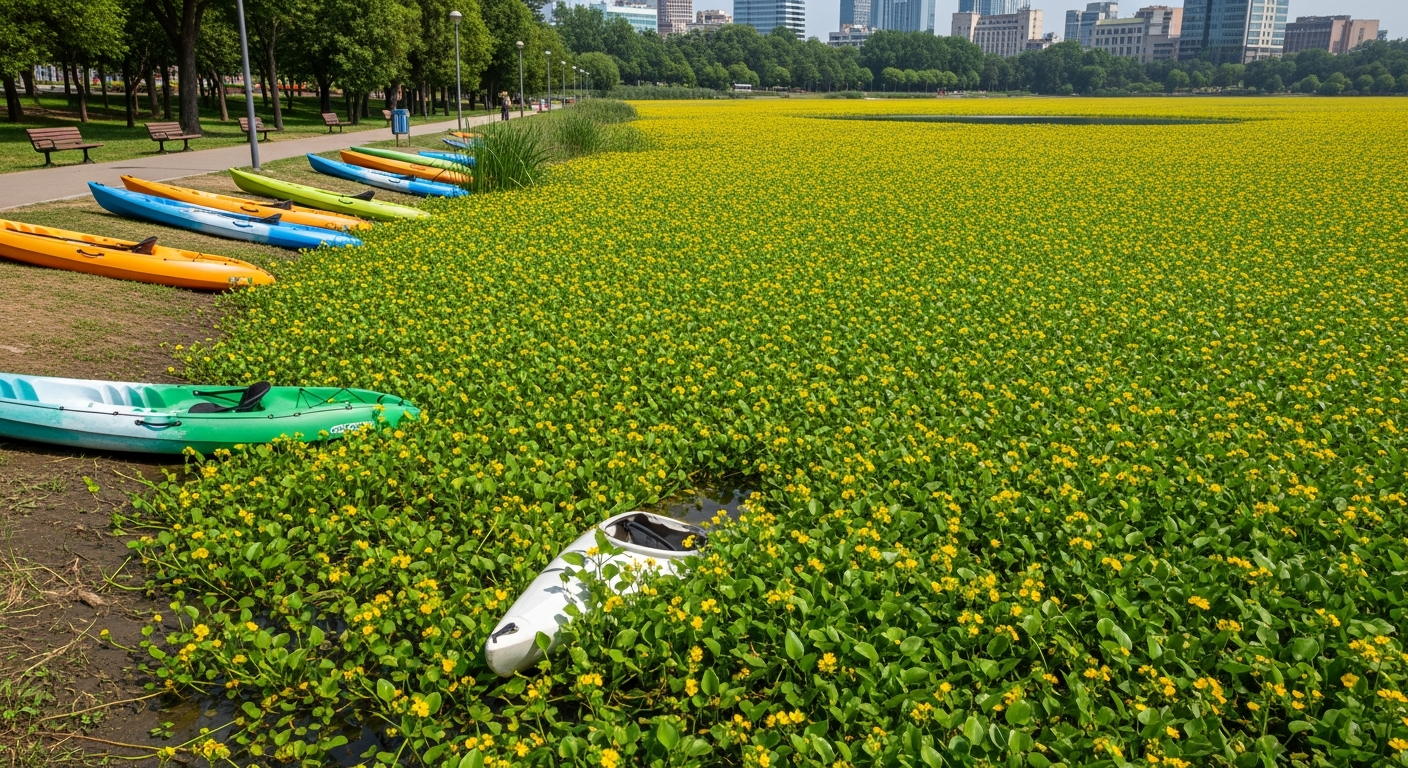
Ludwigia peploides is established across a broad swath of the United States, from California's extensive Delta infestation to emerging populations in the Atlantic coastal states. The distribution is shaped by climate (primarily winter minimum temperatures and summer thermal conditions), availability of suitable freshwater habitats, and the history of introduction and subsequent spread. This article provides a regional overview of US distribution. For California-specific information, see our dedicated California Distribution article.
West Coast States
California hosts the most extensive and ecologically significant US infestation — centered on the Sacramento-San Joaquin Delta but extending throughout Central Valley waterways and into Southern California. California lists the species as a Class A Noxious Weed with mandatory management requirements. Annual management expenditure in California exceeds several million dollars. Oregon has established populations in the Willamette Valley — particularly in the lower Willamette River tributaries and associated wetlands near Portland and Salem. Oregon lists the species as a Prohibited Noxious Weed. Washington has documented populations in the Columbia River system and the Puget Sound lowlands. Washington maintains active management programs in collaboration with Oregon along the Columbia River corridor.
Gulf Coast States
Texas has extensive populations in the Houston area waterways, Galveston Bay watershed, and Lower Rio Grande Valley. Texas naturally-occurring populations in South Texas may represent part of the native range or very early introductions. Louisiana has significant populations in the Atchafalaya Basin, Lake Pontchartrain watershed, and coastal marshes. Louisiana's extensive freshwater wetland system provides large areas of suitable habitat. Mississippi and Alabama have documented populations in river systems draining to the Gulf. Florida has populations in the panhandle and northern regions; the extensive wetland systems of South Florida are considered at high risk but have not yet been widely invaded. All Gulf Coast states consider the species a significant management priority given the extent of suitable freshwater and wetland habitat.
Southeast Atlantic States
Georgia and South Carolina have documented L. peploides in coastal plain river systems and associated wetlands. North Carolina has records from multiple Coastal Plain locations. Populations in the Southeast are generally less extensive than in California or the Gulf Coast states, but the region's extensive freshwater wetland systems (Carolina Bays, coastal plain rivers, pocosins) provide large areas of potentially suitable habitat. Active monitoring and management programs in several southeastern states aim to prevent expansion of currently limited populations.
Northeast and Mid-Atlantic States
Virginia and Maryland have documented populations, primarily in Tidal Potomac River and Chesapeake Bay watershed systems. New Jersey and Delaware have records from coastal wetland systems. The Northeast represents the northern fringe of the current invasive range in the eastern US — winter temperatures in most of the region provide significant cold-season limitation on establishment and overwinter survival. However, climate warming is projected to expand the feasibility of year-round establishment progressively northward through the 21st century, placing currently uninvaded waters in New England and the Great Lakes region at increasing risk.
Selected State Status Summary
| State | Status | Regulatory Listing |
|---|---|---|
| California | Established, widespread | Class A Noxious Weed (CDFA) |
| Oregon | Established, managed | Prohibited Noxious Weed |
| Washington | Established | Class A Noxious Weed |
| Texas | Established | Listed invasive species |
| Louisiana | Established, widespread | State noxious weed |
| Florida | Established (limited) | Prohibited aquatic plant |
| Virginia | Established (limited) | Under review |
Conclusion
The US distribution of Ludwigia peploides spans the southern tier of the country from California to the Atlantic coast, with established infestations in more than 30 states. California's Sacramento-San Joaquin Delta remains the epicenter of the US invasion, but expanding populations along the Gulf Coast, in the Southeast, and along the Pacific Northwest represent significant and growing management challenges. Reporting confirmed occurrences through official channels and supporting state and federal management programs is the most impactful action that individuals and organizations can take to limit further expansion.