Field Identification Techniques for Ludwigia peploides
Practical survey methods, photography standards, environmental DNA sampling, and reporting protocols for confirming and documenting Ludwigia peploides in the field.
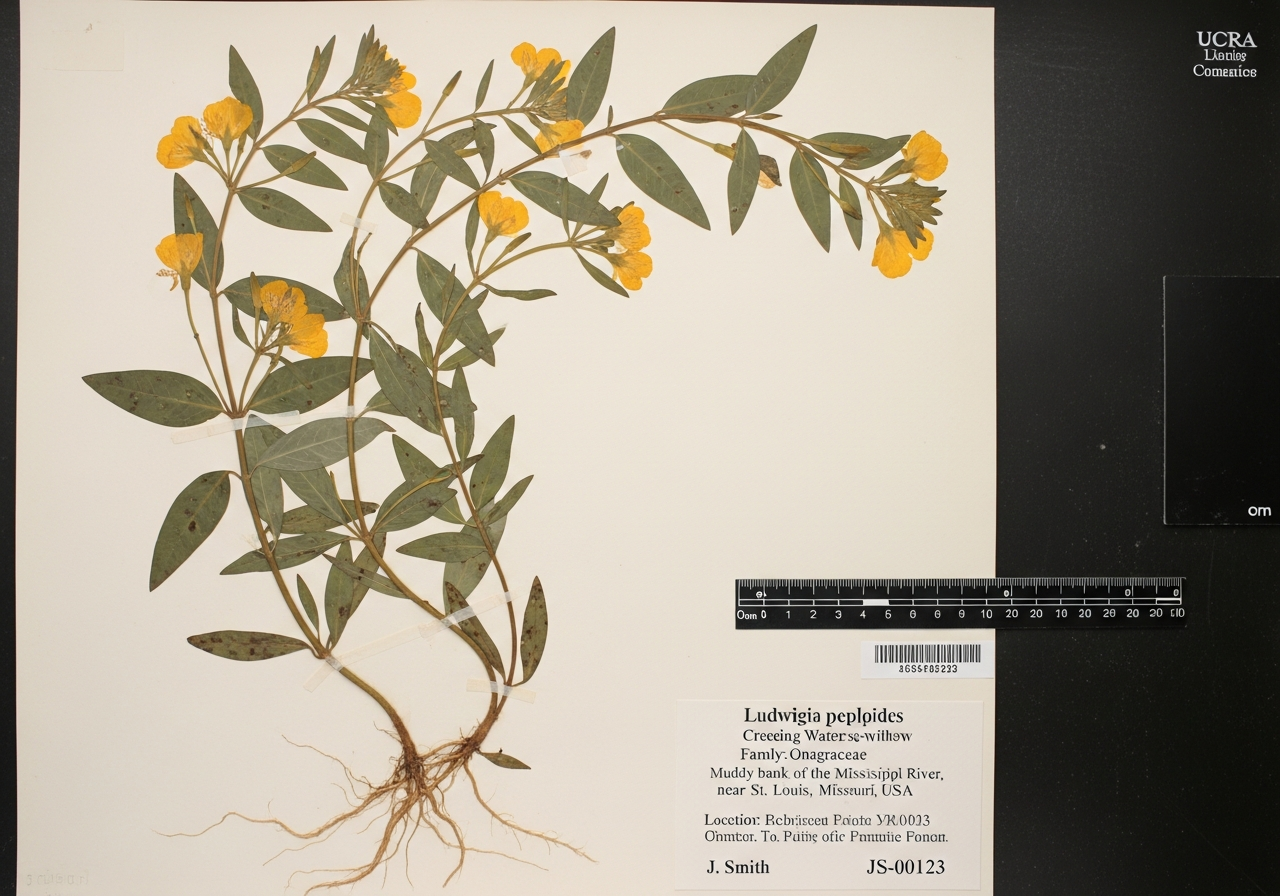
Good field identification goes beyond recognizing morphological features — it also involves systematic survey methods, photographic documentation, and reporting that contributes to regional and national databases. This guide provides the practical techniques needed to conduct credible field surveys for Ludwigia peploides, from equipment selection through final reporting. For the morphological identification guide, see How to Identify Creeping Water Primrose. For early-stage detection techniques, see Early Stage Identification.
Field Equipment
A basic field identification kit for aquatic plant surveys includes: a waterproof smartphone or camera capable of macro photography; a GPS device or phone with a GPS app providing coordinate accuracy to within 5 m; waterproof notebooks and permanent marker pens; a 10× hand lens for examining small features (stipules, hairs, seed capsule texture); chest waders or waterproof boots for margin access; and specimen collection bags if voucher material is to be collected. For safety in aquatic survey environments, a personal flotation device should be worn in boats, and buddy protocols maintained when wading in unfamiliar water bodies.
Morphological Survey Protocol
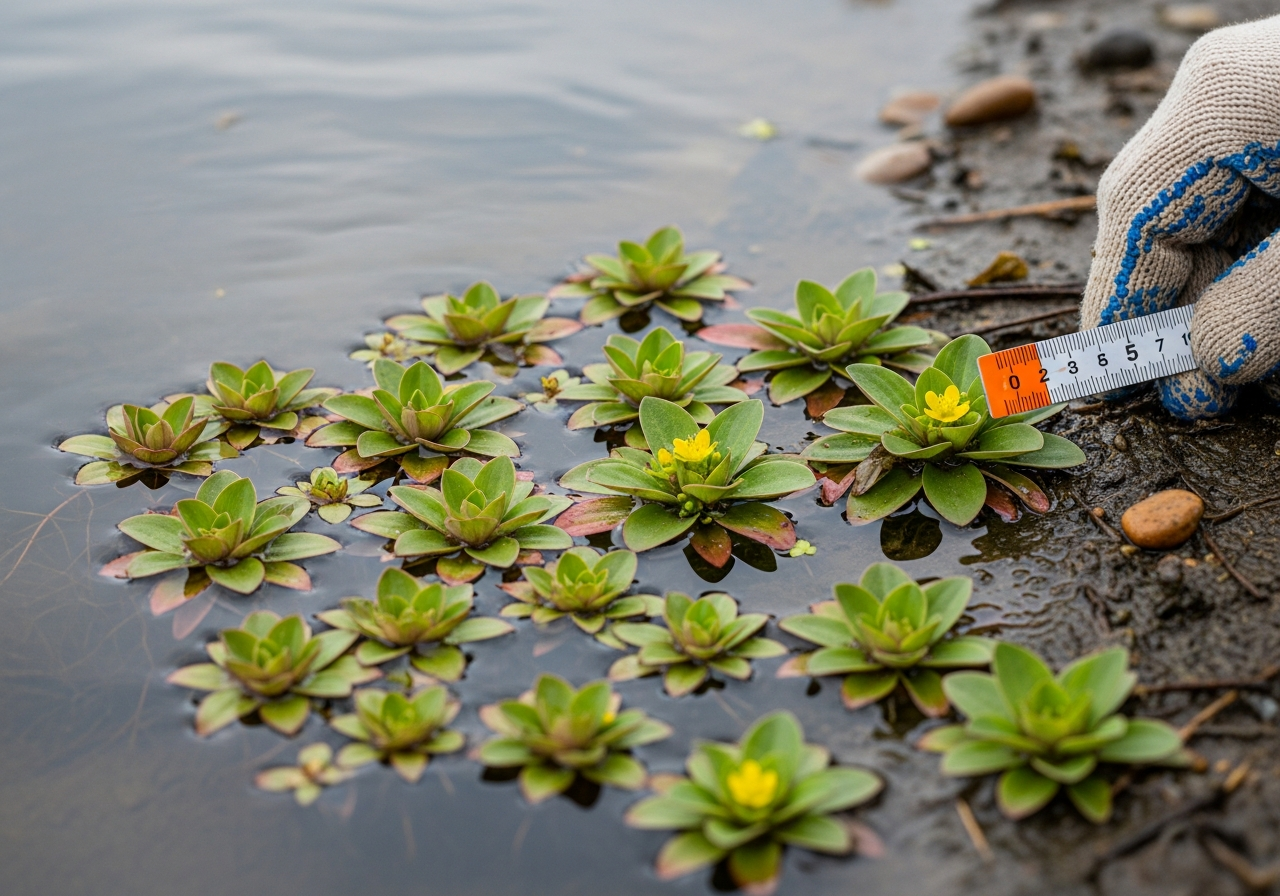
At each survey location, follow a systematic protocol: (1) Approach the water body and scan the margins and open water from multiple vantage points. (2) Note the presence of floating mats, emergent stems, or mat remnants. (3) Move to the nearest access point and observe leaf arrangement, stem characters, and node structures. (4) Check specifically for pneumatophores — white spongy protrusions at stem nodes — as these are diagnostic. (5) If flowers are present, count the petals (5 for L. peploides, 6 for L. hexapetala). (6) Record GPS coordinates of the infestation boundary. (7) Estimate total area covered (in square meters or hectares) using GPS track or visual estimate. (8) Photograph all diagnostic features as described below.
Photography Standards for Identification
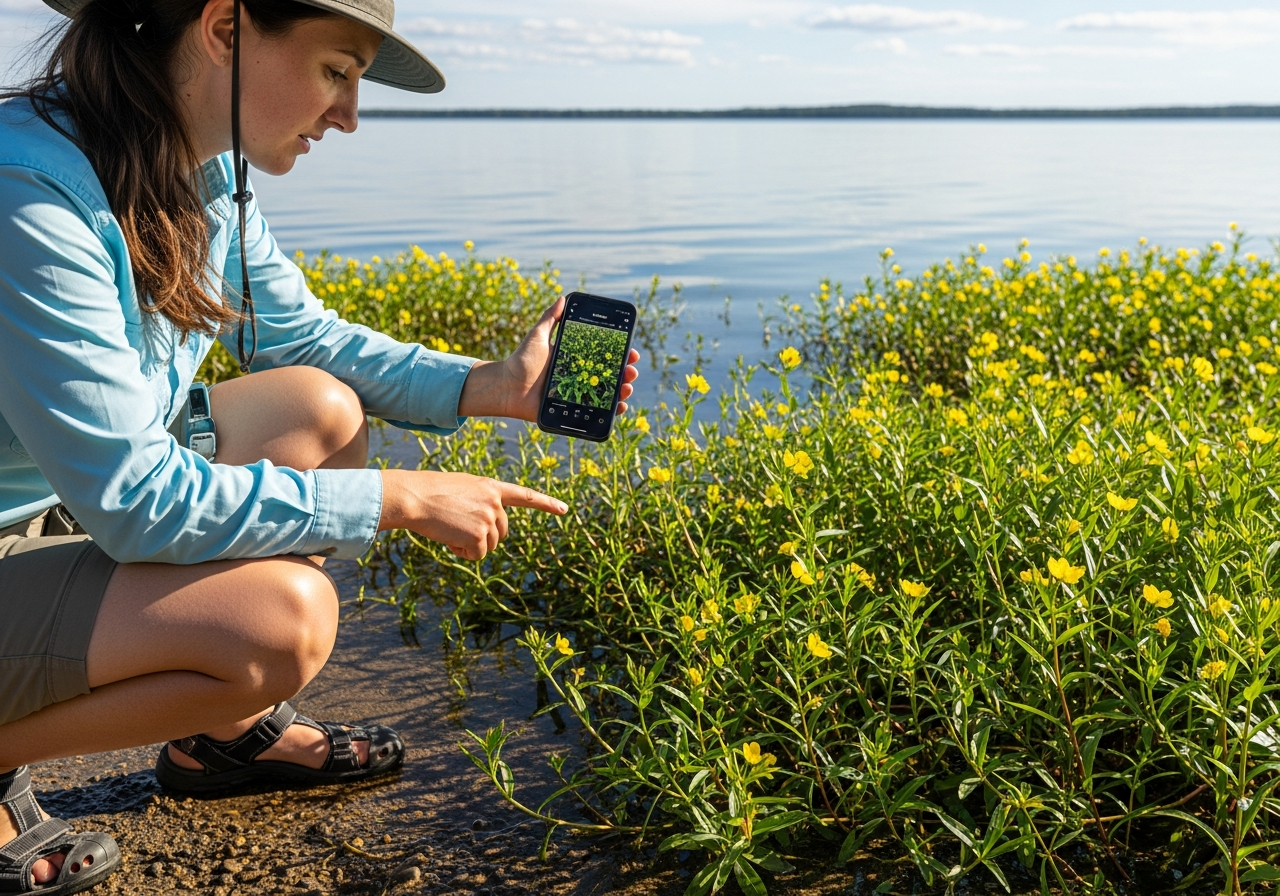
Photographic documentation is essential for verification of new occurrence records. The minimum acceptable photographic record includes five image types: (1) Wide-angle photograph showing the infestation in its habitat context, with visible open water, shoreline, and mat extent. (2) Mid-range photograph showing multiple stems with leaf arrangement visible. (3) Close-up of a stem node showing pneumatophores or rooting. (4) Close-up of a leaf from above showing the shiny surface and alternate arrangement. (5) Flower photograph from above (showing all petals clearly) and from the side (showing sepal length and pedicel attachment). Where flowers are absent, fruit capsules should be photographed to show cylindrical shape and approximate dimensions. All photographs should include GPS metadata if the camera supports it, or a written note of coordinates.
Environmental DNA (eDNA) Sampling
Environmental DNA (eDNA) techniques detect the DNA shed by organisms — through root exudates, pollen, decaying tissue, and mucilage — in water samples. For Ludwigia peploides, species-specific eDNA assays have been developed and validated in the literature, enabling detection of the species' presence in a water body from a single water sample, even at very low plant densities. eDNA sampling is particularly valuable for: (1) winter surveys when above-ground growth is absent; (2) large water bodies where visual surveys cannot cover all areas; (3) post-management monitoring to confirm whether any plants survived treatment. Water samples (typically 1–2 liters) are filtered through 0.45–1 µm membranes in the field, and filters are preserved cold or frozen for laboratory DNA extraction and PCR analysis.
Reporting and Voucher Collection
All confirmed new occurrence records should be reported through EDDMapS (Early Detection and Distribution Mapping System), iNaturalist with a research-grade observation, and your state invasive species reporting system. For new county or watershed records, also notify your state department of natural resources or agriculture directly. For formal scientific records, herbarium voucher specimens — pressed and dried plant material including leaves, stems (showing node structure and any pneumatophores), and flowers or fruit — should be collected and submitted to a regional herbarium. Herbarium specimens provide permanent, verifiable records that can be re-examined as taxonomy evolves. For reporting new invasions and accessing state-specific resources, see our New Invasion Reports guide.
Conclusion
Effective field identification of Ludwigia peploides requires combining morphological knowledge with systematic survey methods, rigorous photographic documentation, and prompt reporting through established databases. The data generated by accurate field surveys directly feeds management decision-making at the regional level — helping prioritize sites for early intervention, tracking the effectiveness of management programs, and identifying new invasion fronts before they become established. Every confirmed occurrence record contributes to a more complete picture of Ludwigia peploides distribution that benefits all management efforts. For information on what happens after you report — and the management options available — see our Early Detection and Rapid Response guide.