Ludwigia peploides in the Sacramento-San Joaquin Delta
The ecology, invasion history, scale, ecological impacts, and management programs at the site of the most significant Ludwigia peploides invasion in the United States.
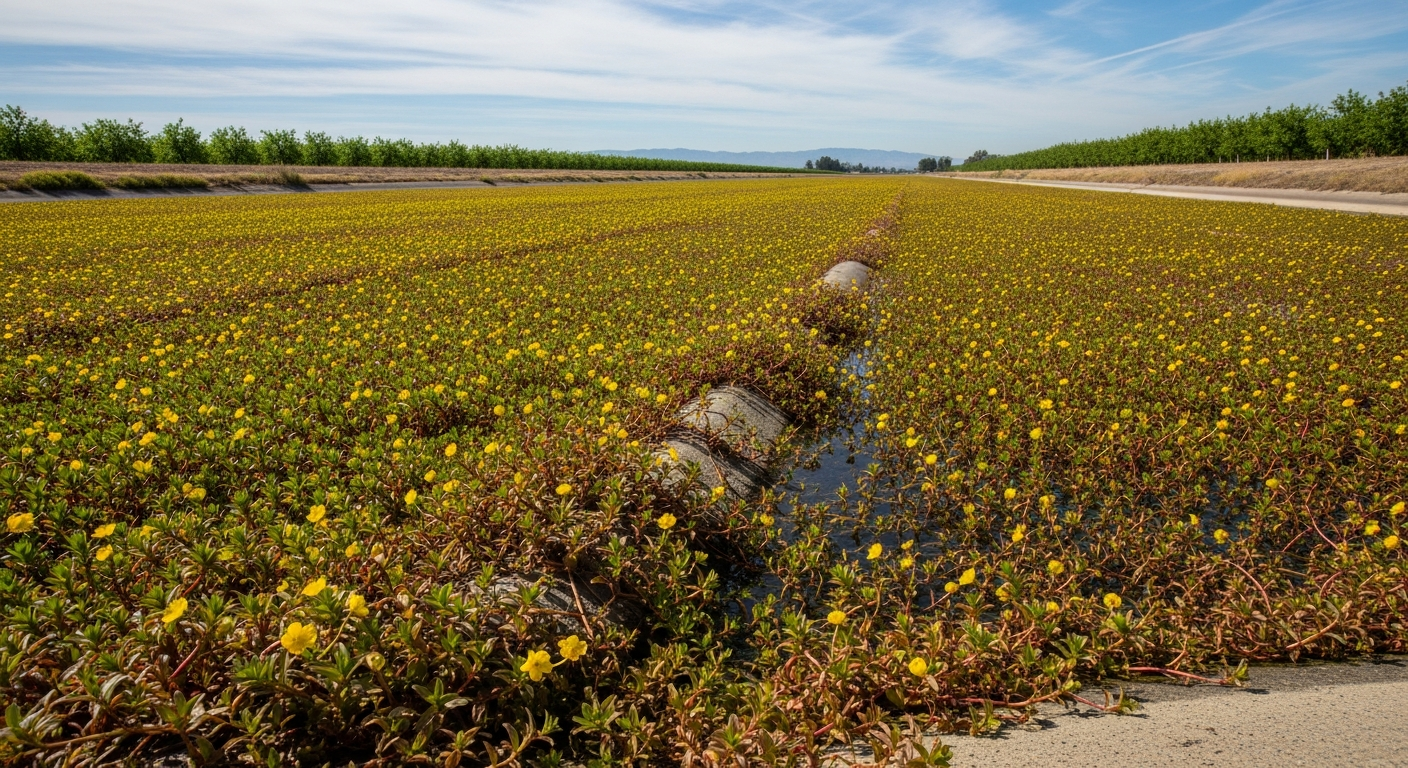
The Sacramento-San Joaquin Delta — where California's two largest rivers meet before flowing into San Francisco Bay — is the epicenter of the most significant Ludwigia peploides invasion in the United States. The 1,100-square-mile Delta system, with its 700+ miles of channels and extensive freshwater wetlands, supports critical endangered species habitat and provides water to 25 million Californians. The Ludwigia invasion threatens both the ecological integrity of this nationally important ecosystem and the water infrastructure that depends on it. For the broader California distribution context, see our California Distribution article.
The Delta Ecosystem
The Sacramento-San Joaquin Delta is one of California's most ecologically important freshwater systems — historically a vast tule marsh and open water habitat supporting extraordinary biodiversity, including multiple runs of Pacific salmon, steelhead, striped bass, and the endemic and federally threatened Delta smelt (Hypomesus transpacificus). The Delta has been heavily modified over the past 150 years through levee construction, agricultural development, and water diversion infrastructure, reducing its total natural wetland area by over 90%. The remaining channels and wetlands retain significant ecological value but are highly vulnerable to invasive species — the same slow-moving, warm, nutrient-enriched conditions that support the remaining native biota also create near-optimal conditions for Ludwigia peploides.
Invasion History
The earliest confirmed California record of L. peploides — collected in 1945 near Sacramento — places the initial invasion in or near the Delta. By the 1970s and 80s, the species was documented across multiple Delta channels. The first major management response came in the 1990s when the scale of the infestation became widely recognized by water managers and conservation agencies. Early management efforts were limited in scope and funding; through the 2000s, management programs expanded in response to documented ecological impacts on Delta smelt habitat and other water quality concerns. By the 2010s, the program had grown to one of the largest aquatic invasive plant management efforts in North America.
Current Scale of Infestation
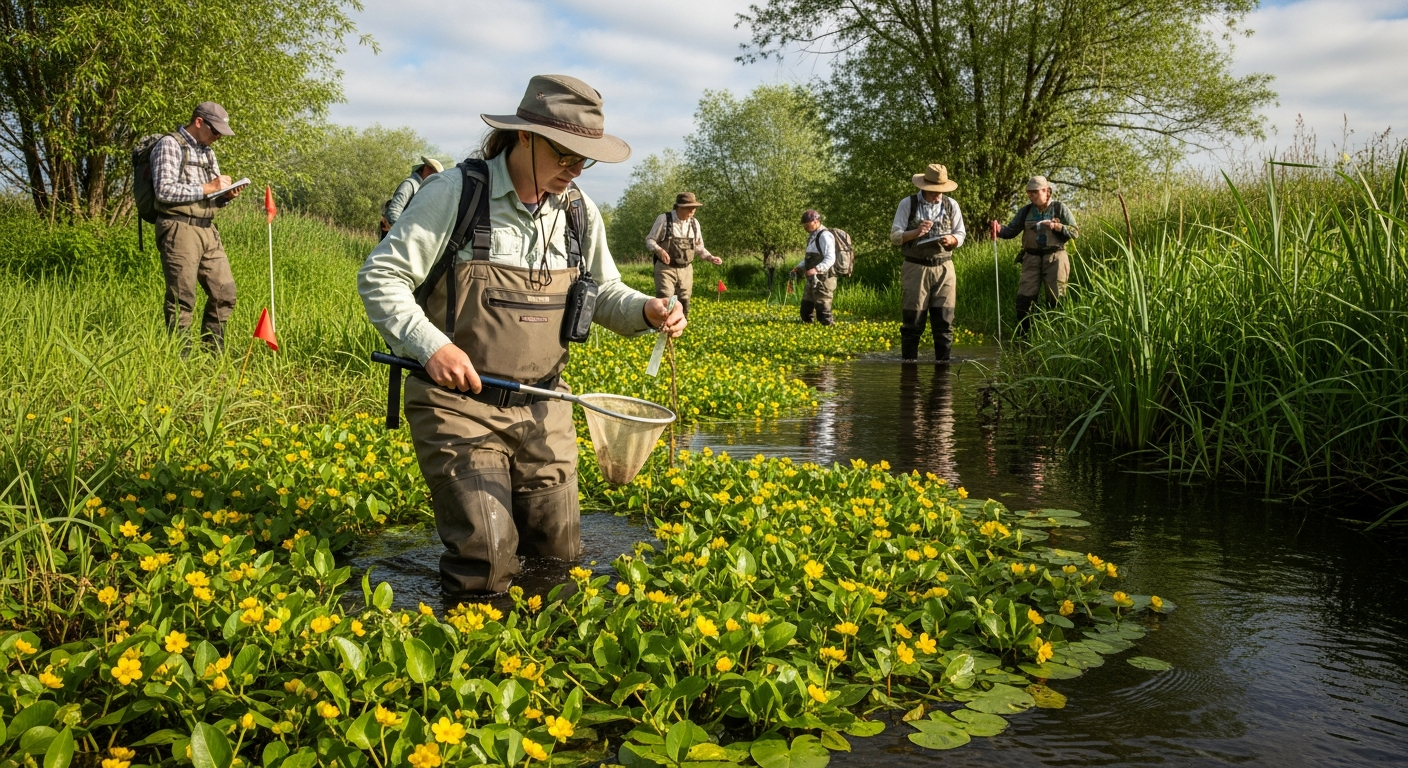
Current surveys document Ludwigia peploides throughout the Delta system, with the most intense infestations concentrated in the southern and central Delta channels — areas with the warmest summer temperatures, highest nutrient loads, and greatest hydrological modification. Infestation extent fluctuates significantly from year to year: dry years with warm water tend to produce peak growth, while flood years disperse plant material but also fragment mats and create new establishment opportunities throughout the system. Annual management treatments — covering thousands of acres with herbicide and mechanical harvesting — are required to maintain suppression at current levels; without treatment, infestation extent would expand rapidly.
Ecological and Economic Impacts
The ecological impacts of Ludwigia peploides in the Delta are severe and multi-faceted. Dense mats reduce light penetration to near zero, eliminating subaqueous aquatic vegetation and the invertebrate communities dependent on it — directly impacting the food web of fish including salmon, striped bass, and Delta smelt. Nighttime and seasonal dissolved oxygen crashes beneath mat edges create hypoxic conditions that exclude fish from previously productive areas. The physical structure of mats blocks fish movement through channels. Water temperature is elevated beneath mats in summer — exacerbating thermal stress on cold-adapted fish species. For a complete analysis of these impacts, see our Oxygen Depletion Effects article and Effects on Fish Populations. Economic impacts include costs to recreational boating and fishing (marina access, propeller damage, navigation hazards) and costs to water management infrastructure (pump intakes, water gates, flood control structures). Annual economic costs in the Delta from Ludwigia invasions are estimated at tens of millions of dollars when management, infrastructure, and recreation losses are combined.
Management Programs
The Delta Ludwigia management program involves multiple agencies — the California Department of Fish and Wildlife (CDFW), Department of Water Resources (DWR), and US Army Corps of Engineers — operating under a coordinated Aquatic Invasive Plant Management Program. Treatment methods include boat-based herbicide application (primarily imazapyr and triclopyr), aerial herbicide application for large inaccessible mats, and mechanical harvesting in areas where herbicide use is restricted near water intakes or sensitive species habitat. Treatment is followed by annual monitoring surveys to track regrowth and reinfestation. The program represents one of the most intensive aquatic invasive plant management operations in the US. Costs run to several million dollars annually. For more on treatment costs and economics, see Annual Control Budgets for Ludwigia Management.
Conclusion
The Sacramento-San Joaquin Delta invasion represents the worst-case scenario for Ludwigia peploides in the United States — a large, highly productive, and biologically critical water body system heavily infested after decades without adequate management response. The Delta program provides the most detailed and longest-running dataset on large-scale Ludwigia management in the US, with important lessons for other regions facing similar invasions. The overarching lesson is that early, aggressive management before infestations reach the scale of the Delta invasion provides far better ecological and economic outcomes than attempting to manage a large established infestation — a lesson that drives the emphasis on early detection and rapid response in management frameworks everywhere else.