Ludwigia peploides Reproduction Cycle: Seasonal Patterns
The annual reproductive calendar of Ludwigia peploides — vegetative propagation, spring growth flushes, summer flowering, seed set, autumn senescence, and the multi-year seed bank that drives management complexity.
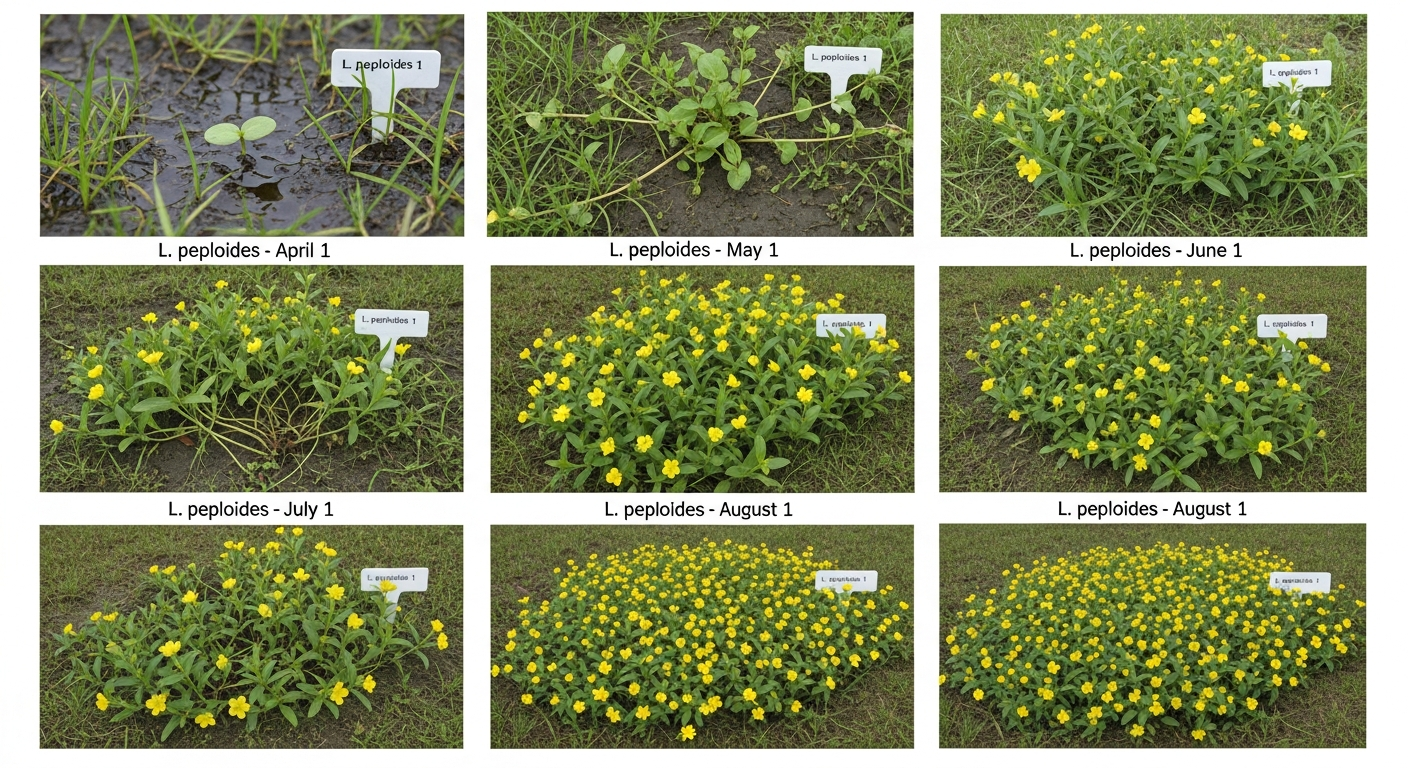
The reproductive biology of Ludwigia peploides is a key factor in its invasive success and in the difficulty of achieving lasting control. Unlike many invasive plants that rely primarily on seed reproduction, L. peploides combines efficient vegetative propagation from stem fragments and root crowns with abundant seed production — creating two independent pathways for population persistence and establishment. Understanding the seasonal rhythm of reproduction guides both management timing and multi-year program design. For growth rate data, see Growth Rate. For the management implications, see Integrated Management.
Vegetative Reproduction: The Primary Mechanism
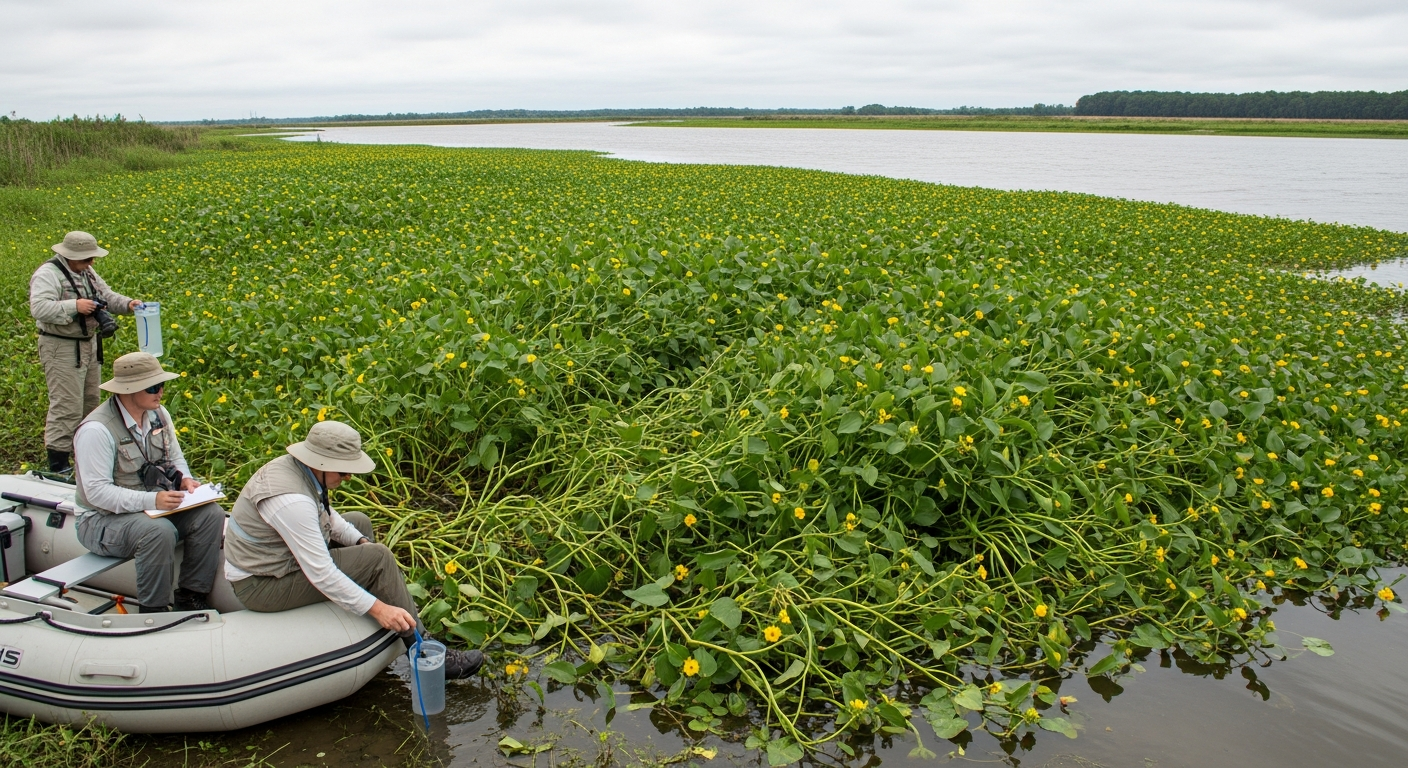
Vegetative reproduction — the production of new individual plants from fragments of existing plants or from overwintering root crowns — is the dominant mode of reproduction in established Ludwigia peploides populations and the primary driver of within-water-body population expansion. Three vegetative mechanisms operate simultaneously: Nodal rooting of elongating stems: As stems grow horizontally across the water surface, nodes that contact wet substrate (at the margins, or when stems sink slightly below the surface) produce adventitious roots and establish new root crowns. This is the mechanism of lateral mat expansion. Fragment regeneration: Any stem fragment containing at least one node is a viable propagule — it can float to a new location, contact wet substrate, root, and establish a new plant. Fragment viability under field conditions has been documented for up to 2–4 weeks floating in water, and longer when moist but not submerged. Root crown regrowth: Established root crowns in the sediment survive through winter and produce new shoot growth in spring. Root crowns can maintain viability for 2+ years in the sediment, even if above-ground shoots are killed by frost or treatment.
Flowering and Sexual Reproduction
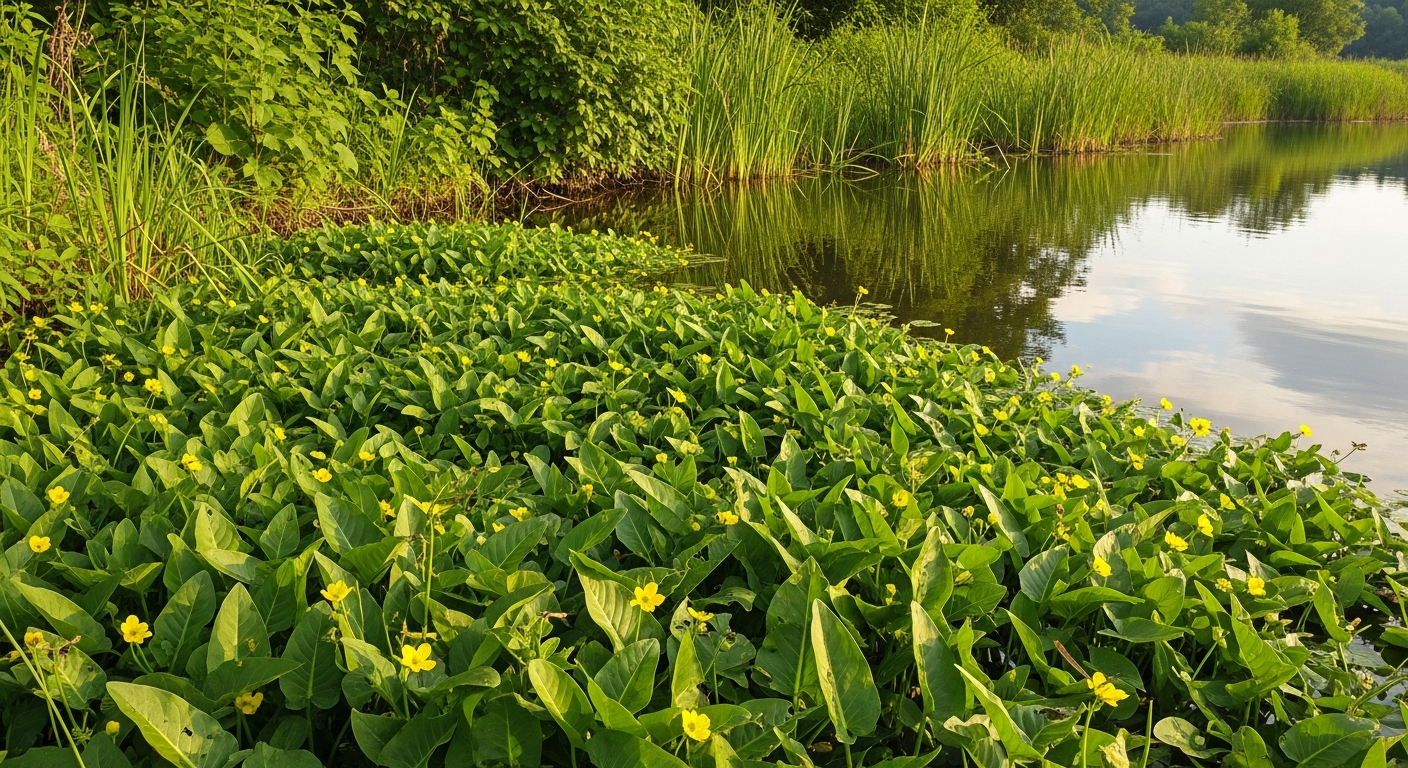
Sexual reproduction through flowers and seeds provides the long-distance dispersal capacity and genetic diversity that vegetative reproduction cannot. Flowering begins in late spring when stem growth is well established and temperatures are warm — typically May in temperate North America, earlier in warmer regions. Peak flowering is June–August, declining in September–October. Individual flowers — large, bright yellow, 4–6 cm diameter — are produced prolifically from leaf axils along the upper portions of elongating stems. Each flower, if successfully pollinated by bumblebees or other insect visitors, produces a cylindrical capsule containing 20–40 seeds. A large established plant in peak summer may produce hundreds of flowers per week, generating thousands of seeds over the course of a season. For detailed flower biology, see Flower Identification.
Seed Dispersal
Seeds are dispersed through multiple mechanisms that operate over different spatial scales: Hydrochory (water dispersal): Seeds are buoyant and float in water for extended periods — weeks to months — enabling downstream transport in flowing water systems. In river networks, seeds from an upstream infestation can travel many kilometers in a single flood event. Endozoochory (dispersal via animal gut): Waterfowl consume the fruit capsules and seeds along with other aquatic plant material; seeds survive digestion and are deposited viable in droppings at subsequent water bodies. Migratory ducks may transport seeds hundreds of kilometers on a single migration flight. Epizoochory (external attachment): Seeds and capsule fragments attach to the feathers and feet of wading birds and to the fur and footwear of mammals. Human-mediated dispersal: Seeds and capsule fragments travel in boat bilge water, on fishing gear, and in soil attached to aquatic plants in trade. The combination of these dispersal mechanisms is responsible for the global distribution of L. peploides — no single dispersal pathway could explain its occurrence on all inhabited continents.
Seed Bank Persistence
The sediment seed bank — the reservoir of viable seeds stored in the upper layers of water body sediment — is one of the most important and least visible aspects of L. peploides population persistence. Published studies report seed viability in sediment of 3–7 years, depending on sediment temperature, moisture, and oxygen conditions. In cool, moist, anaerobic sediments (conditions typical of many freshwater water bodies), seed viability at the upper end of this range is most relevant. The practical implication: even if 100% of above-ground plants are killed in a management treatment, the sediment seed bank can produce new seedling cohorts for 3–7 subsequent growing seasons. This is the primary biological reason why multi-year management programs are necessary — and why eradication, rather than suppression, is so rarely achievable once a significant seed bank has accumulated. Management programs must plan for 3–5+ years of follow-up treatment to deplete the seed bank progressively through repeated germination and seedling mortality cycles.
Overwintering and Spring Regrowth
In temperate regions with winter frosts, the annual cycle of L. peploides ends with autumn senescence of above-ground tissue. Root crowns in the sediment and at the waterline accumulate carbohydrate reserves through late summer and early autumn, fueling overwintering survival and the vigorous spring regrowth flush. Root crowns survive through winter in USDA zones 6 and above — meaning that most of the invaded range in North America supports overwintering populations. In zones 5 and below (colder northern US, Canada), root crown survival is variable and depends on insulation by water, snow cover, and the specific microhabitat. New spring growth from established root crowns typically emerges 2–4 weeks earlier than seedling germination from the seed bank — giving established plants a significant competitive head start over both native plants and newly germinating Ludwigia seeds. This phenological advantage reinforces the importance of targeting root crowns directly in management programs, rather than relying on seedling management alone.
Conclusion
The reproduction cycle of Ludwigia peploides — combining highly efficient vegetative propagation with abundant seed production and multi-year seed bank persistence — creates the biological resilience that makes it so challenging to control. Understanding this cycle in detail guides every aspect of management design: treatment timing (target before seed set to minimize seed bank additions), treatment methods (systemic herbicides or root excavation to address root crowns), and program duration (minimum 3–5 years to deplete the seed bank). The reproductive biology of Ludwigia sets the biological minimum for effective management; programs that fail to account for it will consistently underperform their goals.