Water Level Management for Ludwigia peploides Control
Manipulating water levels to desiccate or drown invasive plant populations is an ecologically targeted approach requiring appropriate water control infrastructure but avoiding chemical inputs.
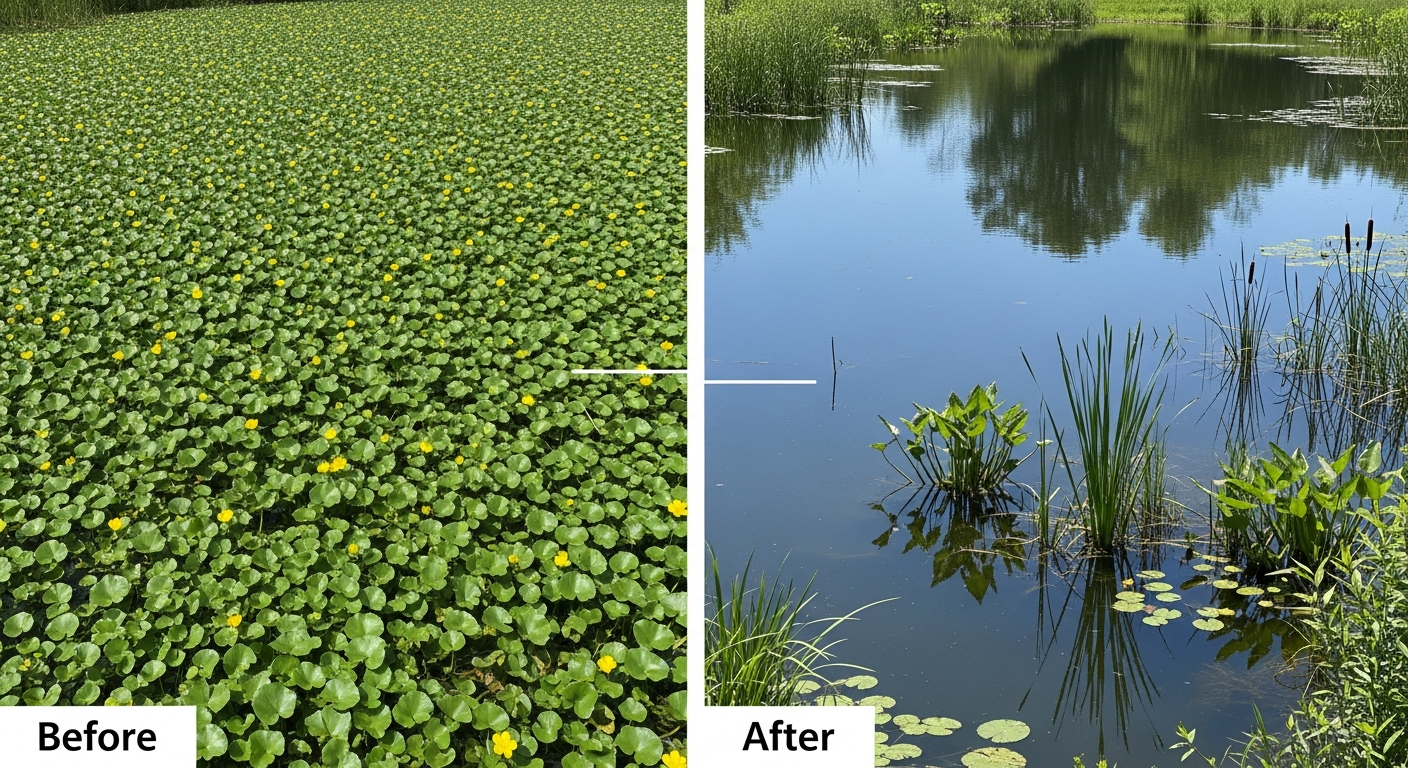
Water level manipulation exploits the fundamental physiological requirements of aquatic plants — their dependence on specific water depths and moisture conditions — to create conditions lethal to L. peploides while potentially less damaging than chemical alternatives to the broader aquatic community. The approach has particular appeal in managed water bodies (ponds, reservoirs, irrigation canals) where control structures allow intentional manipulation of water levels, and in contexts where herbicide use is restricted or undesirable.
Water Drawdown and Desiccation
Summer drawdown — deliberately lowering the water level to expose L. peploides root systems to air — is the most widely applied and best-documented form of water level management for this species. When root systems are exposed to air temperatures above 25°C, the highly hydrophilic root tissue begins to desiccate rapidly. Pneumatophores — normally adapted for atmospheric oxygen uptake — become desiccation points as their large surface area facilitates rapid water loss. Under optimal conditions of high temperature, low humidity, and direct solar exposure, complete root kill can be achieved in 4–6 weeks. Cooler, more humid conditions extend the required period substantially.
The practical requirements for effective drawdown control are significant: the water control structure must allow complete or near-complete drawdown of the target water body or management unit; the drawdown must be sustained for the full desiccation period; and the timing must coincide with high-temperature summer conditions. These requirements often conflict with other uses of the water body — water supply, irrigation, recreation, angling — and must be negotiated with all stakeholders before implementation.
Deep Inundation for Seedling Suppression
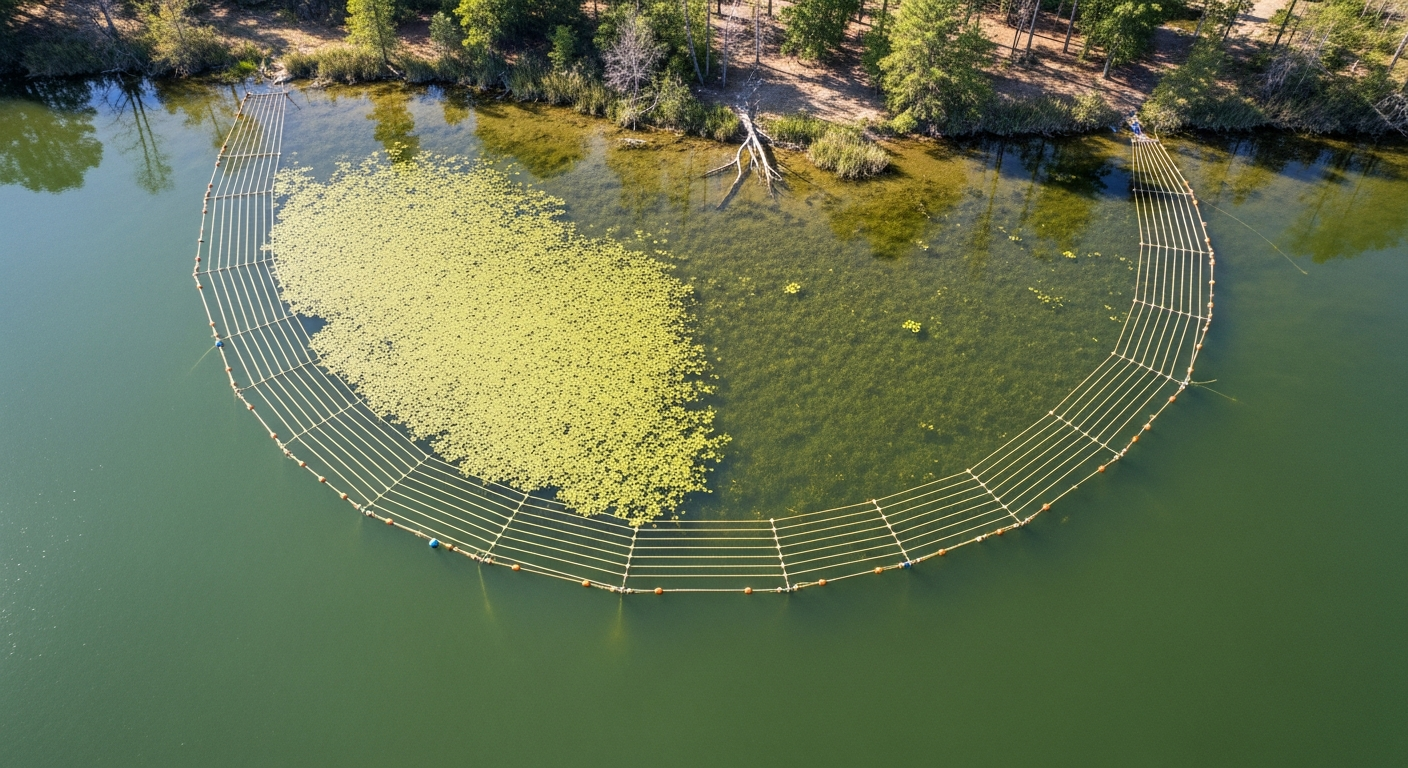
The reverse approach — raising water levels to depths that suppress L. peploides establishment and growth — is more limited in effectiveness against established populations but can be a useful preventative tool. Seeds require light for germination, and deep inundation (greater than 1 m) significantly reduces germination in the water column. Established seedlings in shallow water can be suppressed if inundation depth is increased beyond their elongation capacity before they reach the surface, though established adult plants can extend stems to reach the surface from depths of 2–3 m.
Critical Timing Windows
The timing of drawdown is critical to both efficacy and minimizing ecological impacts. Drawdown initiated in late spring (May–June) catches the plant at active early-growth phase, when carbohydrate reserves are depleted and root systems most vulnerable to desiccation stress. Drawdown timed in late summer (August–September) coincides with seed maturation, so exposed plant material should be collected and disposed of before seeds disperse. Winter drawdown is less effective at achieving desiccation kill due to low temperatures but can be used to expose root material for physical removal without desiccation risk to amphibians and other sensitive species.
Limitations and Ecological Risks
Water level management carries inherent ecological risks beyond its target species. Summer drawdown can strand or kill fish, expose invertebrate communities to lethal desiccation, damage native aquatic and emergent plant communities, and trigger algal blooms as nutrients are released from exposed sediments. Post-drawdown reflooding of nutrient-enriched sediments can produce severe water quality events. These impacts must be weighed against the management benefit and minimized through careful planning, stakeholder consultation, and where necessary, mitigation measures such as pre-drawdown fish rescue.
Conclusion
Water level management is a valuable, non-chemical tool for L. peploides control in managed water bodies with appropriate infrastructure. Its effectiveness depends on sustained high-temperature desiccation conditions and is best combined with mechanical removal of desiccated plant material before reflooding. The ecological impacts of drawdown on non-target species must be assessed, mitigated, and monitored. Where applicable, water level management provides an important addition to the integrated management toolkit, particularly for pond and reservoir managers seeking to minimize chemical inputs.