Regulatory Frameworks for Ludwigia peploides
The legal framework governing L. peploides management varies across jurisdictions but consistently addresses trade restrictions, management obligations, and permitted control methods.
Effective invasive species management requires not only scientific knowledge and operational capability but also a supportive regulatory framework that restricts introduction pathways, mandates management where necessary, and provides clear legal authority for control operations. Ludwigia peploides is now subject to regulatory listing in most jurisdictions where it is invasive, though the specific provisions, penalties, and management obligations vary substantially across countries and regions.
European Union Regulation
The EU Regulation on Invasive Alien Species (Regulation (EU) No 1143/2014) provides the primary legal framework for invasive species management across EU member states. Ludwigia peploides was listed on the first Union List of Invasive Alien Species of Union Concern in 2016 (Commission Implementing Regulation (EU) 2016/1141), triggering a comprehensive set of obligations and restrictions applicable across all 27 member states.
The listing prohibits import, export, production, breeding, transport, keeping, stocking, trading, planting, growing, or releasing L. peploides. Member states are required to implement management measures for established populations, develop and implement action plans on introduction pathways, and report to the European Commission on implementation progress. Surveillance systems must be established to monitor the listed species' presence and population status. Member states must also ensure that effective, proportionate, and dissuasive penalties exist for violations.
United Kingdom
Following withdrawal from the EU, the UK has maintained and extended equivalent domestic legislation. Ludwigia peploides is listed under Schedule 9 of the Wildlife and Countryside Act 1981 (as amended), which makes it an offence to plant or otherwise cause the species to grow in the wild. The Environmental Damage Regulations 2009 provide additional legal tools for addressing invasive species impacts on protected habitats. Scotland, Wales, and Northern Ireland have comparable provisions under devolved legislation. Non-native species management in England is overseen by the Great Britain Non-native Species Secretariat (GBNNSS), which coordinates the rapid response and biosecurity programs at national level.
Australia
In Australia, L. peploides invasive management occurs primarily under state legislation, with significant variation between states and territories. In New South Wales, the species is listed under the Biosecurity Act 2015 as a Weed of National Significance, imposing general biosecurity duties on landholders. In Victoria, it is listed as a prohibited aquatic plant under the Catchment and Land Protection Act 1994. South Australia and Queensland have similar provisions under their respective biosecurity frameworks. The federal Environment Protection and Biodiversity Conservation Act 1999 does not currently list L. peploides as a key threatening process, but individual Threatened Ecological Communities impacted by its invasion may receive protection through that pathway.
United States
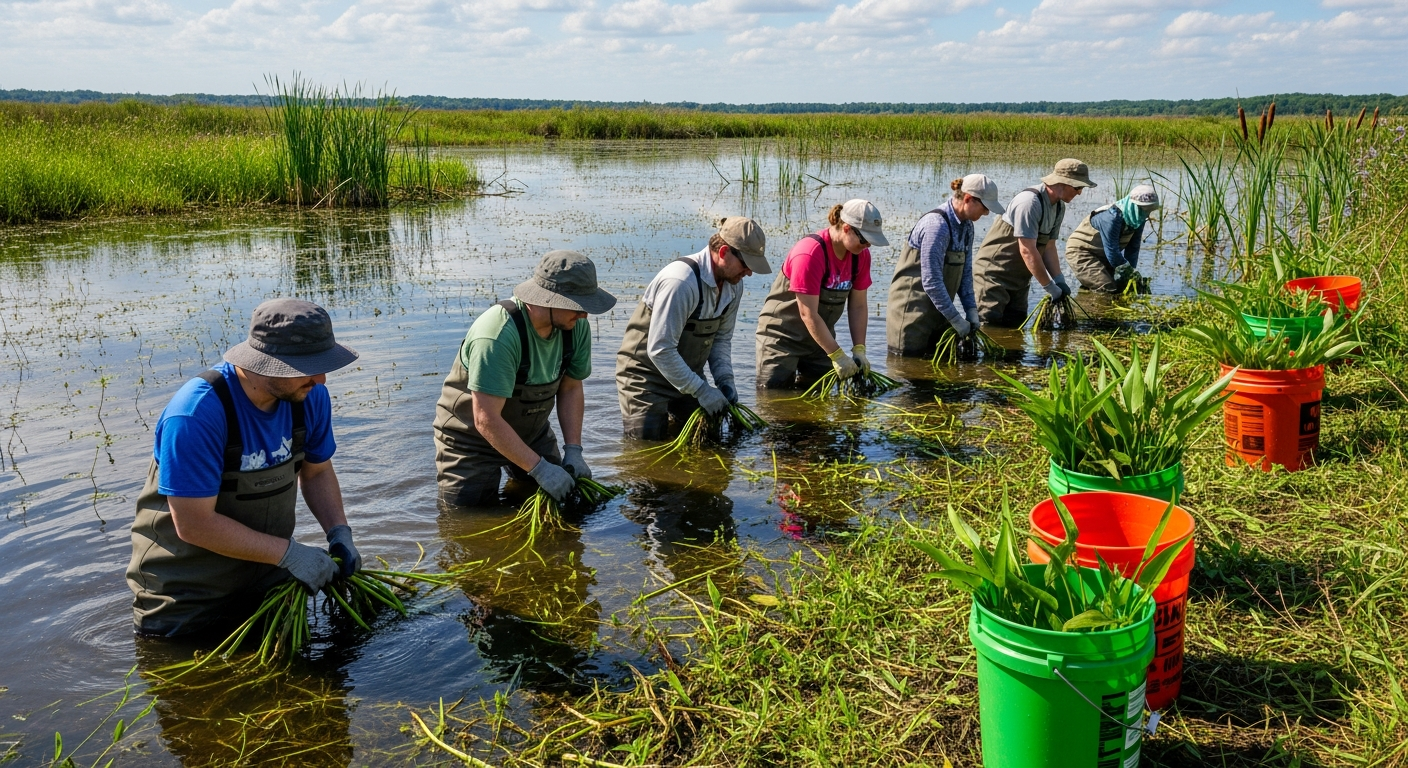
Regulation of L. peploides in the United States occurs primarily at state level. California lists it as a listed noxious weed under the California Food and Agriculture Code, with provisions restricting sale and requiring management by landowners on state-managed lands. Oregon and Washington have similar noxious weed listings. Federal authority over aquatic invasive species is exercised primarily through the Nonindigenous Aquatic Nuisance Prevention and Control Act, which authorizes federal agency action on priority aquatic invasive species and provides funding for state programs, but does not directly prohibit trade in L. peploides at the federal level. The US Army Corps of Engineers has authority over operations affecting navigable waters under Section 404 of the Clean Water Act, which is relevant to mechanical management operations in regulated waters.
Conclusion
The regulatory framework for L. peploides management has strengthened substantially over the past decade, particularly through the EU IAS Regulation, which provides the most comprehensive statutory framework globally. Effective regulatory implementation requires consistent enforcement of trade restrictions, clear communication of legal obligations to landowners and managers, streamlined authorization processes for management activities that avoid unnecessary delays in effective control, and international coordination to address cross-border dispersal and consistent trade regulation. Practitioners and managers should ensure they understand the specific regulatory requirements applicable in their jurisdiction before initiating any management operations.