Ludwigia peploides Habitat Modification
Through its capacity to physically restructure the aquatic environment — altering light, flow, sediment dynamics, and spatial habitat configuration — L. peploides acts as an ecosystem engineer with far-reaching consequences for ecological community structure.
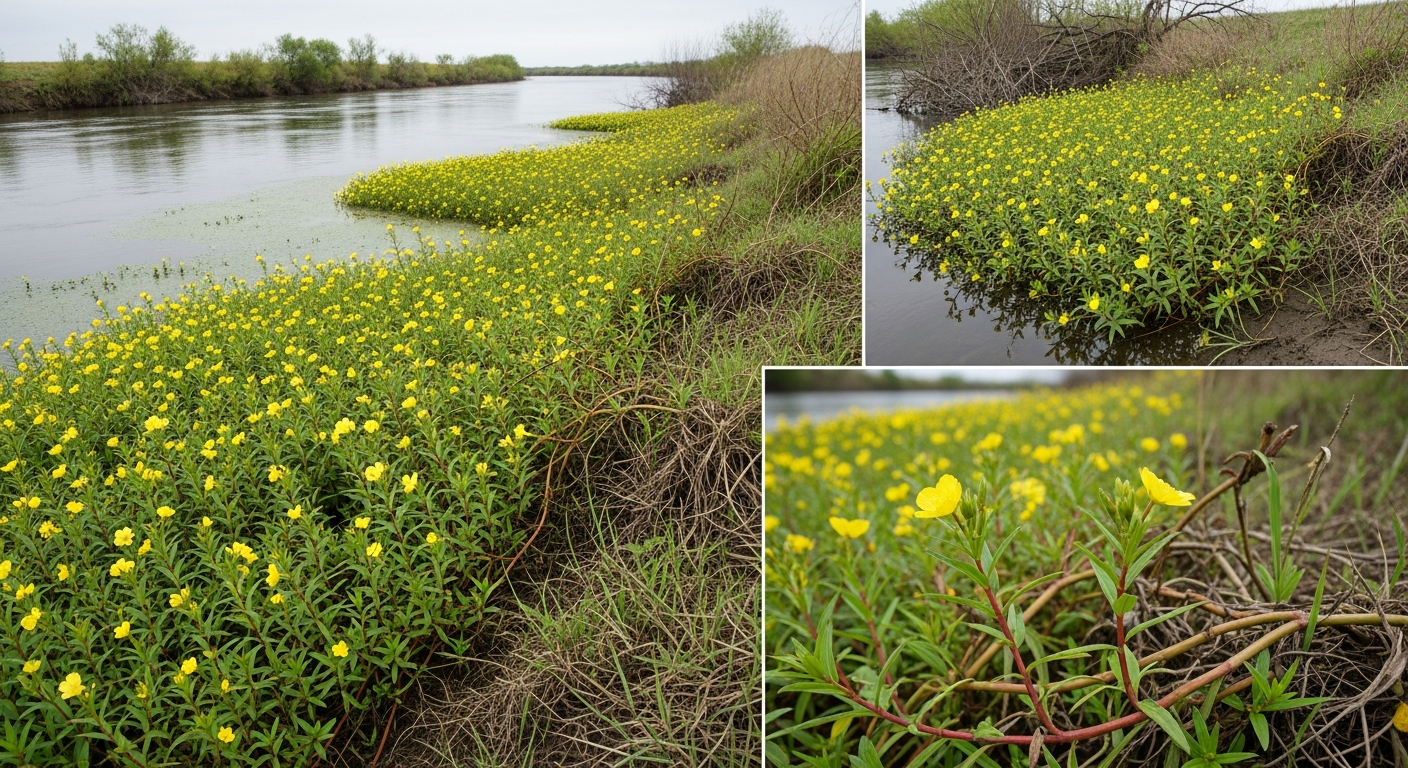
An ecosystem engineer is an organism that directly or indirectly modulates the availability of resources to other species by causing physical state changes in biotic or abiotic materials. Ludwigia peploides qualifies unambiguously as a physical ecosystem engineer in its invasive range — it does not simply compete with native species for resources but fundamentally restructures the physical environment in ways that alter resource availability for the entire community. Understanding this engineering role is essential for grasping the depth and persistence of ecological change associated with L. peploides invasion.
Physical Habitat Transformation
The transformation of open or structurally complex aquatic habitats into dense floating mat systems by L. peploides is the most immediately obvious form of habitat modification. A healthy water body with diverse aquatic habitats — open water, submerged beds, floating-leaved communities, emergent fringes — is progressively replaced by a near-monoculture mat system characterized by a dense above-water stem canopy (20–60 cm tall), a closed floating mat surface impermeable to light, a dark sub-mat zone colonized only by hypoxia-tolerant organisms, and a simplified sediment surface covered in decomposing organic debris rather than diverse macrophyte root architectures.
This physical transformation eliminates habitat heterogeneity — the spatial diversity of microhabitats that sustains the diverse assemblage of species characteristic of healthy freshwater ecosystems. The ecological principle that diversity is correlated with habitat heterogeneity predicts the biodiversity losses observed in heavily invaded water bodies: reduced spatial complexity of habitat types translates directly into reduced species diversity at every trophic level.
Hydraulic Modification
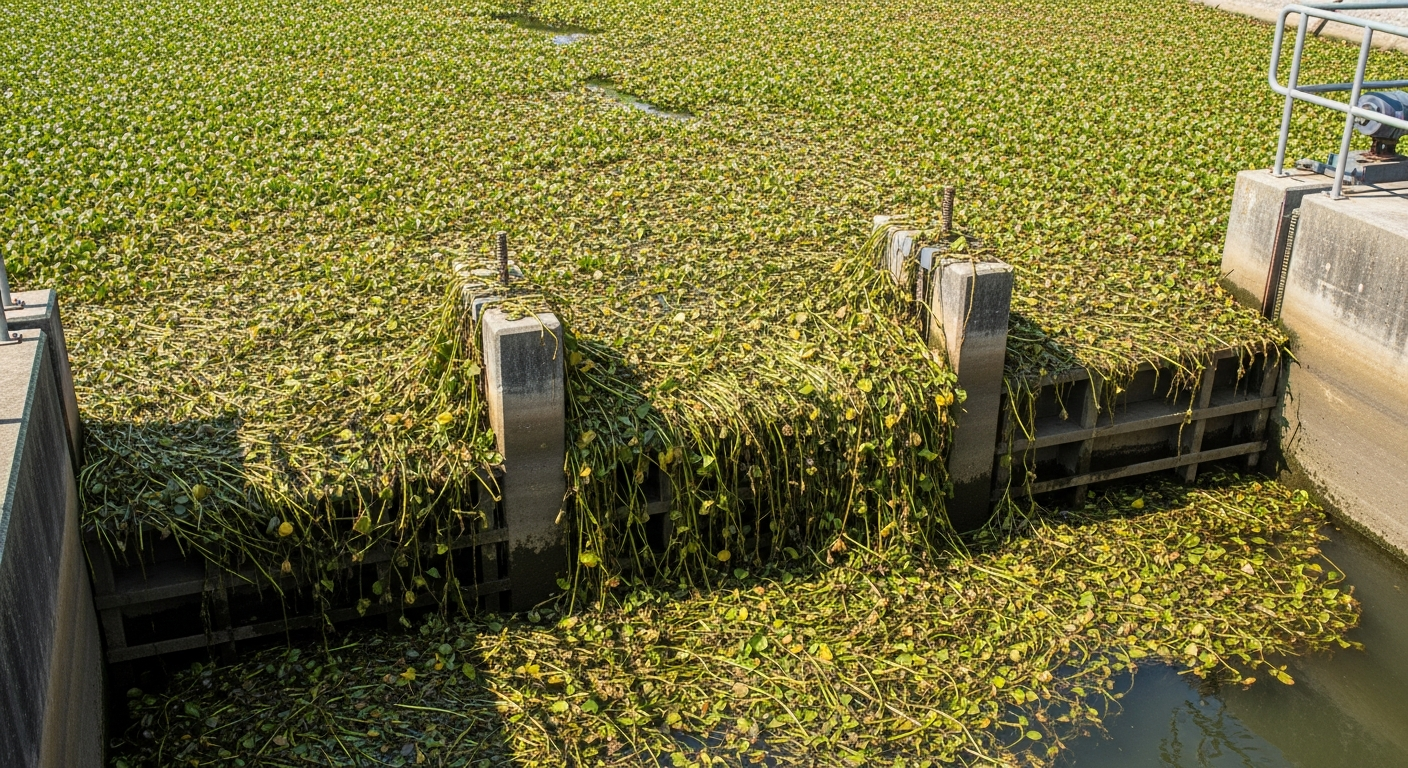
Dense L. peploides mats substantially alter the hydraulic characteristics of invaded water bodies. Velocity measurements within established mats show reductions of 50–90% in flow velocity compared to adjacent open-water sections, as the stems and roots act as a high-drag substrate that dissipates hydraulic energy. This velocity reduction has cascading effects: shear stress on the channel bed decreases, reducing the self-cleaning capacity of the channel and allowing fine sediment deposition. Water levels upstream of dense stands can be elevated measurably, increasing hydraulic head and potentially increasing flood risk in adjacent low-lying areas.
In drainage-managed agricultural landscapes — the irrigation channels, drainage ditches, and regulated watercourses characteristic of lowland Europe — the hydraulic obstruction caused by L. peploides can severely compromise the drainage function for which the channel network was designed. Increased maintenance costs to maintain channel capacity represent a direct economic impact of invasion on agricultural water management infrastructure.
Sediment Dynamics and Organic Accumulation
The combined effects of reduced flow velocity and dense root mat architecture create conditions highly favourable for sediment deposition and organic matter accumulation within L. peploides stands. Fine suspended particles settle from the water column under the calm conditions created by the mat, progressively raising the sediment surface. Organic matter from leaf litter, senescent stems, and root debris accumulates at rates far exceeding decomposition under the anoxic conditions prevailing at the sediment surface. Over years to decades, this organic accumulation can build up substantial peat-like deposits that permanently alter the topography and substrate character of the invaded area.
Successional Dynamics and Terrestrialization
The progressive accumulation of organic debris and raised sediment surface creates a positive feedback that can accelerate aquatic to terrestrial succession — the ecological process by which open water habitats are progressively colonized by emergent and ultimately terrestrial vegetation. L. peploides itself participates in this succession, as its mat can serve as a substrate for establishment of lightweight terrestrial plant species whose seeds land on the mat surface. Where this process proceeds to completion, the ecological transformation from open water to terrestrial habitat is effectively permanent at human timescales without active management.
Conclusion
The habitat modification capacity of L. peploides — its role as a physical ecosystem engineer — extends its ecological impact far beyond simple competitive displacement of individual native species. By restructuring the physical environment at scales from sediment chemistry to channel hydraulics, it drives ecological community changes that in some cases are effectively irreversible without active restoration intervention. This engineering role underscores the importance of early detection and rapid response: the habitat modification legacy of long-established invasions is the most persistent and costly aspect of L. peploides impact, and preventing it through timely management is far more achievable than reversing it once established.