Invasion Ecology of Ludwigia peploides
The invasion trajectory of L. peploides illustrates key theoretical principles of invasion ecology — the lag phase, enemy release, biotic resistance, and the progression from establishment to ecological impact — in ways that illuminate both the biology of invasion and the management challenge.
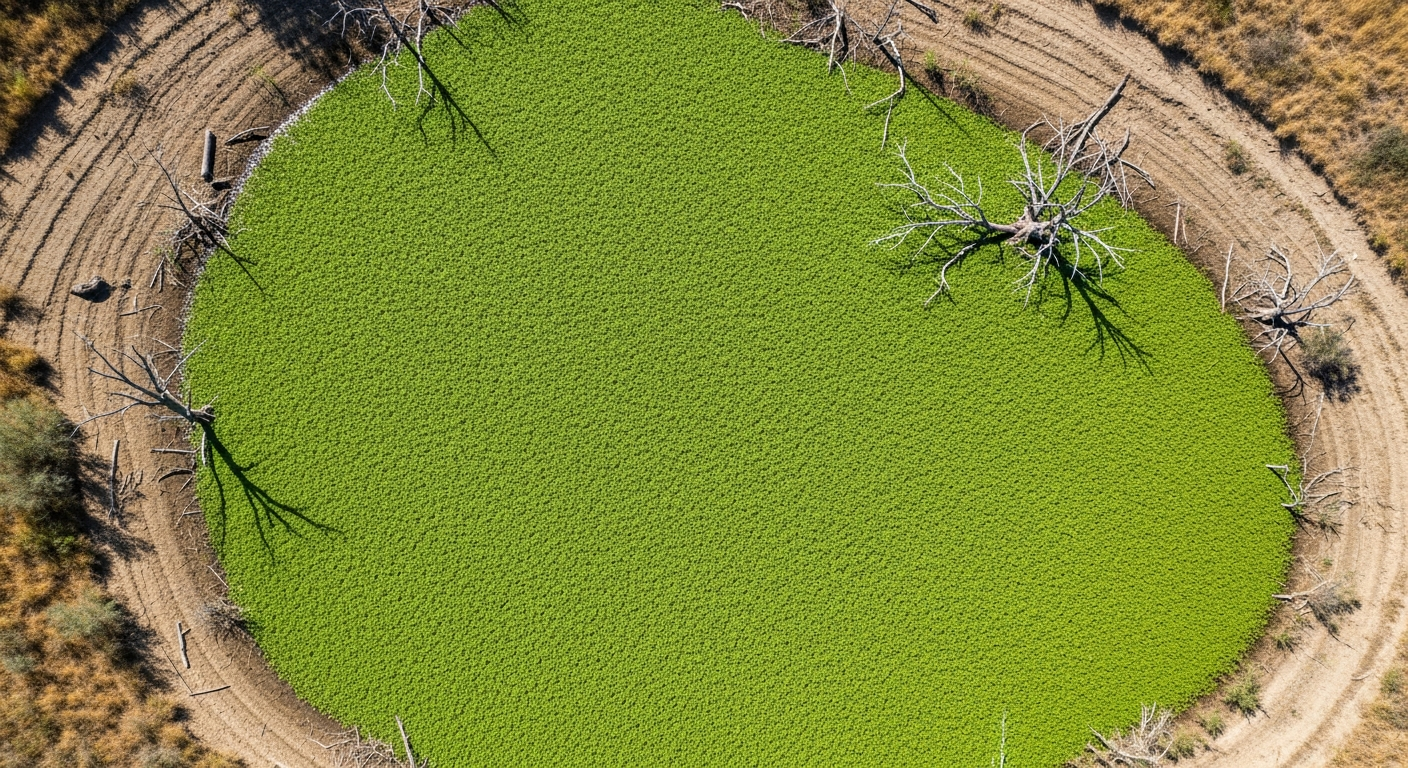
Invasion ecology — the scientific study of the processes by which non-native species establish, spread, and impact ecological systems — has developed a rich body of theory and empirical knowledge over the past half-century. Ludwigia peploides is not only a management priority but also a valuable scientific model: its well-documented invasion history in Europe, genetic diversity patterns, performance differences between native and invasive populations, and measurable ecological impacts provide a concrete instantiation of theoretical invasion ecology concepts that can inform both scientific understanding and practical management.
Lag Phase and Early Establishment
One of the most practically important — and counterintuitive — phenomena in invasion ecology is the lag phase: the period following initial introduction when population size and geographic spread remain low, often for decades or even longer, before a transition to rapid expansion. This lag phase has been documented for L. peploides in France, where populations were established by the 1820s but remained relatively localized for over a century. The late 20th century saw a transition to landscape-scale spread that now characterizes the invasion.
Multiple mechanisms can contribute to lag phases in invasive plant populations: initial genetic bottlenecks that limit growth and adaptation capacity; insufficient propagule pressure for saturation of suitable habitats; absence of the hydrological connectivity pathways needed for dispersal; and threshold effects in habitat suitability related to eutrophication levels, temperature trends, or water management changes. The lag phase concept has important management implications: populations that appear stable and localized may be poised for explosive expansion, making complacency about apparently contained invasions a potentially costly management error.
Biotic Resistance and Invasion Success
The biotic resistance hypothesis — that diverse, intact native communities resist invasion more effectively than degraded, simplified ones — finds empirical support in the observed patterns of L. peploides invasion. The species is most severe in eutrophied, disturbed water bodies where native species diversity has already been reduced by nutrient enrichment, physical management (dredging, straightening), and pollution. In relatively undisturbed, oligotrophic water bodies with intact native communities, L. peploides establishment and spread are often slower and less complete.
This relationship suggests that addressing the underlying disturbance and eutrophication drivers of freshwater degradation — not just treating the invasive symptoms — could reduce invasion susceptibility. A water body restored to near-natural hydrological and nutrient conditions may be more resistant to reinvasion following L. peploides management than one remaining in a degraded state.

Enemy Release Hypothesis
The enemy release hypothesis (ERH) proposes that invasive species perform better in their new range because they have escaped the specialist natural enemies — herbivores, pathogens, parasites — that regulate their populations in the native range. For L. peploides, evidence supporting the ERH includes: significantly lower levels of specialist herbivore damage documented on European invasive plants compared to native-range North American plants; consistently higher growth rates and final biomass of European invasive populations in common garden experiments; and the absence in Europe of the specialist weevil and insect herbivore communities that create measurable population-level damage in the native range.
The Invasion Curve and Management Intervention Points
The "invasion curve" — depicting the relationship between population growth and management cost over the stages of invasion — provides a powerful framework for prioritizing management investment. In the introduction and early establishment phase (small, localized populations), management costs are low and eradication is feasible. In the rapid-spread phase (exponential growth, expanding geographic range), costs rise dramatically and eradication becomes increasingly impractical. In the entrenched phase (large, widely distributed populations), management costs are highest and the achievable objective shifts from eradication to suppression. L. peploides management in most heavily invaded regions is now firmly in the entrenched phase for established populations, emphasizing the value of rapid response to newly detected populations that are still in the early establishment phase.
Conclusion
The invasion ecology of Ludwigia peploides is both scientifically rich and practically instructive. The lag phase demonstrates the danger of management complacency about apparently stable invasions. The biotic resistance pattern supports addressing underlying ecological degradation as a component of invasion prevention. The enemy release hypothesis validates the biological control research program currently underway. And the invasion curve provides the most compelling justification for early detection and rapid response investment. Understanding these ecological concepts deepens management effectiveness by aligning intervention strategies with the biological reality of how invasions proceed.