Ecosystem Services and Ludwigia peploides
The degradation of ecosystem services — from fisheries and water purification to recreation and biodiversity support — by L. peploides invasion provides a powerful economic framework for justifying management investment.
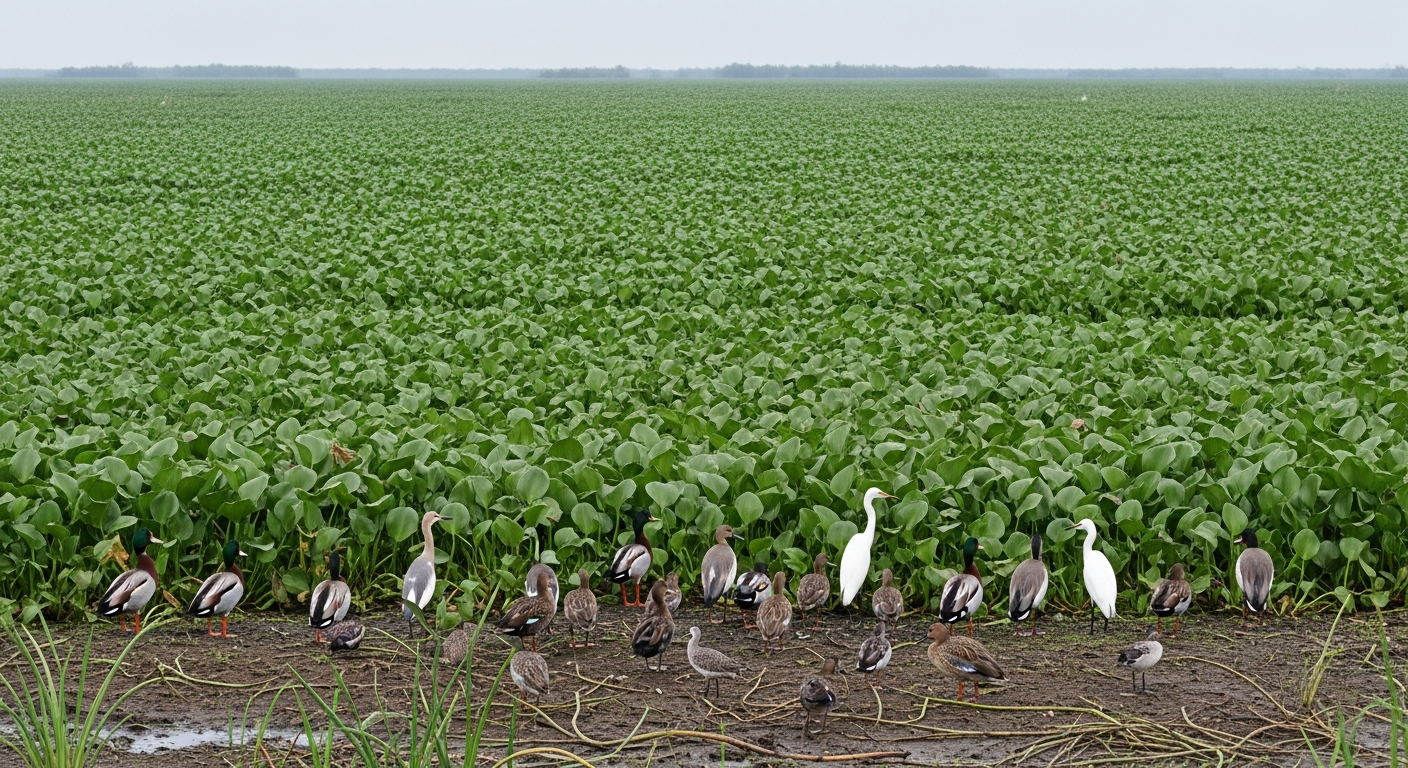
The ecosystem services framework — developed most comprehensively in the Millennium Ecosystem Assessment (2005) — provides a systematic approach to identifying and valuing the benefits that functioning ecosystems provide to human society. For freshwater systems invaded by Ludwigia peploides, this framework offers a more complete accounting of invasion impacts than species-loss metrics alone, revealing economic costs that resonate with policymakers and funders in ways that purely scientific assessments sometimes do not.
Provisioning Services: Fisheries, Food, and Water
Provisioning services — the tangible goods extracted from ecosystems — are among the most directly and obviously affected by L. peploides invasion. Freshwater fisheries represent major economic assets across Europe, the United States, and Australia, both in terms of commercial fish production and the recreational angling economy. The documented decline of fish diversity and abundance in L. peploides-invaded water bodies translates directly into reduced catches, lower angling license revenues, diminished aquaculture production in affected channels, and reduced commercial fishing value where species of commercial importance are affected.
Water supply is a provisioning service more indirectly affected by the invasion. Where water bodies provide drinking water or irrigation supply, the eutrophication-amplifying effects of L. peploides — internal phosphorus loading from anoxic sediments, oxygen depletion events, increased organic load from decaying biomass — increase water treatment complexity and cost, and in extreme cases can temporarily compromise water quality at intake structures.
Regulating Services: Flood Control, Water Purification
Regulating services are ecosystem functions that modulate environmental conditions — flood attenuation, water purification, climate regulation — that humans depend on without typically paying directly for them. Healthy freshwater wetlands and riparian vegetation communities provide significant flood attenuation through water storage, flow resistance, and bank stabilization. The replacement of structurally diverse native communities with L. peploides monocultures alters these regulating functions in complex ways: dense mats increase hydraulic resistance and can locally attenuate flows, but the loss of structurally complex root systems impairs bank stability, and the obstruction of drainage channels can increase flood risk in managed agricultural landscapes.
Water purification — the processing of nutrients, pollutants, and suspended materials by biological communities and physical processes — is compromised by the altered biogeochemical dynamics under L. peploides mats. The anoxic conditions and internal nutrient loading described elsewhere in this site effectively reverse the nutrient retention function of freshwater sediments, transforming them from nutrient sinks to nutrient sources.
Cultural Services: Recreation, Tourism, Aesthetic Value
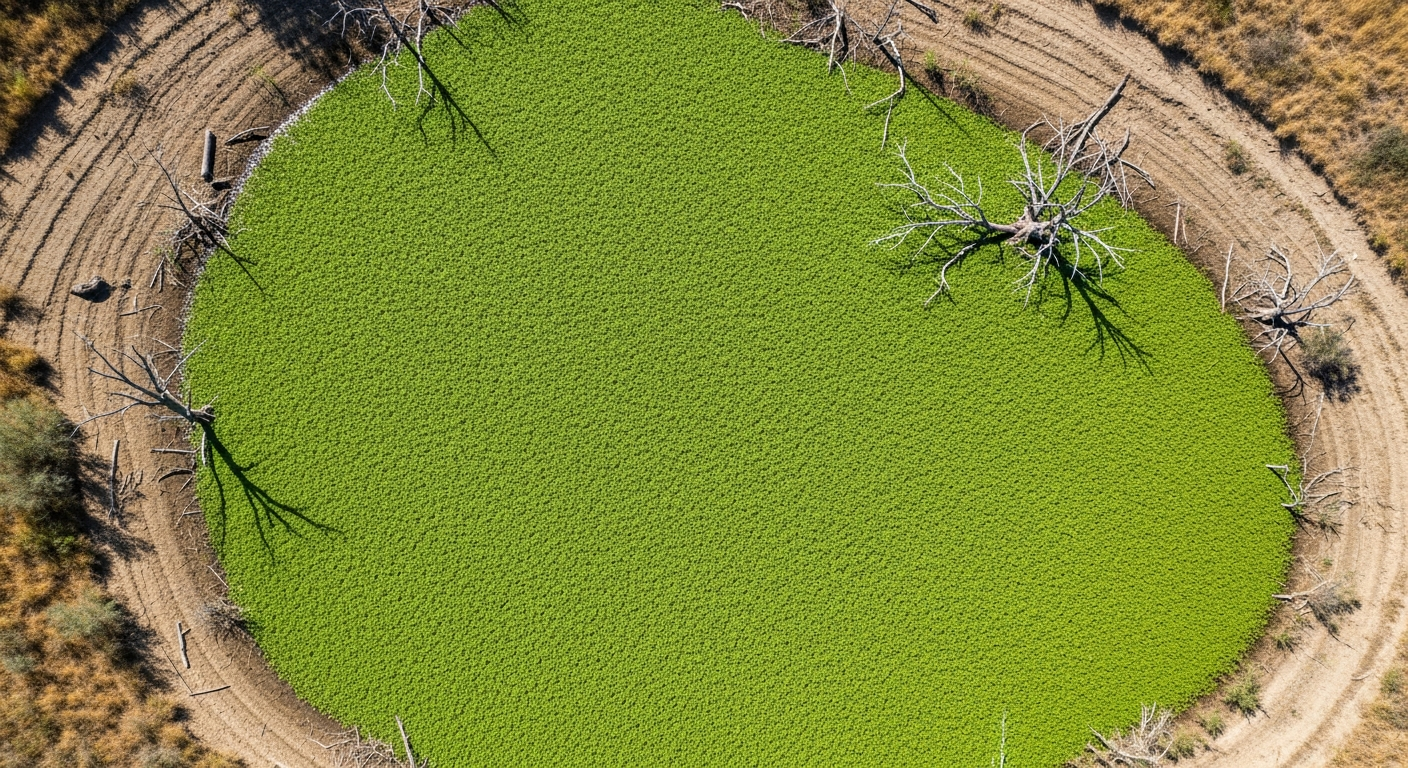
Cultural services — the non-material benefits that people derive from ecosystems — are profoundly affected by L. peploides invasion in ways that are economically significant but challenging to quantify. The recreational value of fresh water bodies for swimming, boating, angling, and nature observation is dramatically reduced by dense floating mat coverage. Angling clubs, canoe clubs, rowing associations, and watersports providers in heavily invaded regions of France and England have reported significant membership and revenue declines associated with L. peploides expansion. The aesthetic appeal of water bodies smothered by dense green vegetation mats — and the unpleasant odour associated with decomposing organic matter — reduces the tourism value and sense-of-place associated with freshwater landscapes.
Supporting Services: Biodiversity and Nutrient Cycling
Supporting services — the foundational ecological processes that underpin all other ecosystem services — are also compromised by L. peploides invasion. The dramatic reductions in aquatic biodiversity documented in invaded water bodies (described in detail in the Biodiversity Loss article) represent a loss of biological diversity that underpins ecosystem resilience, evolutionary potential, and long-term ecological stability. Nutrient cycling — the transformation and transfer of nutrients through food webs and biogeochemical processes — is fundamentally altered by the shift from diverse, oxygenated communities to simplified, anoxic mat-dominated systems. These changes in supporting services ultimately undermine the delivery of all other service categories.
Conclusion
The ecosystem services framework reveals that the true cost of L. peploides invasion is far greater than direct management costs — it includes the degradation or loss of provisioning, regulating, cultural, and supporting services that collectively constitute the economic and social value of freshwater ecosystems. Quantifying these service losses using established economic valuation methodologies strengthens the case for management investment, enables cost-benefit analyses that accurately reflect the full value at stake, and supports the development of payment-for-ecosystem-services mechanisms that could fund management programs at landscape scale. Practitioners and policymakers should use the ecosystem services framework not only to justify management spending but as a framework for setting ecological recovery targets and measuring management success.