Understanding Ludwigia peploides Biology
A foundational overview of the taxonomy, morphology, physiology, and ecological role of Ludwigia peploides — the biological building blocks of one of the world's most significant aquatic invasive species.
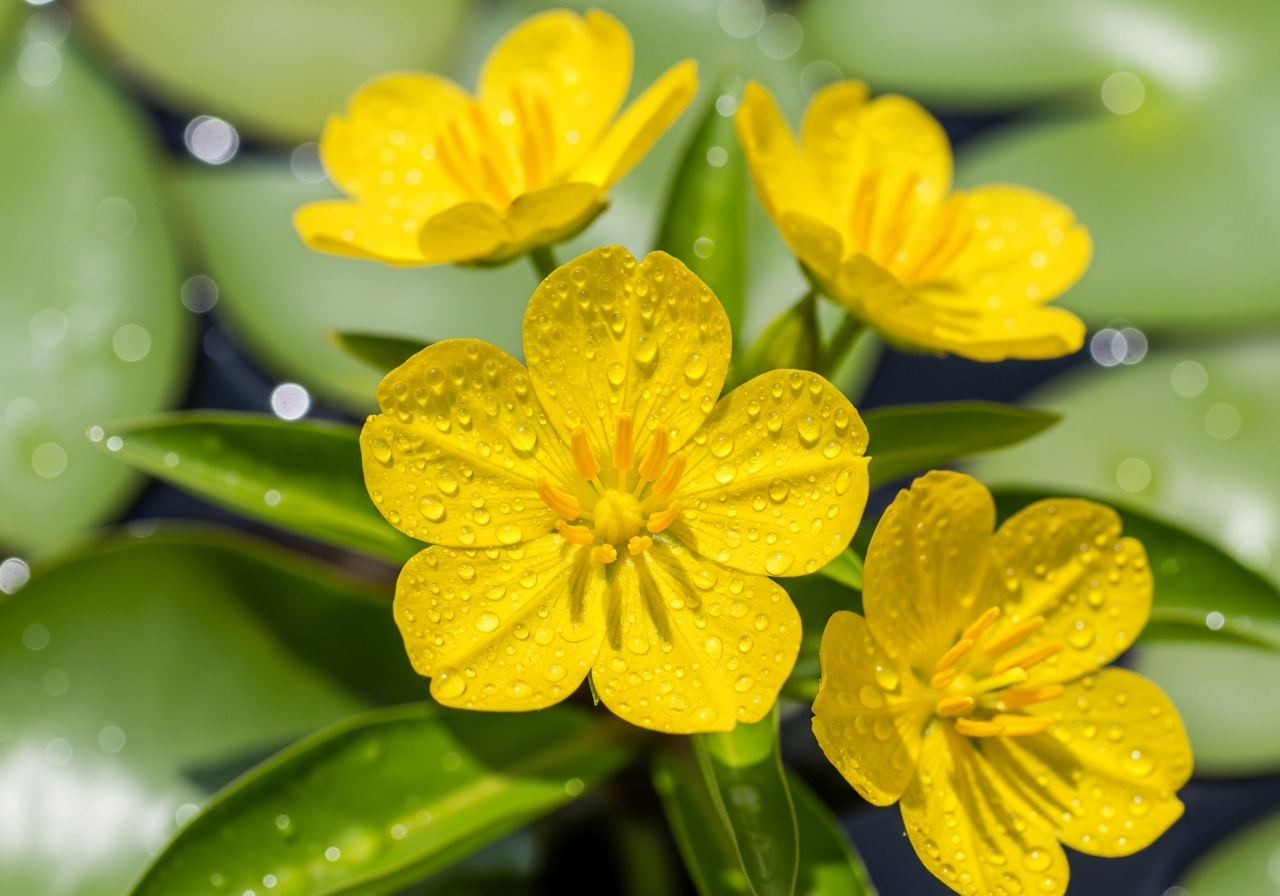
Ludwigia peploides — commonly known as Creeping Water Primrose, Floating Primrose-willow, or Water Primrose — is a perennial aquatic macrophyte that has become one of the most ecologically significant invasive plants in global freshwater systems. To understand why this species presents such a formidable management challenge, it is essential first to understand its fundamental biology: its taxonomic placement, morphological characteristics, physiological capabilities, and ecological strategies.
This article provides a comprehensive biological overview for readers approaching L. peploides for the first time, as well as a consolidated reference for specialists seeking a structured summary of the species' basic biology. More detailed treatment of specific aspects — genetics, reproduction, adaptations, stress physiology — is provided in companion articles within the Plant Biology section of this site.
Taxonomy and Classification
Ludwigia peploides is placed in the family Onagraceae — the evening primrose family — alongside other familiar plants including Epilobium (willowherbs), Oenothera (evening primroses), and Fuchsia. The genus Ludwigia comprises approximately 80 species, predominantly distributed in tropical and subtropical regions, with a center of diversity in the Americas. The genus is named in honour of Christian Gottlieb Ludwig (1709–1773), a German botanist at the University of Leipzig.
The currently accepted taxonomic name is Ludwigia peploides (Kunth) P.H. Raven, recognized in the landmark 1963 revision of the genus by Peter Raven. The species was previously classified within the genus Jussiaea (as Jussiaea repens var. peploides), a synonymy that appears frequently in older literature. The specific epithet "peploides" means "resembling Peplis" — a reference to the superficial similarity of small plants to species of the genus Peplis (now included in Lythrum).
Morphology
Ludwigia peploides is a robust perennial herb with a flexible, modular growth architecture well-suited to aquatic environments. The primary stem is prostrate to ascending, floating, or creeping — depending on water depth — and can reach 2–3 m in length. Stems are glabrous to sparsely hairy, green to reddish-brown, and cylindrical in cross-section. Internal aerenchyma tissue provides buoyancy and oxygen transport. Distinctive white, spongy pneumatophore roots arise at submerged nodes.
Leaves are alternate, simple, elliptic to obovate, 2–7 cm long × 1–3 cm wide, with entire margins and a glabrous, glossy adaxial surface. Two rounded stipules at the leaf base are a consistent and reliable identification feature. Flowers are axillary, solitary, with 5 bright yellow petals (8–15 mm each), 10 stamens, and an inferior ovary developing into a linear capsule 15–35 mm long containing numerous seeds.
Basic Physiology
Ludwigia peploides is a C3 photosynthetic plant — it fixes carbon via the Calvin cycle without the additional concentration mechanisms of C4 or CAM photosynthesis. Despite this, its photosynthetic capacity per unit leaf area is high relative to many competing aquatic species, driven by efficient light capture architecture and high nitrogen investment in photosynthetic proteins. The species can maintain positive carbon balances across a broad range of irradiances, giving it functional advantages in both high-light mat surfaces and partially shaded interior positions.
Nutrient acquisition occurs through both roots (from sediment and water column) and leaves (from water column in submerged growth forms). Root nutrient uptake is facilitated by dense, fibrous root systems at each node. The aerenchyma system, in addition to oxygen transport, facilitates the release of molecular oxygen from roots (radial oxygen loss) into the rhizosphere, creating oxidized microsites that support nitrifying bacteria and enhance nitrogen availability.
Ecological Role
In its native range, L. peploides plays natural ecological roles as a component of structurally diverse aquatic plant communities. It provides cover and substrate for invertebrates and fish, contributes to primary productivity, and participates in nutrient cycling. Native herbivores including specialist insects and waterfowl exert population-level control that prevents the monospecific dominance characteristic of invasive populations outside the native range.
In the invasive range, released from these controls, L. peploides transitions from community component to ecosystem engineer — a species that transforms the physical, chemical, and biological environment through its own activities. Dense mats alter light, oxygen, temperature, sediment chemistry, and flow dynamics in ways that cascade through the entire biological community.
Conclusion
The biology of Ludwigia peploides is that of a generalist aquatic macrophyte adapted to the nutrient-rich, hydrologically variable freshwater systems of subtropical America, now operating in a global context where its competitive advantages are magnified by the absence of natural controls. Its morphological versatility, physiological efficiency, and modular clonal architecture combine to produce one of the most challenging invasive species problems in freshwater conservation. Building accurate understanding of this biology at every level — from cell physiology to population ecology — is the foundation upon which effective, scientifically-grounded management must be built.