Ludwigia Species Identification Guide
Accurate identification of Ludwigia peploides is essential for effective management, regulatory compliance, and ecological monitoring. Misidentification can lead to inappropriate control measures and missed management windows.
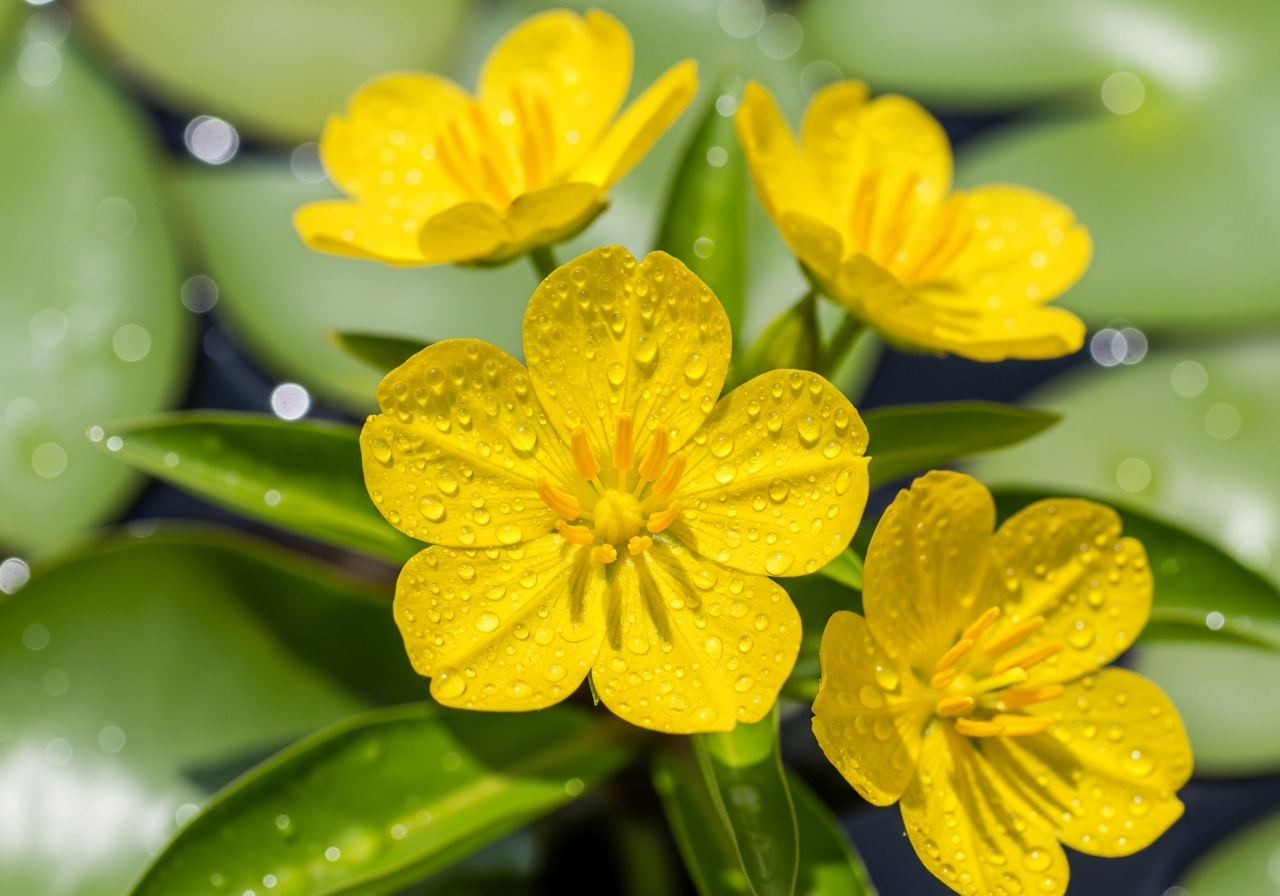
Ludwigia peploides belongs to the family Onagraceae and genus Ludwigia — a large genus of approximately 80 species distributed across tropical, subtropical, and warm temperate regions worldwide. Several species within this genus are morphologically similar to L. peploides, and some are also invasive in Europe and Australia. Reliable field identification requires familiarity with the key diagnostic features of the target species and the ability to distinguish it from both native Onagraceae and non-target Ludwigia species.
Key Morphological Features
Stems and Growth Habit
The most immediately visible field characteristic of L. peploides is its creeping, floating, or ascendant stem growth habit. Stems are typically 0.5–3 m in length, often rooting at nodes when in contact with moist substrate. The stem surface is glabrous to sparsely hairy, green to reddish in colour, and cylindrical in cross-section. Hollow internodes and associated aerenchyma tissue are visible on cross-section. White, spongy pneumatophore roots developing at submerged nodes are highly diagnostic.
Leaves
Leaves are alternate (not opposite), simple, and typically elliptic to obovate in shape, measuring 2–7 cm in length and 1–3 cm in width. Leaf margins are entire (smooth). A characteristic pair of rounded stipules is present at the base of each petiole — these are often dark green to brownish and are a reliable identification feature throughout the growing season. Leaf surfaces are typically glabrous, and the adaxial (upper) surface is glossy.
Flowers and Fruit
Flowers are solitary, axillary (arising from leaf axils), and conspicuously yellow. Five petals are present, each measuring 8–15 mm, giving the open flower a diameter of 15–25 mm. The five sepals persist in fruit. Ten stamens in two whorls surround the inferior ovary. Flowers are bee-pollinated and produced abundantly from June through September in temperate regions. The fruit is a cylindrical capsule, 15–35 mm long and 3–5 mm wide, containing numerous small seeds (less than 1 mm).
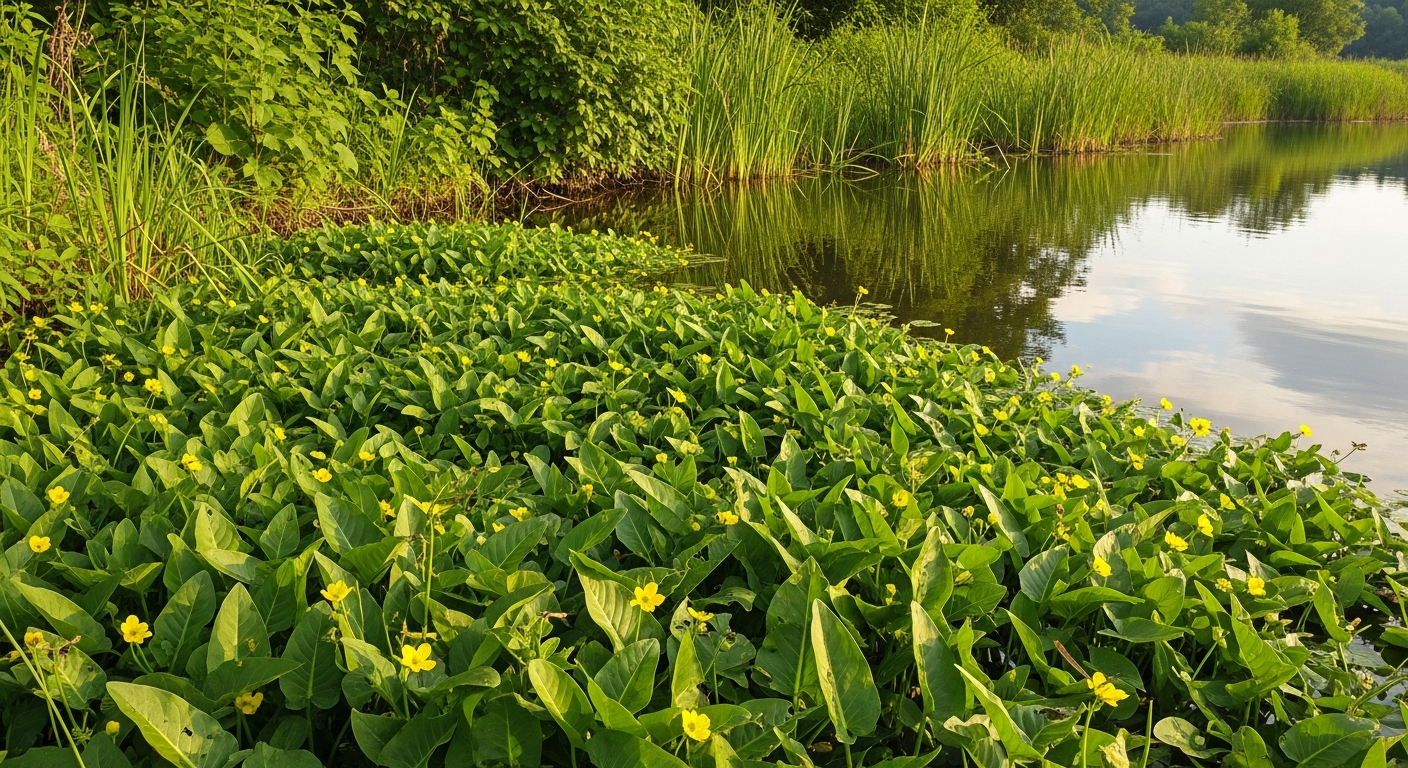
Similar Species and Confusion Taxa
In Europe, the most commonly confused species are Ludwigia grandiflora (Largeleaf Water Primrose) and Ludwigia uruguayensis, both of which are also invasive and subject to the same regulatory controls. L. grandiflora is distinguished by its larger flowers (petals 15–25 mm), more narrowly lanceolate leaves, and more prominent stipules. L. uruguayensis (also known as L. hexapetala) typically has 6 petals rather than 5 — a reliable discriminating character.
In North America, several native Ludwigia species may be encountered in the same habitats. L. palustris (Marsh Seedbox) is distinguished by its opposite leaves, smaller flowers (4 petals), and prostrate habit without floating stems. L. alternifolia (Seedbox) is an erect terrestrial or semi-aquatic species with 4-petalled flowers and angular, box-shaped fruits. Neither species produces the white spongy pneumatophores characteristic of L. peploides.
Molecular Identification Tools
When morphological identification is uncertain — particularly in vegetative material lacking flowers or fruits, or where hybrids are suspected — molecular methods provide definitive identification. DNA barcoding using the chloroplast markers rbcL (ribulose bisphosphate carboxylase large subunit) and matK (maturase K) distinguishes L. peploides from all commonly encountered congeners with high accuracy when used in combination.
Nuclear ITS2 (internal transcribed spacer 2) sequences provide additional discriminatory power and are particularly valuable for detecting hybrid individuals that may show intermediate morphological characteristics. Hybrid L. peploides × L. grandiflora individuals have been documented in French field populations and may exhibit intermediate flower size and leaf shape.
Subspecies and Varieties
Three subspecies of L. peploides are currently recognized: ssp. peploides, which is the most widespread and includes most invasive populations; ssp. montevidensis, characterized by more elongated stipules and narrower leaves; and ssp. stipulacea, found primarily in South America and distinguished by particularly prominent stipules. The taxonomic delimitation of these subspecies remains somewhat contentious, and the ecological and management implications of subspecific identity are not yet well characterized.
Conclusion
Reliable identification of Ludwigia peploides requires attention to a combination of vegetative and reproductive features: the alternate elliptic leaves with basal stipules, 5-petalled yellow flowers, creeping or floating stem habit, and white spongy pneumatophores at nodes are collectively diagnostic. When flowers are absent or morphological features are ambiguous, molecular barcoding provides definitive identification. Investment in accurate species identification is foundational to all subsequent management and monitoring activities, as misidentification can lead to wasted resources, inappropriate interventions, and missed regulatory obligations.