Ludwigia peploides Reproduction Explained
The dual reproductive strategy of L. peploides — combining prolific seed production for long-distance dispersal with highly efficient clonal propagation for local dominance — is central to its invasion success.
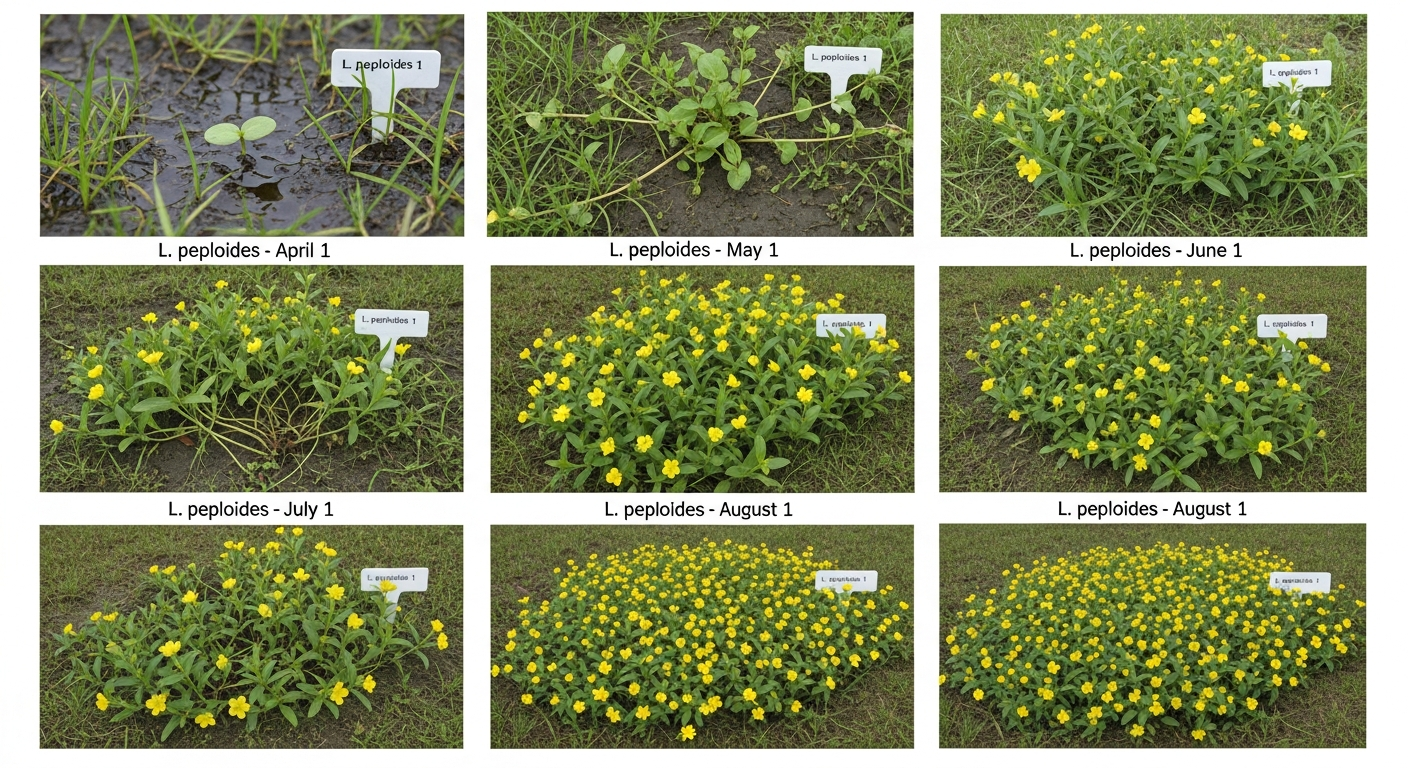
Reproduction is the foundation of biological invasion. A species can only establish and spread in a new range if it can produce sufficient offspring, disperse them to suitable habitats, and establish viable populations from those propagules. Ludwigia peploides achieves all three requirements with exceptional efficiency, using complementary sexual and vegetative reproductive pathways that operate at different spatial scales and serve different ecological functions.
Sexual Reproduction: Flowers, Pollination, and Seeds
The yellow flowers of L. peploides are produced abundantly from late spring through early autumn in temperate climates. Each axillary flower is bisexual, with both male (10 stamens in two whorls) and female (inferior ovary with elongated style and 5-lobed stigma) reproductive organs. The flower architecture promotes cross-pollination — the stigma is typically receptive before the anthers of the same flower dehisce, reducing self-fertilization and maintaining genetic diversity in seed populations.
Bee pollination is the primary pollination mode. Flowers produce both pollen and nectar rewards, attracting generalist bee species. The large, conspicuous yellow petals provide a visual beacon visible at distance, while floral volatiles guide close-range approach. In invaded European habitats, native bee species effectively pollinate L. peploides flowers, demonstrating that the absence of specialist pollinators from the native range does not limit sexual reproduction in the invasive range.
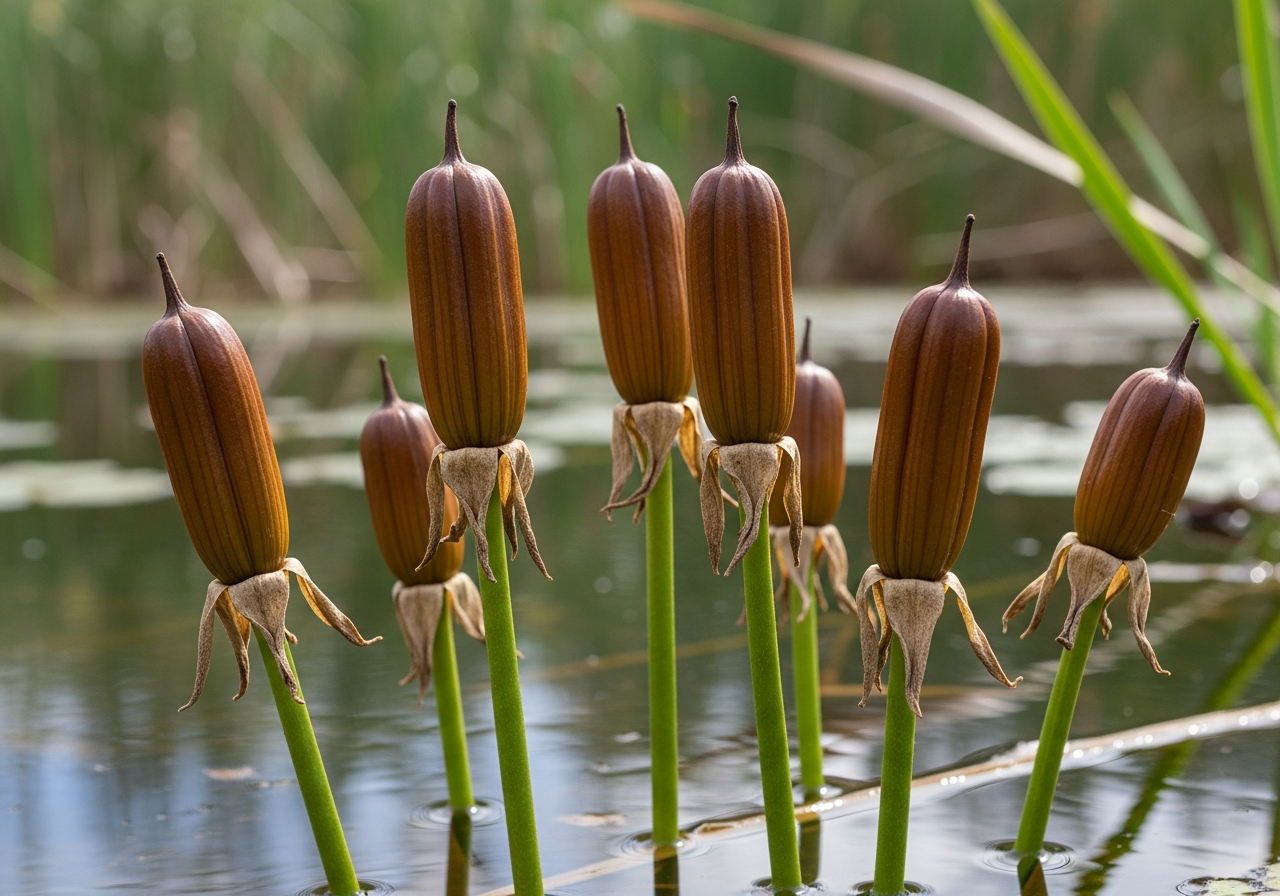
Each pollinated flower develops into a linear capsule containing 20–100 small seeds. Seeds mature approximately 4–6 weeks after pollination and are released through apical pore formation in the capsule wall. Peak seed maturation occurs August–October in temperate northern hemisphere populations.
Vegetative Propagation: The Dominant Local Strategy
While seeds are critical for long-distance colonization, vegetative propagation drives population expansion within established sites. The primary mechanism is nodal rooting of floating stems: as stems grow laterally across the water surface and their tips reach moist substrate, roots develop rapidly at the terminal and subterminal nodes. This directional growth creates a progressive colonization front that advances at rates of up to 2 m per week during peak season.
Rhizome growth from established root crowns also contributes to local expansion, extending below the sediment surface to produce new shoots at intervals of 5–20 cm. This below-ground spread is particularly important for consolidating patches within established stands and for post-winter recovery from the overwintering root crown. In late summer, rhizome branching intensifies, forming a dense below-ground mat that persists through winter and regenerates the following spring.
Seed Dispersal Mechanisms
Seeds are small (typically less than 1 mm in maximum dimension), lightweight, and possess a hydrophobic surface coating that enables them to float on the water surface for extended periods without becoming waterlogged. This buoyancy, combined with the plant's preference for river and canal systems, enables hydrochorous (water-mediated) dispersal along waterway networks over distances of tens of kilometers per flood event.
Endozoochory — dispersal through animal digestive systems — is a particularly important pathway for inter-basin transfer. Seeds of L. peploides retain viability after passage through the digestive tracts of migratory waterfowl, particularly dabbling ducks of the genus Anas that regularly consume aquatic plant material. A single duck defecating after a long migratory flight can deposit viable seeds far outside the connected waterway network. This mechanism explains the observation of new colonizations in isolated water bodies with no hydrological connection to known populations.
Regeneration from Fragments
A distinctive and management-critical aspect of L. peploides reproduction is the ability of very small stem fragments to regenerate complete plants. As little as a single internode with an intact node can produce adventitious roots within 2–5 days under suitable conditions (temperature above 15°C, moist or submerged). This extraordinary regenerative capacity means that mechanical control operations that break, shred, or disturb plant material without complete removal can actively disperse viable propagules within the work site or downstream.
Conclusion
The reproductive biology of Ludwigia peploides is a study in biological redundancy: every level of spatial scale — from local expansion to regional dispersal to intercontinental colonization — is covered by at least one efficient propagule type. Seeds handle long-distance dispersal; clonal stem extension handles local mat formation; rhizome growth handles within-patch persistence; and fragment regeneration handles reinfestation from management activities. Effective management must account for all of these pathways simultaneously. Biosecurity protocols that prevent dispersal of fragments during and after management operations, seed bank management following herbicide treatment, and long-term population monitoring to catch seed-derived reinfestation are all essential components of a comprehensive reproductive management strategy.