Genetic Insights in Ludwigia peploides
Population genetics, hybridization dynamics, and the genomic basis of invasiveness reveal how L. peploides has successfully colonized water bodies far outside its native range with limited genetic diversity.
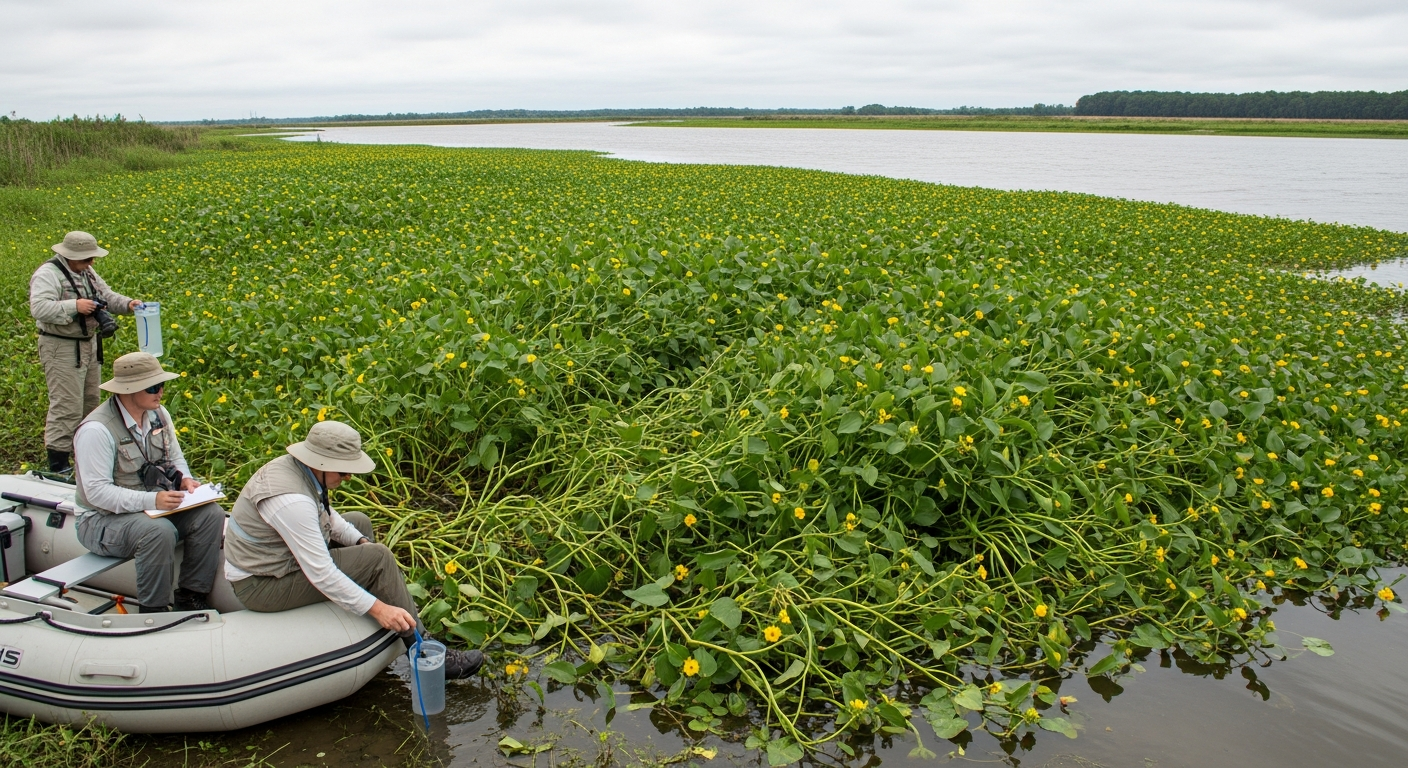
The genetic architecture of invasive species populations reflects their biogeographic history and shapes their evolutionary potential. For Ludwigia peploides, population genetic studies have provided crucial insights into how many independent introduction events established the invasive range, the level of genetic diversity available for local adaptation, and the extent to which hybridization with congeners contributes to invasive vigor. These findings have both theoretical significance for invasion biology and practical implications for management strategy.
Polyploidy, Genome Size, and Chromosomal Biology
Ludwigia peploides is a diploid species with 2n = 16 chromosomes and a relatively compact genome estimated at approximately 0.8 pg/2C. This genomic stability contrasts with some invasive species that exploit polyploidy as a mechanism for rapid genome restructuring and phenotypic diversification. The diploid constitution of L. peploides means that its invasive success derives not from genomic redundancy but from allelic variation at functional loci and from phenotypic plasticity built into the existing genomic framework.
Cytogenetic studies have confirmed chromosome number consistency across populations from diverse geographic origins — native South American, North American, and invasive European populations all share the 2n = 16 karyotype without documented polyploidization. This karyotypic stability simplifies hybridization compatibility analyses and suggests that the genomic basis of invasiveness lies at the gene expression or regulatory level rather than in gross chromosomal rearrangements.
Population Genetic Structure
Microsatellite marker analyses — using highly polymorphic loci that are sensitive to recent demographic changes — reveal that European invasive populations maintain moderate but significantly lower genetic diversity than native range populations. Expected heterozygosity values in European populations (He = 0.35–0.55) are consistently lower than those in North American native populations (He = 0.55–0.75), consistent with genetic bottlenecks during introduction events.
Bayesian clustering analyses of microsatellite genotype data from European populations identify 3–5 genetically distinct clusters, suggesting independent introduction events from different native-range source populations. French populations cluster closest to subtropical eastern North American source populations, while Iberian populations show signals of South American ancestry — consistent with historical records of the horticultural trade routes through which the species was likely introduced.
Hybridization with Congeners
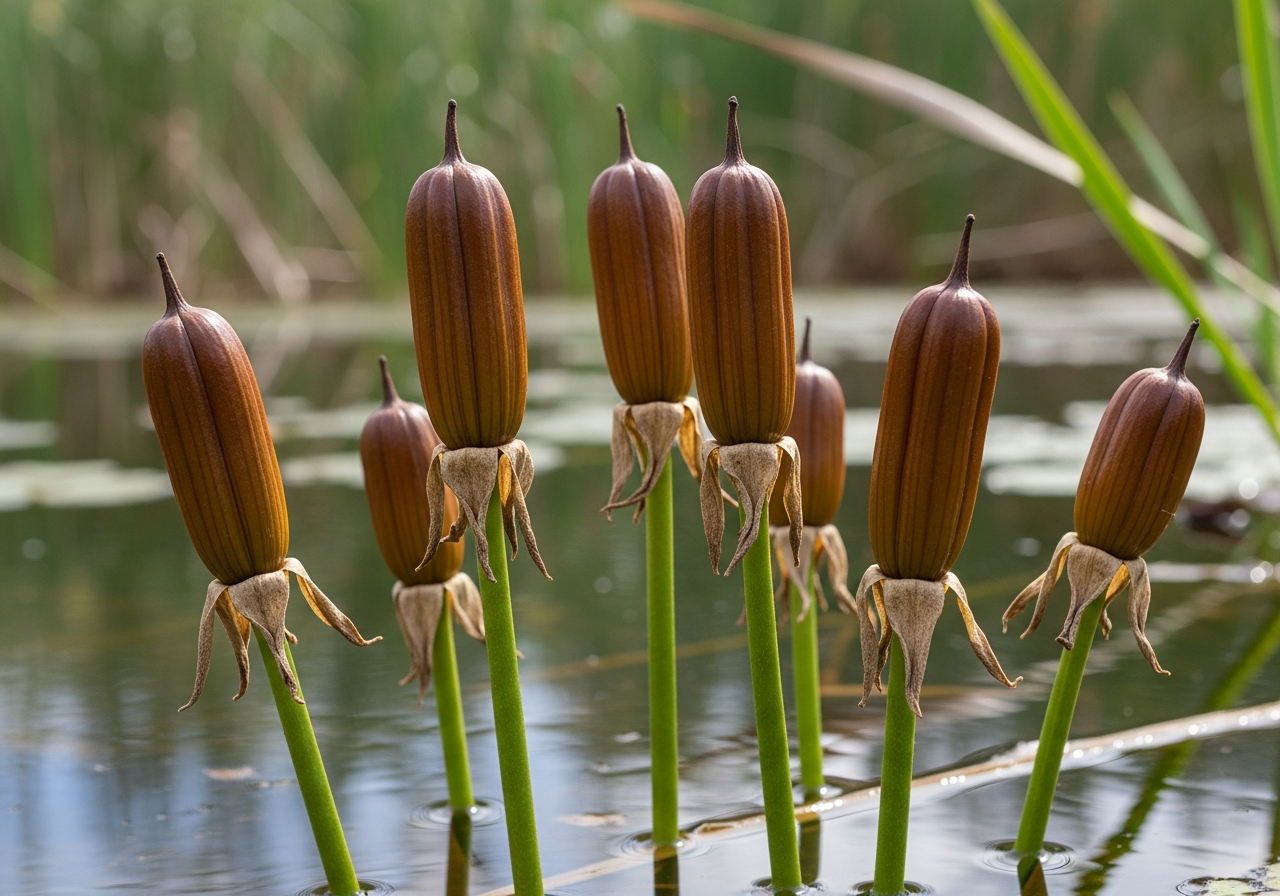
In European water bodies where L. peploides co-occurs with L. grandiflora (also invasive), hybridization has been documented through both morphological observations of intermediate phenotypes and molecular confirmation using nuclear ITS sequences and species-specific microsatellite alleles. Hybrid individuals show intermediate leaf shape, flower size, and stipule morphology relative to the parent species. The frequency of hybridization appears to be low (less than 5% of individuals in co-occurrence sites), but the ecological performance, fertility, and invasiveness of hybrid individuals relative to pure parent species remains an active research priority, as hybrid vigor (heterosis) could potentially produce more invasive phenotypes than either parent.
Evolution of Increased Competitive Ability
The EICA (Evolution of Increased Competitive Ability) hypothesis provides a theoretical framework for understanding how invasive populations may evolve in the absence of specialist natural enemies from the native range. Common garden experiments comparing European invasive and North American native populations of L. peploides grown under identical conditions reveal that invasive European plants consistently produce 15–40% more above-ground biomass, have higher relative growth rates, and show greater competitive suppression of a native European macrophyte (Myriophyllum spicatum) than do native North American plants.
These performance differences are heritable across generations grown under common conditions, demonstrating genetic rather than purely phenotypic differentiation. The traits associated with enhanced competitive performance in invasive populations include higher specific leaf area (more leaf area per unit mass), greater node production rates, and more extensive lateral stem spreading — all traits directly associated with competitive dominance in the dense macrophyte communities of European water bodies.
Conclusion
The population genetics of Ludwigia peploides reveals a species that has successfully established a globally significant invasive range despite carrying reduced genetic diversity relative to native-range source populations. Multiple introduction events from diverse source regions have partially compensated for individual bottleneck effects, maintaining sufficient genetic variation for local adaptation and continued evolutionary response. The documentation of hybridization with L. grandiflora in European water bodies adds a further dimension of genetic complexity that deserves continued monitoring. These findings support the importance of strict biosecurity measures to prevent new introduction events, as each new introduction potentially contributes novel genetic variation that could enhance local adaptation and increase invasion potential.